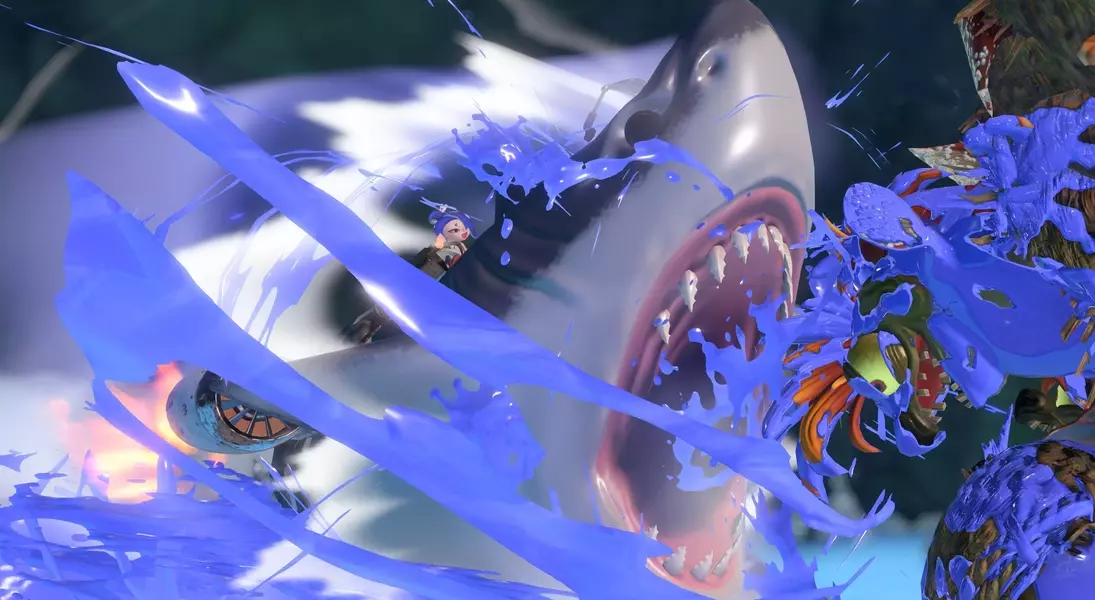
Nintendo, a company long celebrated for its distinctive approach to game development, has found itself revitalized by the unexpected triumph of its 'Splatoon' series. This franchise, born from a creative surge within a younger generation of designers, challenged conventional perceptions of what a Nintendo game could be. The article highlights how 'Splatoon' ingeniously reinterpreted the competitive multiplayer shooter genre, introducing unique mechanics like ink-based territory control and squid-form travel, alongside rich in-universe cultural elements. This bold venture not only defied expectations but also spawned a multi-million-selling franchise, proving Nintendo's capacity for groundbreaking innovation. The recent introduction of 'Splatoon Raiders', a spin-off that merges 'Splatoon's' core gameplay with a player-versus-environment looter-shooter style, further exemplifies this innovative spirit. This expansion into a previously untouched genre for Nintendo demonstrates a willingness to adapt and infuse its signature pop aesthetic and playful design into new gaming formats, much like its initial foray into competitive shooters. The continued success and evolution of 'Splatoon' underscore a crucial need for Nintendo to persistently explore unfamiliar territories, embracing diverse genres and fresh ideas to sustain its creative vitality and remain at the forefront of the entertainment industry.
The discussion also emphasizes that 'Splatoon' should not be an isolated example of Nintendo's adventurous spirit. To truly thrive, the company must cultivate a culture of continuous exploration, seeking out new genres and gameplay styles that challenge its established comfort zones. This means nurturing more projects akin to 'Pikmin' or 'WarioWare'—titles that offer distinct experiences and push the boundaries of what players expect from Nintendo. By venturing into uncharted waters, such as developing a Nintendo-style roguelike or a co-op 'friendslop' game, the company can tap into a wellspring of creativity. This approach would not only inject new energy into its portfolio but also solidify its reputation as an innovator in the gaming world. The success of 'Splatoon' serves as a powerful reminder that embracing novelty and a competitive edge is essential for any creative enterprise, preventing stagnation and ensuring a vibrant future for Nintendo and its global fanbase.
The Unforeseen Success of Splatoon and its Innovative Gameplay
Nintendo's 'Splatoon' franchise emerged as a groundbreaking competitive multiplayer shooter, defying initial skepticism within the gaming community. Unlike traditional shooters, 'Splatoon' introduced a vibrant, ink-based combat system where players cover arenas with colorful paint to claim territory, transforming into squids to traverse their own ink more rapidly. This innovative mechanic, coupled with a rich in-game fashion and music culture, created an entirely fresh experience that resonated with millions. The game's success on the Wii U, a console often overshadowed by competitors, demonstrated Nintendo's ability to innovate beyond its well-established franchises and carve out new niches in the gaming landscape. This period marked a significant shift, showcasing a more contemporary and creatively driven Nintendo.
The journey of 'Splatoon' from an unexpected concept to a multi-million-selling franchise is a testament to Nintendo's willingness to embrace novel ideas. Conceived by a younger generation of designers, 'Splatoon' illustrated how Nintendo could both acknowledge external gaming trends and reinterpret them through its unique lens, similar to 'The Legend of Zelda: Breath of the Wild'. The recent introduction of 'Splatoon Raiders', a spin-off title, further expands on this foundation by blending 'Splatoon's' core mechanics with the popular player-versus-environment looter-shooter genre. This strategic move allows Nintendo to explore an oversubscribed genre with its distinctive aesthetic and playful sensibility, proving that even familiar formats can be made fresh and exciting under their creative direction. This continuous evolution and genre experimentation are crucial for Nintendo to maintain its inventive edge and remain relevant in a dynamic industry.
Expanding Horizons: Nintendo's Need for Continued Innovation
The success of 'Splatoon' highlights a vital lesson for Nintendo: the necessity of consistently venturing beyond its established comfort zones. While revered for its timeless franchises and impeccable quality control, the company benefits immensely from projects that inject fresh perspectives and a bold competitive spirit. 'Splatoon' provided this much-needed creative jolt, demonstrating that Nintendo can successfully tackle diverse genres and appeal to a broader audience without compromising its core identity. To sustain this momentum, Nintendo must actively seek out and develop more titles that challenge conventional gaming norms and explore uncharted territories, ensuring a continuous flow of new and exciting experiences for players.
To maintain its creative vitality, Nintendo needs to cultivate more franchises that embody the adventurous spirit of 'Splatoon', 'Pikmin', or 'WarioWare'. This implies a strategic shift towards exploring a wider array of genres and gameplay mechanics, moving beyond its traditional repertoire. Imagine a Nintendo-developed roguelike, distinct from anything else on the market, or a collaborative 'friendslop' game that redefines cooperative play. Such ventures would not only differentiate Nintendo in an increasingly crowded market but also allow its unique design philosophy to permeate new types of games. By embracing constant innovation and daring to experiment with unfamiliar genres, Nintendo can ensure its future remains as vibrant and impactful as its past, continually delivering fresh and imaginative content to its global fanbase.
