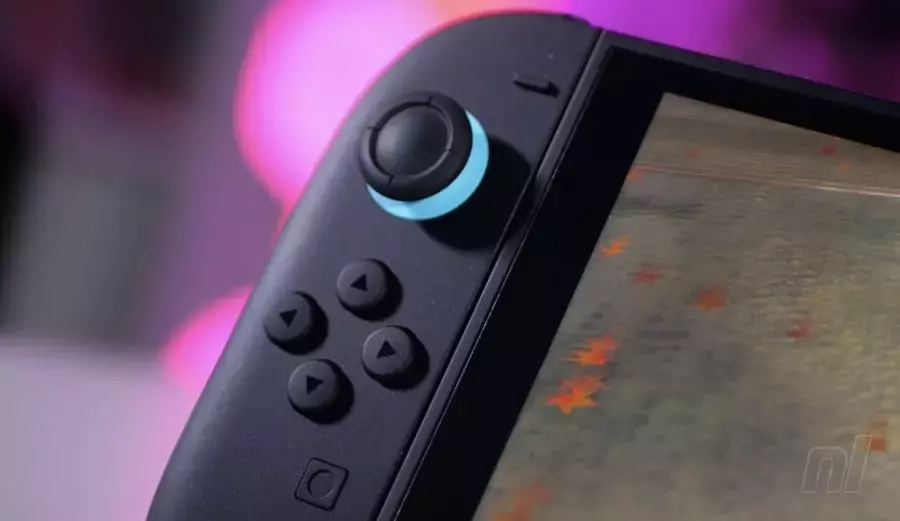
An intriguing discovery on Nintendo's official online platform has ignited discussions regarding a potential new iteration of the Switch 2 console. A previously uncataloged product identifier, 'OSM', was uncovered, leading many to ponder its implications for the gaming giant's hardware roadmap. This unexpected appearance has fueled both excitement and skepticism within the gaming community, as enthusiasts attempt to decipher Nintendo's intentions.
This development points to an ongoing evolution within Nintendo's console strategy. The emergence of a distinct product code like 'OSM' suggests that even if a new model isn't imminent, the company is actively exploring or developing future hardware options. It serves as a reminder that the world of console manufacturing is dynamic, with continuous innovation and secret projects often leading to significant advancements.
Unraveling the 'OSM' Product Code Mystery
The recent unearthing of a unique product code, designated 'OSM', on Nintendo's official portal has ignited considerable speculation within the gaming community. Discovered by a user on Bluesky, who noted that querying this specific code yielded an image of the Switch 2 console, this finding has prompted widespread discussion. Further reports from online forums like ResetEra corroborate that other arbitrary codes typically result in error messages, lending credence to the significance of 'OSM'. This unforeseen revelation has led many to question whether Nintendo is preparing to introduce an updated version of its recently launched Switch 2, merely a year after its initial unveiling. The appearance of such a distinct identifier suggests deliberate intent, as console manufacturers rarely introduce new product codes without a tangible purpose. This has set the stage for an eager wait among fans, keen to understand the true nature of this mysterious designation and its potential impact on the console's future.
Despite the initial excitement surrounding the 'OSM' product code, industry observers and the original discoverer, dootsky, advocate for a cautious approach to interpreting these findings. They highlight that previous Switch models, such as the Lite and OLED versions, were associated with product codes like HAE, HAD, HDH, and HEG, while the current Switch 2 carries the 'BEE' identifier. Crucially, 'OSM' does not align with this established alphanumeric pattern, leading to the argument that it may not signify a direct iteration of the existing console line. While the possibility of a new model cannot be entirely dismissed, particularly given Nintendo's history of hardware revisions, the lack of immediate correlation with past naming conventions suggests that 'OSM' could represent something entirely different. It could be an internal placeholder, a code for an accessory, or perhaps a precursor to a distinct console variant that is still in its nascent stages of development. The timing, just one year after the Switch 2's launch, further supports the notion that a significant hardware refresh might not be imminent, suggesting that the 'OSM' code pertains to a longer-term project or an unannounced component rather than an immediate console release.
Future Implications for Nintendo's Console Strategy
The emergence of the 'OSM' product code, regardless of its immediate interpretation, undeniably underscores Nintendo's ongoing commitment to innovation and product development. Even if it does not signal an immediate new console release, the very existence of such a code within Nintendo's internal systems indicates active exploration and planning for future hardware. This proactive stance is typical for major players in the console market, where continuous research and development are crucial for staying competitive and meeting evolving consumer demands. The mystery surrounding 'OSM' provides a glimpse into the secretive world of console manufacturing, where projects can remain under wraps for extended periods before a formal announcement. It hints at a future where Nintendo may continue to expand its hardware offerings, potentially introducing new form factors, performance enhancements, or specialized devices that cater to different segments of its user base, maintaining a sense of anticipation and excitement among its global fanbase.
Looking ahead, the 'OSM' product code could potentially herald a variety of developments for the Nintendo ecosystem. While a direct successor or an upgraded 'Switch 2 Pro' might not be the immediate outcome, it could foreshadow an evolution in Nintendo's strategy towards modular hardware, or even a different type of gaming device altogether. Historically, Nintendo has shown a willingness to experiment with diverse console designs and functionalities, from handheld-only versions to those offering enhanced display technologies. The 'OSM' code might be tied to an internal project exploring such variations, perhaps a 'Switch 2 Lite' or a 'Switch 2 OLED' that offers specific features or targets a different price point. Alternatively, it could be related to a completely new initiative, such as a cloud gaming service component or an accessory that integrates deeply with the Switch 2. The key takeaway is that Nintendo is not static; it is constantly evaluating market trends and technological advancements to shape its future product line. The 'OSM' code serves as a subtle yet significant indicator of these ongoing efforts, keeping both enthusiasts and industry analysts guessing about what groundbreaking innovations Nintendo might unveil next.
