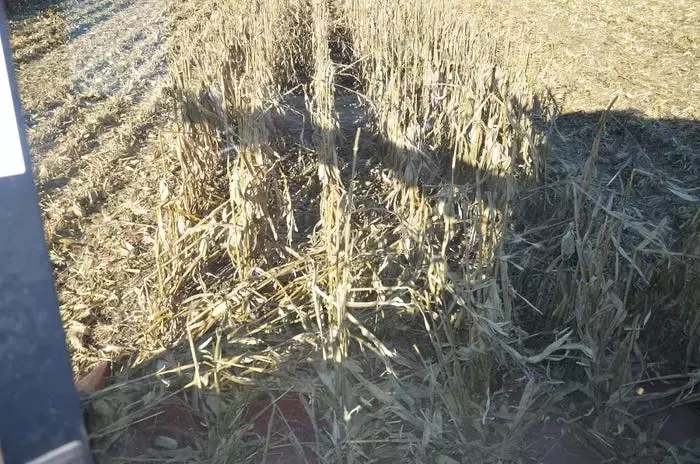
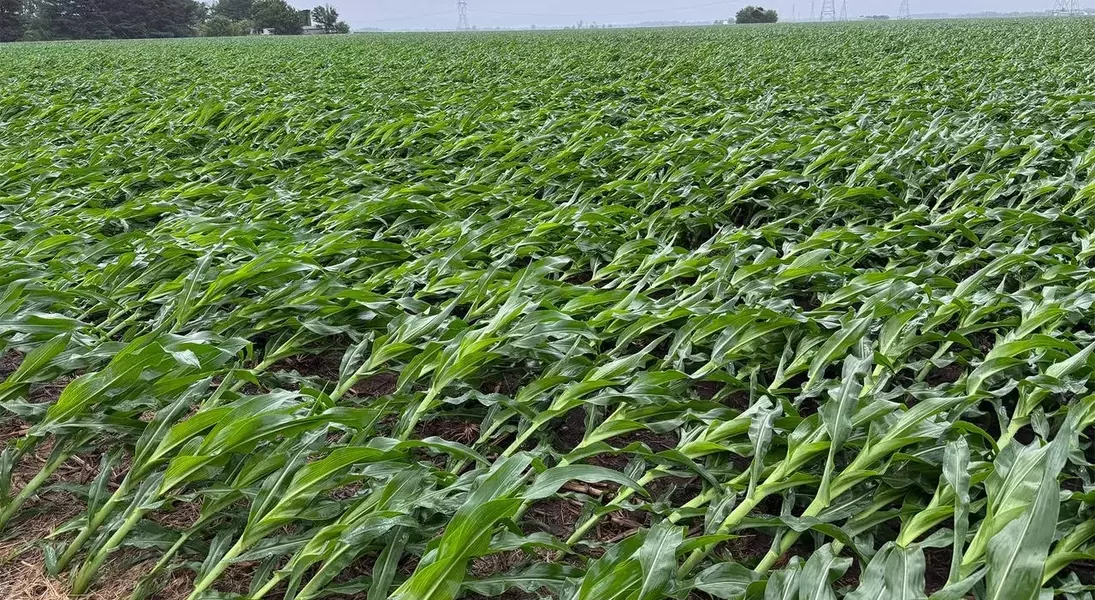
Recent severe storms across the Corn Belt have left many agricultural fields grappling with flattened corn, prompting urgent questions about potential crop recovery and yield implications. Agronomists emphasize the critical importance of a patient and methodical approach when assessing storm-damaged corn, highlighting that the timing of the lodging event in relation to the crop's growth stage is paramount in determining the extent of recovery and the ultimate yield impact. Farmers are encouraged to allow sufficient time for plants to show signs of resilience, such as straightening or developing new growth, before making definitive judgments on their fields' fate. Understanding the nuances of corn plant physiology and its response to stress is key to navigating these challenging post-storm scenarios.
Moreover, the method and tools used for harvesting also play a significant role in mitigating losses from lodged corn. Modern combine harvesters, equipped with advanced corn heads, offer improved efficiency in collecting fallen stalks compared to older machinery. This technological advancement, coupled with careful harvesting strategies, can considerably reduce the operational challenges and further yield reductions associated with severely lodged fields. Ultimately, a combination of scientific insight, technological adaptation, and sustained perseverance is essential for farmers facing the aftermath of such natural disasters.
Evaluating Post-Storm Corn Damage and Recovery Potential
Following intense storms that cause corn to lodge, a common and disheartening sight for farmers, the immediate reaction might be to gauge the damage and potential for recovery. However, experts strongly advise against hasty conclusions. Instead, a period of watchful waiting, typically around four days, is recommended. This allows corn plants sufficient time to exhibit natural recovery mechanisms such as 'goosenecking,' where the stalks bend and then attempt to grow upright again, and the development of new nodal roots for improved stability. The condition of the soil, specifically its moisture level during the storm, the genetic makeup of the corn hybrid, and the degree to which the plants are leaning or bent, all critically influence the plant's capacity for self-correction. For instance, plants in vegetative stages with intact photosynthetic machinery may experience minimal yield impact if they can re-establish themselves. Conversely, damage occurring during sensitive reproductive phases poses a much higher risk.
Purdue Extension corn specialist Dan Quinn points out that observing these visual signs of recovery is crucial for an accurate assessment. He explains that even if a field appears severely flattened, the internal resilience of the corn can be surprising, provided the stalks are not completely snapped. The ability of the plant to recover and continue its growth cycle is directly linked to its physiological state at the time of the stress. If the corn is in early vegetative growth, its capacity for recovery is generally higher due to greater flexibility and less developed root systems, which are more adaptable to shifting. As the corn progresses into reproductive stages, particularly around pollination and grain fill, its energy is heavily invested in kernel development, making it less capable of correcting its orientation, which can lead to significant reductions in photosynthesis due to shading and impaired pollination success, further compounding potential yield losses.
Impact of Timing and Harvesting Strategies on Yield
The timing of lodging and green snap incidents is a pivotal determinant of corn yield loss. Research, including a three-year study by Ohio State University, provides clear evidence of this correlation. For example, corn lodging at the 10-leaf (V10) stage resulted in a relatively modest 5% yield reduction, with only a small percentage of barren plants. However, if lodging occurred later, at the V13 stage, yield losses escalated dramatically to 22%, accompanied by a higher incidence of barren plants. The most severe impacts were observed when damage coincided with tasseling and silking (VT to R1 stages), leading to a substantial 43% yield loss and nearly 10% barren stalks, underscoring the critical sensitivity of these developmental periods to environmental stress. While yield loss potential decreases as the corn enters later grain fill stages, such as R3 (milk stage), it remains a significant concern.
Furthermore, the nature of the damage also dictates the extent of the impact. Green snap, where the stalk breaks, presents a direct challenge. If the snap occurs above the harvestable ear, the plant may still produce some yield, albeit reduced. However, a snap below the ear results in a complete loss of yield potential from that plant. Historically, harvesting lodged corn has presented considerable challenges, often leading to machinery clogs and inefficient operations. Anecdotal accounts from farmers highlight that older combine models struggled immensely, requiring constant manual intervention to clear obstructions. Modern combines, equipped with advanced corn heads and often featuring specialized reels for pulling in downed corn, have significantly alleviated these difficulties. While harvesting lodged corn remains a slower process, these technological improvements minimize frustrating downtime and improve overall efficiency, though patience from the operator remains an indispensable asset.
