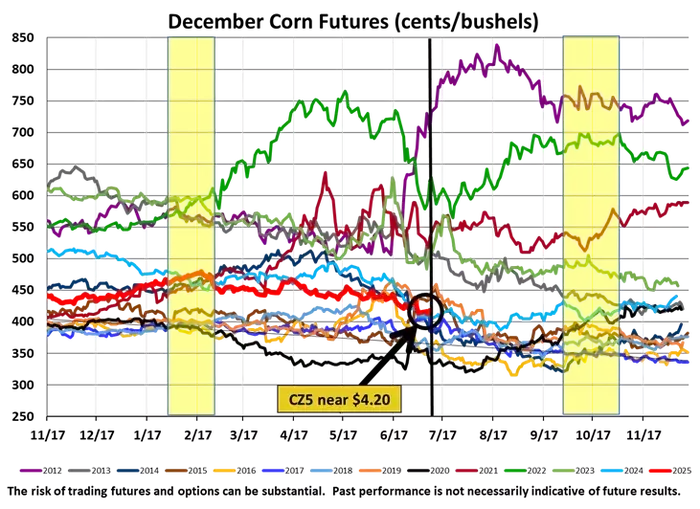

The current agricultural landscape is characterized by the promising prospect of a historically large corn harvest in 2025. This abundant supply, while beneficial in terms of yield, also presents complex challenges for commodity producers in a volatile market environment. This analysis delves into the critical need for sophisticated marketing approaches, emphasizing the strategic utilization of financial tools to safeguard profitability and navigate market uncertainties.
Master the Market: Turn Volatility into Opportunity for Your Harvest.
Understanding the Current Agricultural Landscape and Corn Crop Outlook for 2025
As the 2025 agricultural season advances, a prevailing sense of optimism envelops much of the primary corn-growing regions. Preliminary assessments from agricultural specialists and field inspectors indicate a strong likelihood of exceptional yields, with many areas reporting their most promising starts in recent memory. Timely cultivation, optimal sprouting conditions, and sufficient early-season moisture have collectively laid a robust groundwork for what is anticipated to be an unprecedented corn harvest across the United States. Such a bountiful harvest, however, brings forth new intricacies in market management, necessitating both unwavering discipline and adaptable strategies for producers this year more than ever before.
The Dynamics of Market Volatility and Its Impact on Crop Pricing
The potential for a record-breaking corn output introduces a crucial aspect of market behavior: volatility. With futures markets already factoring in the anticipation of a massive harvest, maintaining marketing discipline becomes paramount. It is effortless to be caught off guard when prices decline due to strong supply expectations, particularly for those who have withheld sales in pursuit of higher valuations. Nonetheless, equally vital to adhering to a marketing blueprint is embedding sufficient adaptability to respond effectively should climate conditions or market dynamics deviate unexpectedly.
Strategic Market Planning with Financial Instruments
In this unpredictable environment, the strategic application of financial instruments, such as options, offers a robust solution. For producers who have yet to price a significant portion of their yield, employing put options on unsold bushels can establish a price floor, thereby mitigating downside risk while preserving the potential for upward price movements. Conversely, for those who have already pre-sold parts of their harvest, acquiring call options against cash sales provides the advantage of participating in a market rally, should unexpected shifts in weather, trade policies, or supply-demand fundamentals occur. Given the current low volatility, options are relatively inexpensive, presenting an accessible means for risk management.
Historical Precedent and Future Market Considerations
Historically, an examination of past market cycles reveals that high yields can exert downward pressure on prices. The current situation, with potential for a 16-billion-bushel corn crop, surpasses previous benchmarks, including the 15.3 billion bushels achieved in 2023. While global demand patterns are evolving, the sheer scale of anticipated supply introduces unique challenges. The December futures market illustrates this, with a $4 put option trading at approximately 10 cents, establishing an effective price floor of $3.90. This level, while not extraordinary, underscores the critical role of these tools in protecting against adverse price movements, especially considering that a combined U.S. and Brazil corn production of 21 billion bushels has never before been witnessed.
Empowering Producers: Taking Control in a Dynamic Market
For producers, the objective is not to forecast market movements but to be adequately prepared for them. This involves safeguarding earnings regardless of whether yields are exceptional or poor. Integrating futures and options into one's marketing toolkit provides a flexible and cost-effective method to manage price risk without hindering opportunities. This proactive stance enables farmers to act as price makers rather than passive price takers, ensuring they remain in control amid evolving market conditions. Staying well-informed about market dynamics, consistently evaluating yield prospects, and leveraging advanced marketing strategies are crucial for success in the upcoming harvest season.
