This news piece highlights the journey of a Missouri high school student's dedicated preparation for a major livestock exhibition and parallel advancements in agricultural infrastructure. It delves into the personal commitment required for success in animal husbandry, showcasing how young individuals gain invaluable life skills through hands-on experience. Furthermore, the report emphasizes a significant governmental investment in upgrading facilities at the state fair, underscoring the growing importance of and support for agricultural endeavors. This dual focus illustrates both the grassroots passion driving the next generation of farmers and the strategic, large-scale developments shaping the future of agricultural showcasing and community engagement.
A Promising Debut and Future Growth at the Missouri State Fair
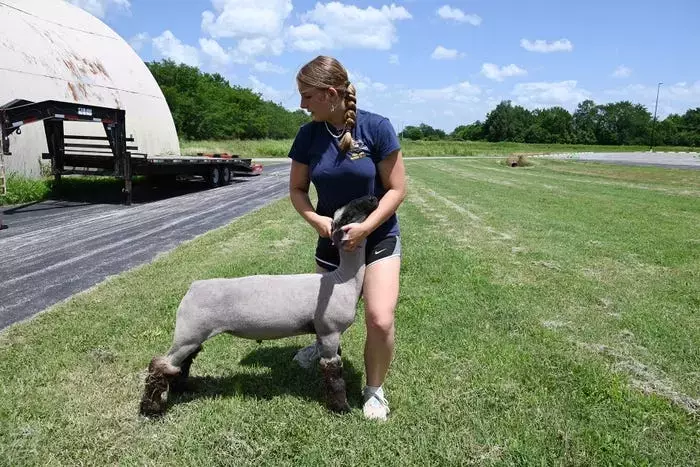
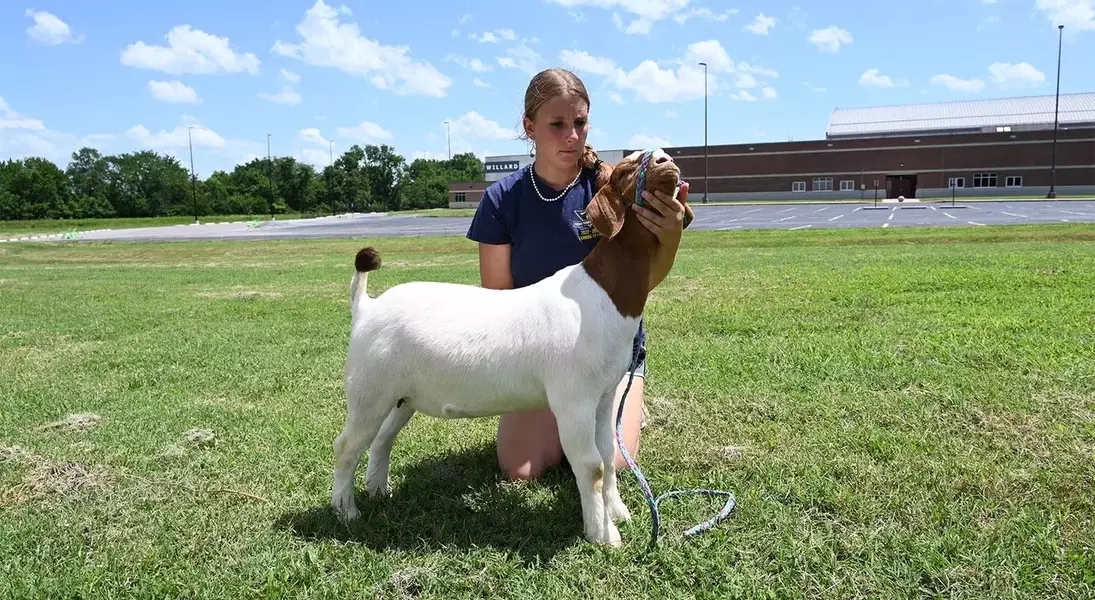
In the heart of Missouri, a determined high school senior from Willard, Caitlyn Sherman, is diligently preparing for her much-anticipated debut at the prestigious Missouri State Fair in Sedalia. Come August, she will present her carefully raised Boer goats and a market lamb, a culmination of months of hard work and learning. Her animals, affectionately named after figures from Greek mythology—Athena and Iris, two full-blood Boer goats; Aphrodite, an 88% Boer goat; and Perseus, a Hampshire crossbreed lamb—were all born in January, marking them as prime contenders for the competition.
Sherman’s remarkable journey in livestock care is supported by the agricultural department at Willard High School. Under the guidance of agricultural education teacher James “J.T.” Asher, students like Sherman benefit from access to the school's barn, a facility with a rich history as a former dairy farm. This invaluable resource enables students who lack personal land or facilities to participate in supervised agricultural experiences, fostering a sense of responsibility and practical knowledge.
Sherman, transitioning from FFA to 4-H this year, has quickly grasped the demanding nature of animal rearing. She attests that progress demands patience and unwavering dedication, even amidst frustrations. Her experience with Perseus, a initially shy lamb that required consistent effort to learn walking and bracing, exemplifies the perseverance vital in this field. These daily interactions in the barn, from fitting to general care, are what truly prepare her and her animals for the show ring.
Beyond the personal triumphs of young exhibitors, a significant development is on the horizon for the Missouri State Fair. Missouri Governor Mike Kehoe recently approved state funding for new stalling barns, with a substantial portion of $23.9 million earmarked for a dedicated goat barn. Randy Plattner, the Boer goat Superintendent for the Missouri State Fair, announced that this long-awaited facility, a dream for nearly a decade, is expected to be completed within four years. Designed to accommodate around 400 goat pens during the fair, the barn will transform into a versatile, multi-functional space for year-round events, aiming to boost tourism and generate revenue for the state. This expansion is critical, especially given last year's record-breaking 200-plus entries in the Boer goat category, highlighting the growing popularity and need for such specialized facilities. Efforts are already underway to raise additional funds for essential equipment like pens, ensuring the new barn can meet the increasing demand from eager exhibitors.
The convergence of individual passion and institutional support creates a vibrant future for agricultural education and exhibition. Caitlyn Sherman's diligent efforts, combined with the state's forward-thinking investment in the Missouri State Fair, exemplify a thriving ecosystem where the next generation of agricultural leaders is nurtured, and the traditions of livestock farming are preserved and advanced.
