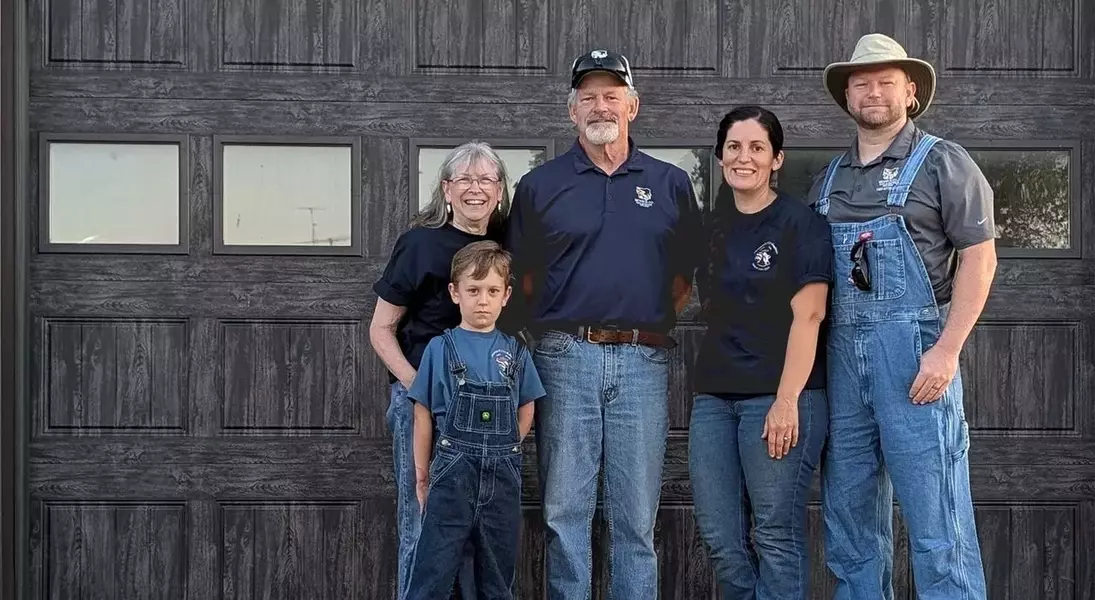
The steadfast dedication of Brad and Jane Miller to sustainable farming has earned them the prestigious 2025 Ohio Conservation Farm Family award. Operating Hope Ridge Farm amidst the demanding landscape of southeast Ohio's Wayne National Forest, the Millers have masterfully converted inherent environmental challenges, particularly scarce water resources, into remarkable opportunities for growth and innovation. Their journey illustrates a powerful synergy where robust conservation strategies not only preserve the land but also fuel the financial success of their cattle business.
Their pioneering approach extends to comprehensive water management and meticulous land stewardship, setting a benchmark for integrating environmental health with agricultural productivity. The Millers' multi-generational family farm, spanning over four decades, stands as a testament to their unwavering commitment to the land and its resources. Their story highlights the profound impact that thoughtful, long-term conservation efforts can have on transforming a challenging terrain into a flourishing, resilient agricultural enterprise, proving that profitability and ecological integrity can indeed flourish hand in hand.
Pioneering Water Management Strategies
In the rugged topography of southeast Ohio, Brad and Jane Miller have faced significant challenges in securing reliable water sources for their farm. Their visionary approach led to the development of an extensive water system comprising over 10,000 feet of buried lines, feeding 17 permanent watering stations across 25 paddocks. This intricate network is primarily supplied by a half-acre, 15-foot-deep pond, a crucial resource that is meticulously maintained and protected from cattle access by strategic fencing. This innovative system ensures a consistent and clean water supply, even during severe drought conditions, underscoring their proactive stance on water conservation.
The Millers' foresight in water management has been critical to their farm's resilience. Despite the region's inherent water scarcity and occasional droughts, their farm has consistently maintained adequate water levels for their livestock and household needs. The success of their system is a testament to their collaboration with the Monroe County Soil and Water Conservation District, demonstrating how strategic planning and dedicated implementation can overcome environmental hurdles. By prioritizing water protection, the Millers have not only ensured the sustainability of their operations but also provided a model for other farmers in similar challenging environments.
Holistic Land Stewardship and Wildlife Integration
The Millers’ commitment to conservation extends beyond water management to include comprehensive land stewardship practices. They have implemented intensive rotational grazing, a technique that optimizes pasture health and prevents soil degradation, particularly during wet periods. By moving cattle to a heavy-use cement pad when pastures are muddy, they safeguard the land from compaction and erosion, preserving the integrity of their grass stands. This careful management fosters robust forage production, essential for both hay harvesting and pasture grazing, further enhancing the farm's productivity and ecological balance.
Their dedication to the environment also encompasses significant efforts in wildlife protection and invasive species control. The Millers allow fencerows to grow, provide wildlife plot seedings, and employ cutting strategies that enable animals to escape during forage harvesting. Moreover, they actively combat invasive species like Ailanthus, autumn olive, multiflora rose, and pine, ensuring the native ecosystem thrives. Through no-till farming and contour strip planting, they prevent soil erosion and improve soil health, reflecting their belief that caring for the land ultimately benefits the entire farm ecosystem and future generations.
