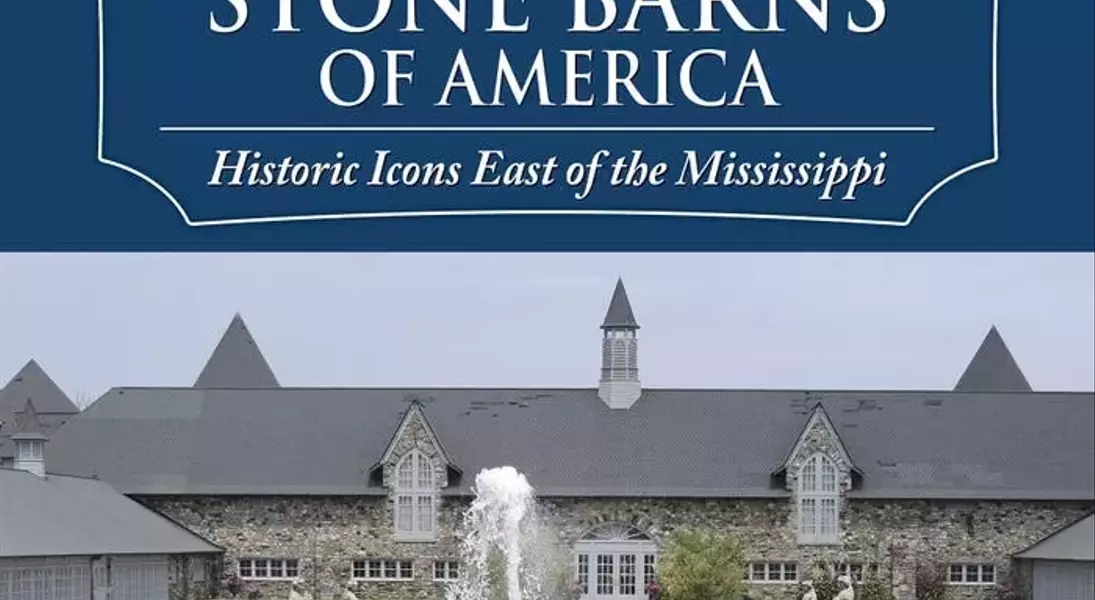
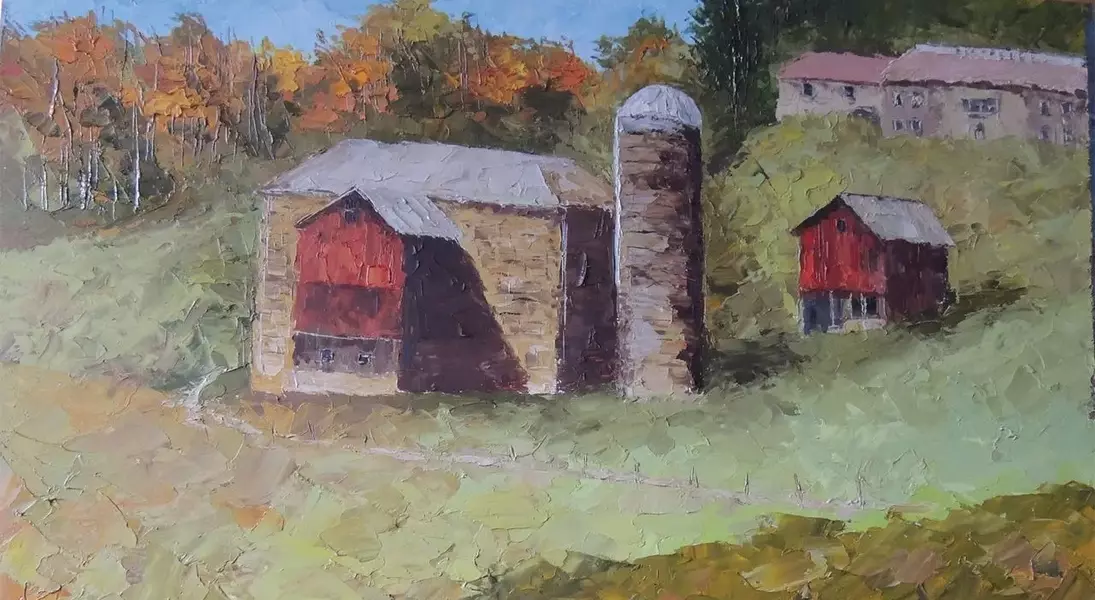
Robert Kroeger, an accomplished author and artist, has dedicated himself to preserving the narrative of America's historic barns. His newest publication, \"Stone Barns of America, Historic Icons East of the Mississippi,\" is a testament to this commitment, offering a vibrant exploration of these often-overlooked structures. Through extensive research and artistic rendering, Kroeger not only documents these architectural treasures but also champions their legacy, reminding us of their crucial role in the nation's agricultural past and present.
Delving into the Enduring Legacy of Stone Barns Across America
In a profound endeavor to safeguard America's rich agricultural heritage, acclaimed author and artist Robert Kroeger has unveiled his latest literary masterpiece, \"Stone Barns of America, Historic Icons East of the Mississippi.\" This meticulously crafted book, released in the early autumn of 2025, serves as an illuminating journey into the heart of these resilient structures, presenting a vibrant tapestry of their history, construction, and the compelling narratives they embody.
Kroeger, a retired dentist and second-generation artist with a deep-seated passion for preserving historical edifices, embarked on a multi-year odyssey to bring this project to fruition. Unlike previous undertakings, which benefited from established listings of barn types, his search for stone barns required a painstaking, state-by-state investigation. Collaborating with barn enthusiasts, historical societies, and leveraging online resources, Kroeger meticulously identified and visited forty-six stone barns scattered across twenty states, primarily east of the Mississippi River.
The book, a 168-page full-color volume, features forty-eight of Kroeger's poignant paintings and fifty-eight captivating photographs. These visual elements are complemented by engaging anecdotes that breathe life into the structures, recounting tales of endurance, community resilience, and even their near demise. Kroeger's artistic insight shines through as he acknowledges the often-anonymous master stonemasons whose artistry laid the foundations for these enduring monuments. He highlights areas such as southeastern Pennsylvania, western New Jersey, and northern Maryland as particularly rich in these stone marvels.
A notable focus of Kroeger's research led him to Michigan, where he documented the majestic fieldstone barns of Charlevoix's Castle Farms and the charming cobblestone El Jireh barn nestled in a steep incline at East Jordan. The latter presented a delightful surprise: a smaller, round barn ingeniously repurposed from an old silo, both of which grace the book's cover.
Beyond aesthetics, Kroeger's work provides a comprehensive understanding of stone barn construction. He elucidates various types of stone and rock, their origins, and the inherent challenges involved in working with them. He introduces readers to the specialized terminology of stone barn building, contrasting European traditions—such as the "cruck," a curved wooden roof support—with their absence in American-built stone barns. During his travels, Kroeger observed that while European stone barns date back as far as 1340, the oldest he identified in the U.S. was constructed in Virginia in 1745, underscoring a distinct historical timeline.
Kroeger's dedication extends beyond the pages of his book. His project is fundamentally philanthropic, aiming to generate funds for historical societies in Ohio and Indiana. As part of this initiative, paintings featured in the book are being auctioned online throughout November via biddingowl.com, under the patronage of the Hocking County Historical Society. This endeavor provides tangible support for the preservation efforts of these vital cultural institutions. For those eager to delve deeper into Kroeger's work, his website, robertkroeger.com, offers more information, and the book itself is available for purchase through acclaimpress.com, Amazon, and Barnes & Noble.
From the perspective of a discerning observer, Robert Kroeger's profound work on stone barns resonates deeply. In an era where the rapid pace of change often leads to the demolition or neglect of historical structures, his dedication to documenting and celebrating these enduring symbols of American ingenuity and perseverance is not merely commendable but essential. His artistry and meticulous research serve as a powerful reminder that history is not just found in textbooks but is etched into the very stones of our built environment. This book is more than a collection of images and facts; it is an urgent plea to recognize, cherish, and protect the architectural heritage that defines our collective past. It inspires a renewed appreciation for the skilled hands that shaped these magnificent barns and prompts us to consider our own role in ensuring their stories continue to be told for generations to come. It underscores the vital importance of preserving these tangible links to our agricultural roots and the communities that thrived around them.
