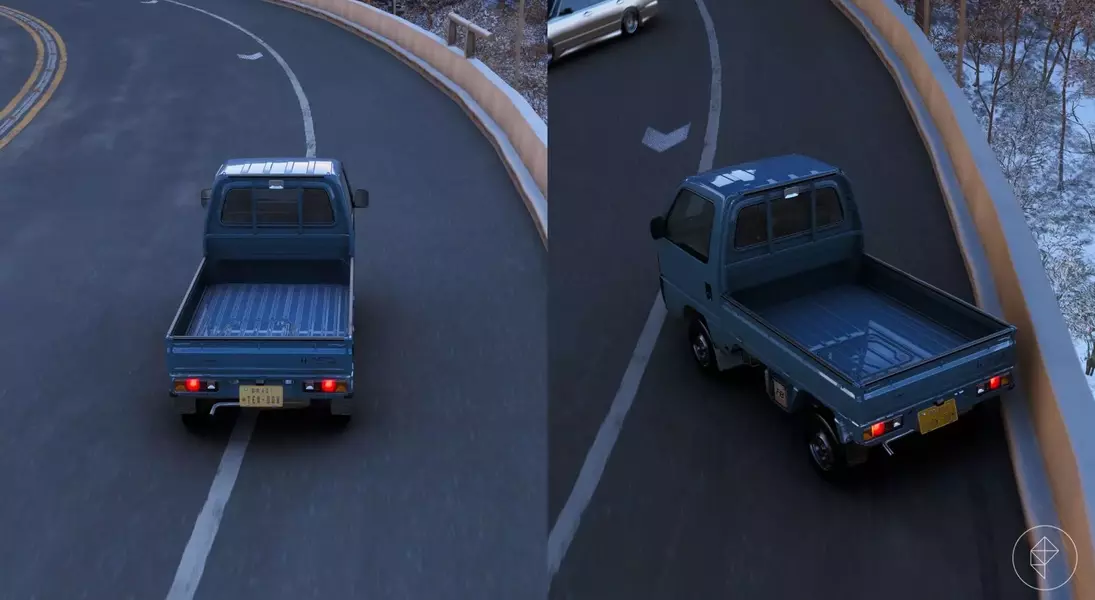
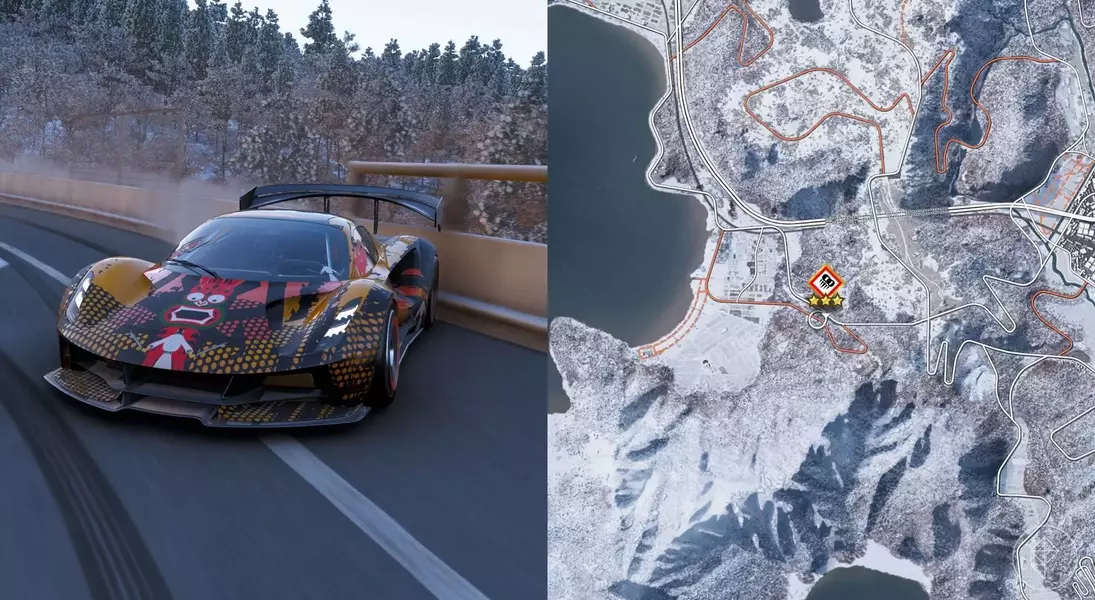
Executing a 'drift tap' in Forza Horizon 6 involves skillfully brushing a wall with your car's rear while simultaneously drifting. This specialized technique is an integral part of the winter challenges within the Horizon Decades series of the Festival Playlist, necessitating prompt acquisition of this ability. While drifting itself presents a considerable challenge, mastering this advanced variant might seem daunting. Nevertheless, a straightforward approach exists, allowing even those unfamiliar with basic drifting to successfully perform a drift tap.
To successfully perform a drift tap, begin by navigating to the Kawazu Nanadaru Loop Bridge Drift Zone, distinguished by its extensive solid wall that runs alongside most of the zone. This location also benefits from rendering other vehicles invisible upon starting, ensuring an unobstructed practice area. Although any vehicle can be used for this challenge, utilizing a car specifically designed for drifting or a high-speed model will simplify the task. For instance, the Lotus Evija Forza Edition is an excellent choice, though even a standard Honda Acty can suffice. Position your vehicle in second or third gear, driving precisely over the white line adjacent to the outer wall. Initiate the drift by briefly engaging the e-brake, then subtly steer your car away from the wall until its rear section makes light contact.
For those using slower vehicles, descending the slope rather than ascending will facilitate speed generation, making the maneuver easier to execute. The 'Bouncing off the Walls' challenge mandates three successful drift taps. It is important to note that these cannot be performed consecutively; a brief pause is required between each attempt. Consequently, you may need to traverse the Kawazu Nanadaru Loop Bridge multiple times to fulfill the challenge's requirements.
Mastering complex in-game maneuvers like the drift tap not only enhances gaming prowess but also cultivates persistence and strategic thinking. Each successful attempt builds confidence and demonstrates the value of practice and adapting techniques to overcome perceived difficulties. This process mirrors real-life problem-solving, where breaking down complex tasks into manageable steps leads to ultimate achievement and a deeper appreciation for the effort invested.
