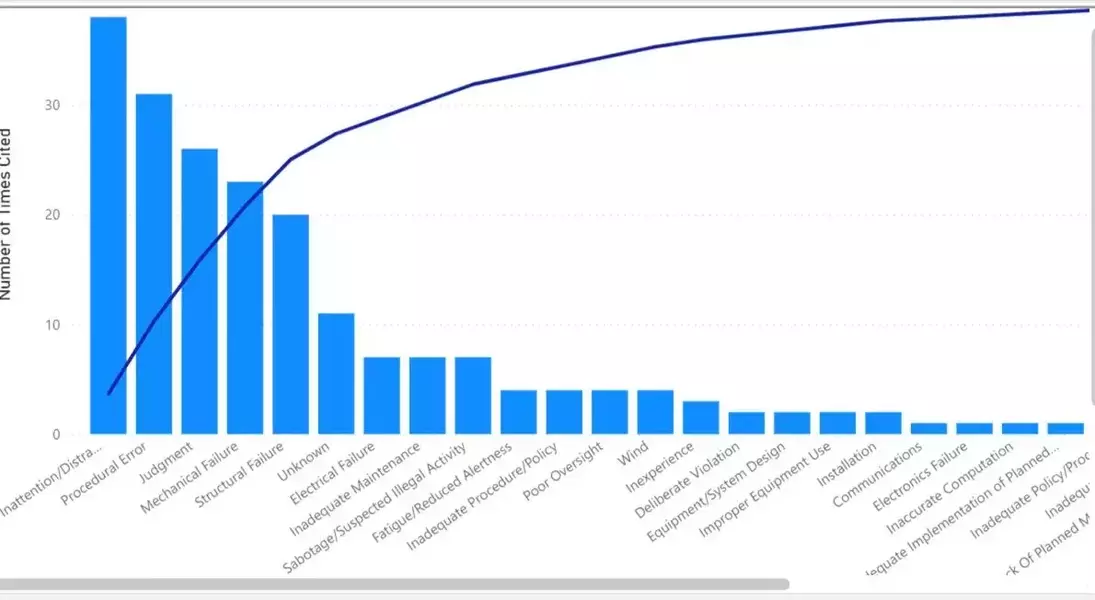

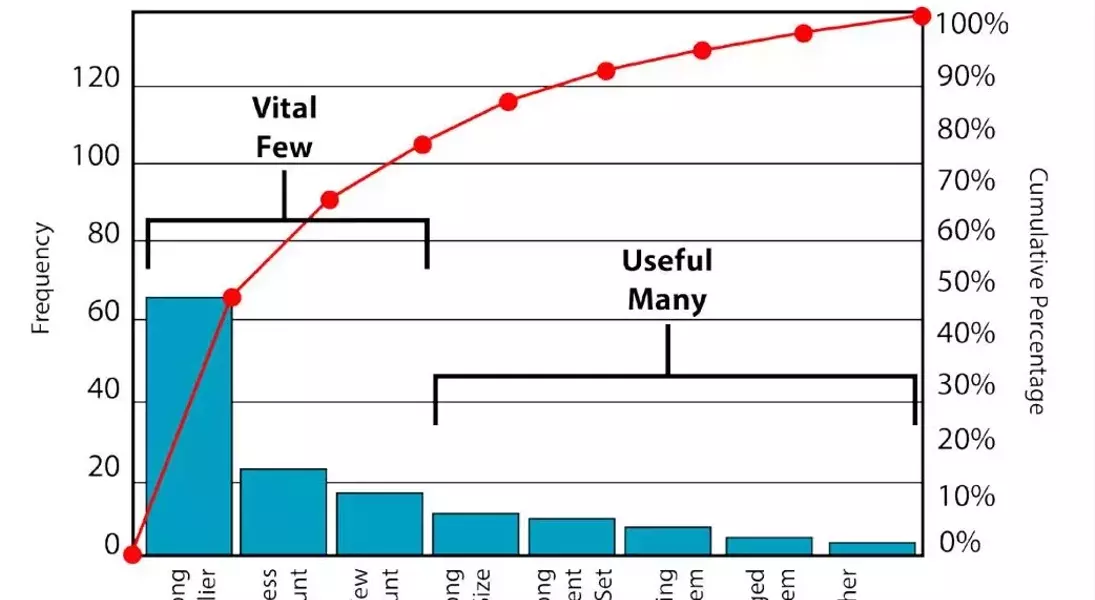
Understanding Pareto Analysis: At its core, Pareto analysis is a decision-making strategy grounded in the well-known 80/20 rule. This principle asserts that approximately 80% of effects stem from 20% of causes. By pinpointing these critical few causes, organizations can strategically direct their efforts and resources towards the areas that will yield the most significant improvements, whether in project management or process optimization.
Implementing Pareto Analysis: This analytical approach is highly effective when variables are visually represented in a Pareto chart, which serves to rank issues by their impact. The method originated from Italian economist Vilfredo Pareto's observation in 1906 that 80% of Italy's land was owned by 20% of its population. Joseph Juran later applied this 'principle of unequal distribution' to the business world, highlighting that a small percentage of defects often cause the majority of production problems. By focusing on resolving these key issues, businesses can achieve substantial improvements with minimal input, thereby optimizing their most valuable resource: time.
Steps to Creating a Pareto Chart and Its Applications: To conduct a Pareto analysis, one must first identify problems and their underlying causes, then quantify their negative impact, such as lost revenue or customer complaints. These problems are then categorized and prioritized based on their scores. The construction of a Pareto chart involves listing problems, establishing a standard measure (like frequency or cost), collecting data over a defined period, calculating percentages, and then plotting this data in descending order of impact. The chart typically combines bars for individual items and a line for cumulative percentages, making it easy to visualize the most impactful issues. While powerful for identifying problems and their root causes, Pareto analysis primarily offers a qualitative view, focusing on 'what' the problems are rather than 'how' to solve them, and relies on historical data, which may not always predict future scenarios accurately.
Ultimately, Pareto analysis equips decision-makers with a robust framework to navigate complex situations, ensuring that efforts are concentrated where they matter most. It empowers organizations to efficiently tackle challenges, fostering a culture of strategic problem-solving and continuous improvement. Embracing this analytical tool enables a more focused and impactful approach to achieving desired outcomes, leading to sustained progress and success.
