
A Maryland farmer has pioneered a transformative agricultural model by converting vast tracts of land from conventional crops to miscanthus grass, establishing a dominant position in the poultry bedding market. This strategic shift, driven by a long-term vision and significant upfront investment, underscores a successful venture into perennial crop cultivation. The innovative approach not only diversifies revenue streams for the farm but also addresses a critical demand within the regional poultry industry, demonstrating the potential for sustainable and high-value niche markets in agriculture.
This pioneering endeavor showcases how embracing alternative crops can lead to substantial economic benefits and environmental advantages. The cultivation of miscanthus, a robust perennial, offers a reduced need for annual replanting and fewer demands on soil nutrients compared to traditional row crops, contributing to more sustainable farming practices. The collaboration between the farmer and a dedicated agricultural technology company highlights the importance of partnerships in developing and scaling up specialized markets for innovative agricultural products.
Pioneering Miscanthus Cultivation
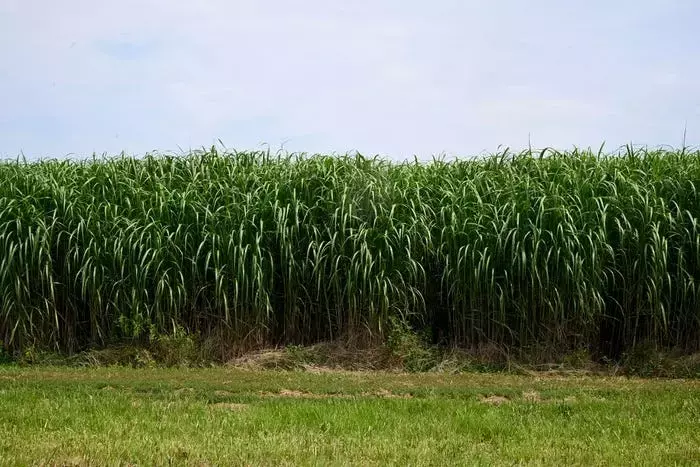
John Luthy, a farmer from Maryland, embarked on an ambitious journey to revolutionize his farm's output by dedicating extensive acreage to miscanthus grass. This strategic pivot from conventional row crops has positioned his operation as a major supplier of poultry bedding for leading integrators in the Delmarva region. The transition, though demanding an initial substantial financial commitment and considerable patience, has yielded significant returns, validating his foresight in adopting this less conventional agricultural path. His success demonstrates the viability of miscanthus as a valuable and sustainable commodity.
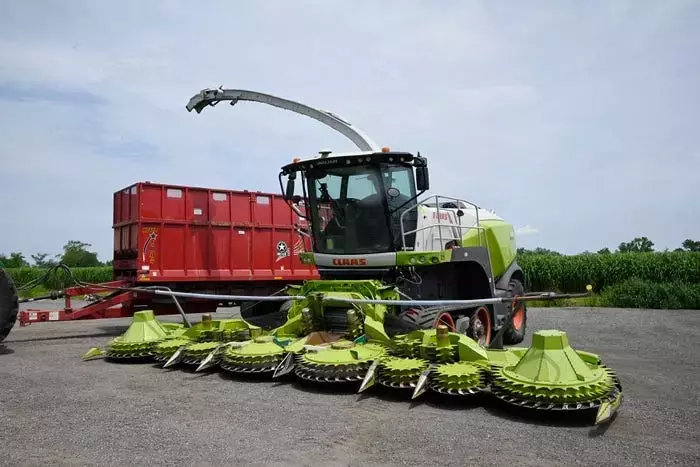
Luthy's commitment to miscanthus began six years ago, with an initial conversion of 900 acres. Today, his miscanthus fields span 2,700 acres, surpassing his traditional corn, soybean, and wheat cultivation in scale. He provides the entirety of Tyson's bedding and a substantial share of Mountaire's requirements, indicating a thriving and expanding market. The cultivation process, in collaboration with AGgrow Tech, involves planting miscanthus rhizomes that, despite an initial cost of $1,200 per acre, establish a perennial crop requiring minimal intervention after the third year. This long-term investment model, supported by the farm's other operations during the initial growth phase, has proven highly profitable and sustainable, with harvesting occurring from November through winter using specialized equipment.
Expanding Markets and Sustainable Practices
While miscanthus offers significant long-term advantages, its broader adoption faces hurdles, primarily due to the considerable initial investment and the limited availability of established markets. AGgrow Tech, a key partner in this venture, has been instrumental not only in the propagation of miscanthus plants but also in actively developing and securing end markets for the crop. Their efforts have been crucial in showcasing the diverse applications and benefits of miscanthus, extending beyond its current primary use in poultry bedding.
Initially introduced to the U.S. as an ornamental plant, miscanthus has often been considered for biofuel production, though its conversion efficiency posed challenges. AGgrow Tech, established in 2010, spent five years perfecting cultivation for large-scale planting and simultaneously worked to convince industries, particularly the poultry sector, of miscanthus's superior qualities over traditional bedding materials like wood. Through extensive testing and equipment modification, they developed an optimal product, leveraging the highly absorbent pith of the miscanthus stems. The company is now exploring new markets, including partnerships with pulp plants to create building materials, garden mulch, and erosion control products, underscoring the plant's versatile potential. Furthermore, miscanthus's ability to thrive on marginal lands, its sterile nature, and its nutrient recycling properties — where leaves naturally enrich the soil upon falling — highlight its environmental benefits and potential for sustainable agriculture across various states.
