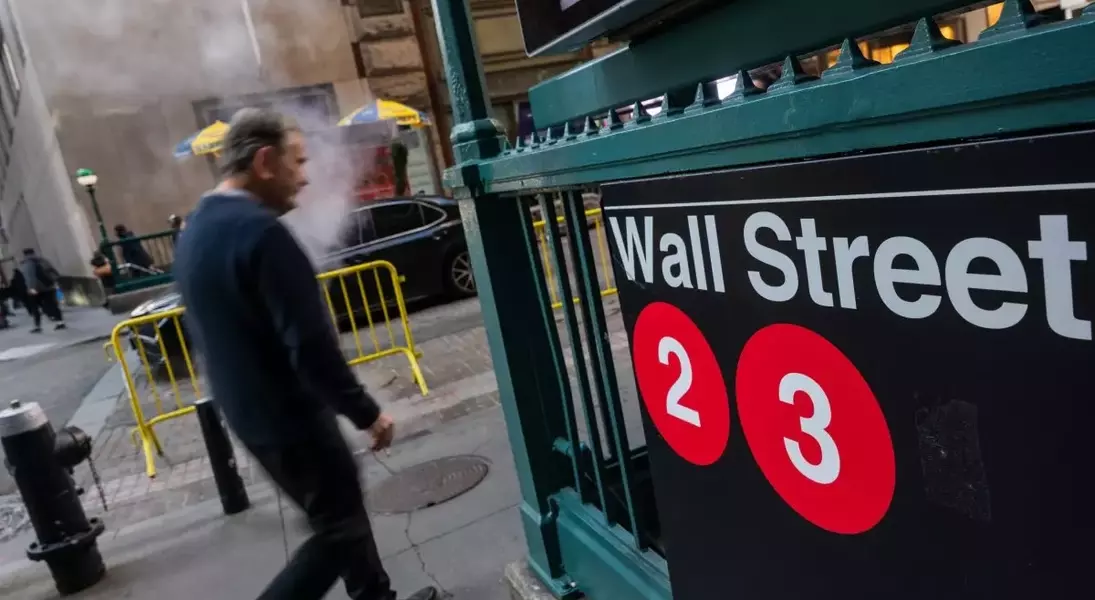
In a significant economic development, Wall Street futures experienced a downturn this week amid concerns over a potential government shutdown before the holiday season. Lawmakers are currently in discussions regarding a temporary spending bill to prevent this scenario. The S&P 500 and Dow Jones Industrial Average futures saw declines of 1% and 0.6%, respectively, ahead of the market opening. The inability to reach a two-thirds majority for the spending bill has raised concerns about the stability of both the financial markets and government operations. This situation marks a setback for President-elect Donald Trump and his supporters, who had voiced criticism over the bipartisan deal aimed at averting a shutdown during the festive period.
Detailed Reporting on Market Reactions and Political Stalemate
As winter approached, investors faced uncertainty when Wall Street futures dipped sharply on December 20, 2024, due to the looming possibility of a government shutdown. The House Speaker, Mike Johnson, acknowledged the challenge but remained committed to finding an alternative solution. The vote's failure highlighted the political divisions within Congress, particularly among Republicans. This deadlock could foreshadow further turbulence once Trump returns to the White House with a Republican-controlled Congress, reminiscent of the longest U.S. government shutdown that occurred during the 2018 Christmas season.
Beyond the immediate political drama, the financial markets showed mixed reactions. FedEx shares surged by 9% in premarket trading after exceeding second-quarter profit expectations and announcing plans to spin off its freight division. Conversely, Nike and U.S. Steel experienced declines of 4.2% and 7%, respectively, due to lowered guidance and negative earnings preannouncements. Investors also awaited the release of U.S. personal spending data for November, adding another layer of anticipation.
Globally, European markets reflected similar concerns. By midday, Britain’s FTSE 100 fell 0.9%, France’s CAC 40 dropped 1.2%, and Germany’s DAX declined 1.5%. In Asia, Tokyo’s Nikkei 225 closed down 0.3%, influenced by positive inflation data. Crude oil prices also slipped, with U.S. benchmark crude dropping to $68.93 per barrel and Brent crude falling to $72.47 per barrel.
Analysts like Carl B. Weinberg from High Frequency Economics warned of the challenges ahead, citing political uncertainties and potential trade disagreements. With government funding set to expire at midnight on Friday, lawmakers are expected to reconvene to address the crisis, hoping to pass legislation to avert a shutdown.
From a journalistic perspective, this event underscores the interconnectedness of political decisions and market stability. The inability to secure a bipartisan agreement highlights the need for more collaborative efforts in governance. As we move forward, it is crucial for policymakers to prioritize dialogue and compromise to ensure the smooth functioning of both government and economic systems. The coming weeks will be pivotal in determining how effectively these challenges can be managed.
