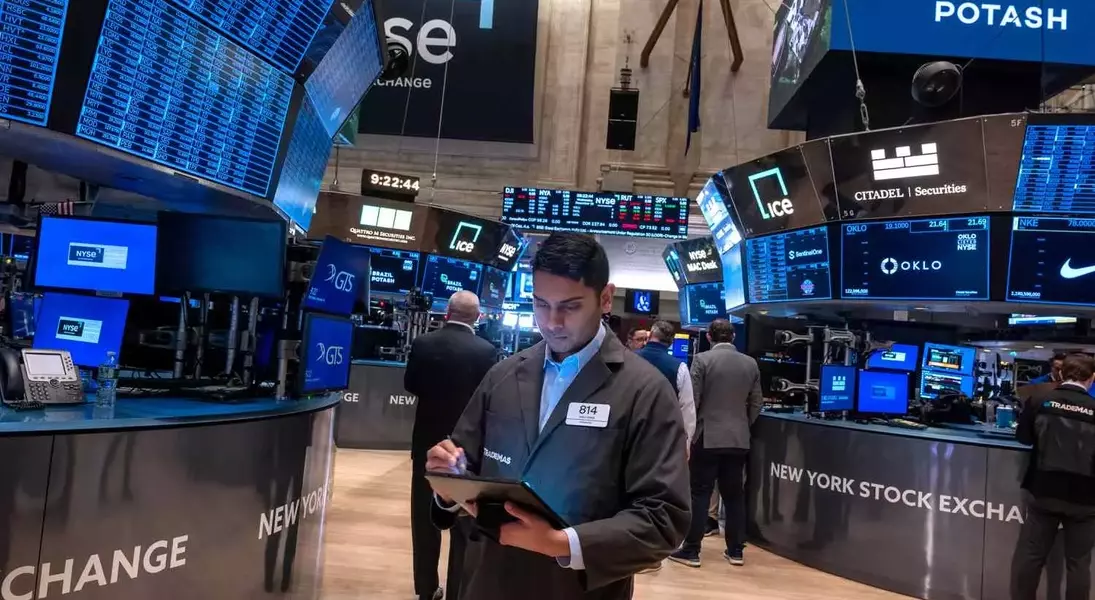
Financial markets experienced a turbulent start to Friday, with major indices showing signs of caution as investors grapple with economic indicators and policy shifts. Early trading saw declines across key benchmarks, reflecting ongoing concerns about inflation and monetary policy. Meanwhile, corporate earnings reports and geopolitical developments added layers of complexity to the trading landscape.
Navigate Market Uncertainty with Strategic Insights for Investors
Economic Indicators Signal Mixed Sentiment
Economic data released early Friday morning provided a glimmer of hope amid market volatility. The Personal Consumption Expenditures (PCE) index, closely monitored by policymakers, indicated that price increases in November were less severe than anticipated. This positive news helped temper initial losses seen in premarket trading. However, the broader context remains one of uncertainty, with investors still wary of potential inflationary pressures. Analysts suggest that while the latest figures offer some relief, they do not signal an end to inflation challenges. Long-term trends will continue to influence investor sentiment and market performance.The 10-year Treasury yield, a key indicator of future interest rate expectations, dipped slightly to 4.52% from its previous close at 4.57%. This movement reflects shifting perceptions about the Federal Reserve’s stance on monetary policy. Despite recent fluctuations, yields remain elevated compared to earlier this year, underscoring the market’s sensitivity to central bank actions. Historically, higher yields can impact various sectors differently, with particular effects on technology stocks and growth-oriented companies. Investors are carefully analyzing these dynamics to adjust their portfolios accordingly.Corporate Earnings and Strategic Moves Drive Stock Performance
Several notable corporations reported earnings or made strategic announcements that influenced stock movements on Friday. Tesla, the electric vehicle giant, saw its shares drop by 2%, signaling investor concerns over competition and market saturation. Other large-cap tech firms like Nvidia, Apple, Microsoft, Alphabet, Amazon, and Meta Platforms also experienced declines, reflecting broader sector weakness. These companies play a crucial role in shaping market trends, and their performance is closely watched by analysts and investors alike.Nike, the iconic sportswear brand, faced a 2% decline following its first earnings report under new CEO Elliott Hill. While the company exceeded expectations, its forward guidance was less optimistic, raising questions about future growth prospects. Similarly, Novo Nordisk, known for its innovative weight-loss medications, saw a significant 20% drop after disappointing trial results for a new obesity treatment. These examples highlight how individual company performance can have ripple effects across the market, influencing investor confidence and trading patterns.On a more positive note, FedEx announced plans to spin off its freight business into a separate public entity, a move that initially boosted its stock by up to 7%. Although the gains moderated later in the day, the announcement underscores the importance of strategic restructuring in maintaining competitiveness. Such moves often signal a company’s commitment to optimizing operations and enhancing shareholder value, which can be critical during periods of economic uncertainty.Commodities and Cryptocurrencies Reflect Market Dynamics
Beyond equities, other asset classes also exhibited notable activity. Bitcoin, the leading cryptocurrency, rebounded from earlier lows to trade around $95,500, though it remained below the record high of $108,000 set earlier in the week. The volatility in crypto markets mirrors broader financial trends, with investor sentiment swinging between optimism and caution. Gold futures, traditionally seen as a safe-haven asset, climbed 1% to approximately $2,630 per ounce, reflecting demand for stability in uncertain times.Crude oil futures, on the other hand, edged down by about 1%, influenced by supply and demand factors as well as geopolitical tensions. Energy markets are particularly sensitive to global events, and traders are closely monitoring developments that could impact oil prices. The interconnectedness of different asset classes highlights the complexity of modern financial markets, where changes in one area can quickly reverberate through others.Policy Developments Add Layers of Complexity
Adding to the mix, investors kept a watchful eye on Washington D.C., where lawmakers were working diligently to prevent a government shutdown. The political climate can significantly affect market stability, especially when fiscal policies and budget negotiations come into play. Additionally, Friday marked a triple-witching day, characterized by the simultaneous expiration of stock options, index options, and index futures contracts. This convergence often leads to heightened trading activity and increased volatility, making it a critical period for market participants.In summary, the confluence of economic data, corporate actions, and policy developments created a challenging yet dynamic trading environment on Friday. Investors navigated these complexities with a mix of caution and opportunity-seeking, all while keeping a close eye on evolving market conditions.