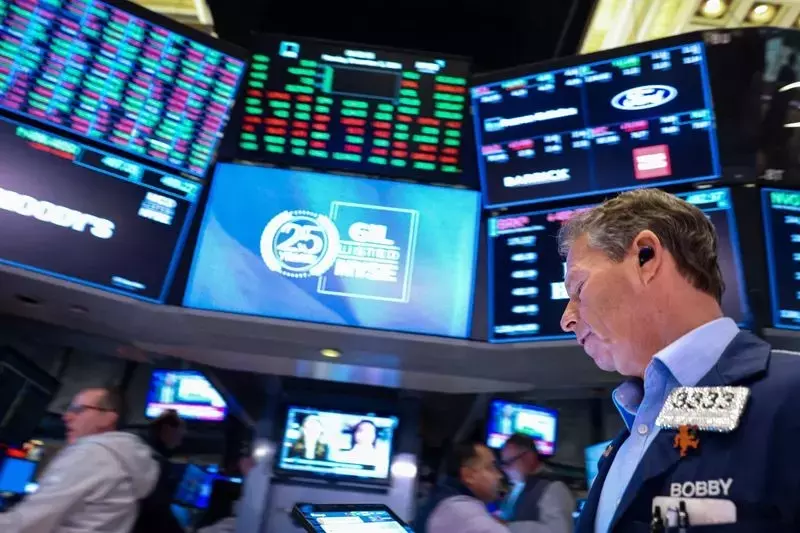
On Monday, the S&P 500 and Dow Jones Industrial Average experienced declines in a trading session marked by reduced volume due to the holiday season. Despite a temporary reprieve from a potential government shutdown, investors remain cautious as they prepare for a more gradual reduction in interest rates by the Federal Reserve next year. The market has seen fluctuations this month, particularly after the Fed revised its forecast for rate cuts, leading to a recalibration of expectations. A recent inflation report offered some relief, but overall sentiment remains guarded.
Federal Reserve's Revised Rate Outlook Weighs on Market Performance
Investors are adjusting their strategies following the Federal Reserve's updated projections for interest rate reductions in 2025. The central bank now anticipates only two quarter-point cuts, down from its earlier estimate of four. This shift has prompted traders to reassess the pace of monetary easing, impacting market dynamics. Additionally, the annual inflation outlook has been raised, adding to the uncertainty surrounding economic growth and corporate profitability. Market participants are closely monitoring these changes, as they could influence investment decisions in the coming months.
The Federal Reserve's decision to lower its forecast for rate cuts has introduced a new layer of caution into the market. Investors had initially anticipated a more aggressive easing of monetary policy, but the revised outlook suggests a slower approach. This adjustment has led to increased scrutiny of economic indicators, such as inflation reports, which have provided mixed signals. While a recent cooler-than-expected inflation reading brought some optimism, the overall sentiment remains subdued. Analysts suggest that the market is likely to experience volatility as it adapts to the changing monetary landscape. Moreover, the impact of these policy shifts on sectors like technology and consumer goods is being carefully evaluated, with some companies showing resilience while others face challenges.
Holiday-Thinned Trading and Sector-Specific Developments Influence Market Trends
Trading volumes have thinned considerably as the holiday season approaches, contributing to heightened volatility. U.S. stock markets will close early on Tuesday and remain shut for Christmas on Wednesday, further limiting trading activity. Despite these constraints, certain sectors have shown signs of strength. For instance, the Nasdaq Composite has gained ground, driven by positive performance in chipmakers and megacap stocks. Companies like Nvidia and Meta Platforms have posted gains, reflecting investor confidence in tech-heavy industries. Meanwhile, Apple continues to edge closer to a $4 trillion market capitalization, solidifying its position as the world’s most valuable company.
In addition to broader market trends, several sector-specific developments have influenced trading patterns. Qualcomm saw its shares rise after a favorable court ruling regarding licensing agreements with Arm Holdings. Conversely, Arm's shares declined as the company seeks a retrial. In other news, Walmart faced a setback following allegations of imposing excessive fees on delivery drivers, causing its stock to drop. On the healthcare front, Eli Lilly benefited from FDA approval for a new weight-loss treatment, while competitors in the sleep apnea device market saw their shares fall. These individual events highlight the diverse factors shaping market performance during this period of transition and uncertainty.
