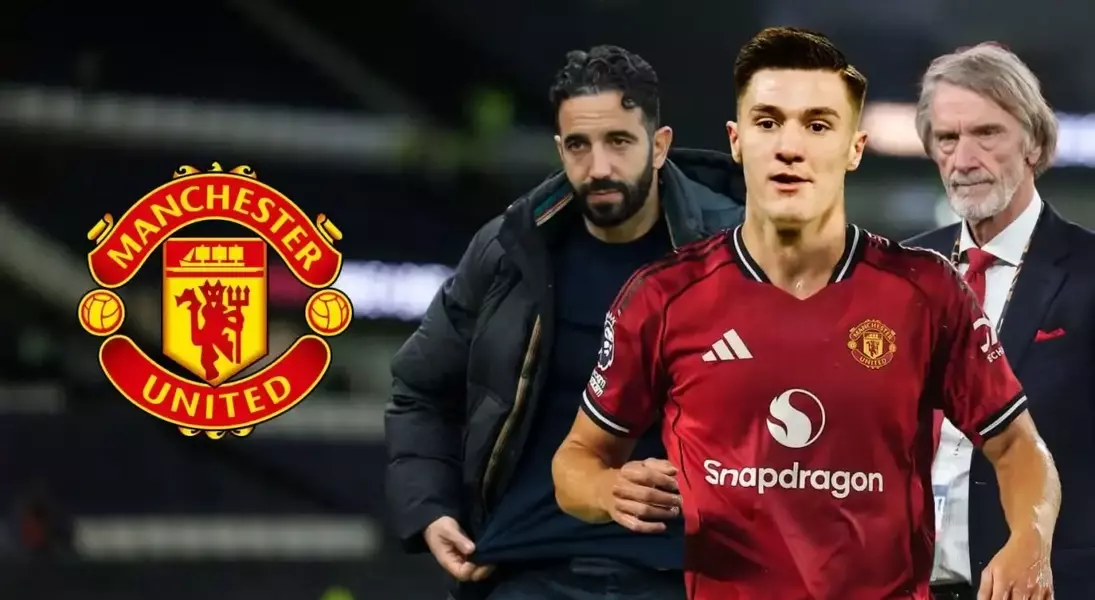
Manchester United finds itself embroiled in a deepening crisis, with growing calls for accountability directed at various figures within the club. The spotlight is firmly on manager Ruben Amorim, whose tactical decisions and the team's disappointing form have drawn widespread criticism. Beyond the dugout, key players, notably Benjamin Sesko, are facing scrutiny for their on-pitch displays and perceived shortcomings, further compounding the club's challenges. This period of intense examination also extends to the club's leadership, including Sir Jim Ratcliffe and Jason Wilcox, as fans and pundits alike demand answers and solutions to navigate this turbulent phase. The club's struggles are evident across all departments, from midfield deficiencies to goalkeeping errors, painting a grim picture of a team struggling to find its identity and regain its competitive edge.
The current struggles at Old Trafford are primarily attributed to manager Ruben Amorim, who is widely seen as being too rigid in his tactical approach and unable to inspire progress. Numerous supporters have voiced their disillusionment, suggesting that his chosen formation is ineffective and his public statements often convey a sense of negativity rather than solutions. The team's recent performance, particularly a 'dire' and 'embarrassing' display against a lower-league opponent, has intensified calls for his immediate departure, with many believing that a change in management is the only way forward. Fans are questioning his leadership, especially after instances such as his perceived avoidance during a penalty shootout, which has been interpreted as a lack of confidence in his squad.
Player performance is another significant concern, with particular focus on expensive new striker Benjamin Sesko. Critics highlight his apparent lack of impact during matches, questioning his value for money and his reluctance to step up in critical moments, such as being the last outfield player to take a penalty in a shootout. This perceived timidity is viewed as symptomatic of a broader issue within the dressing room, pointing to a lack of conviction and leadership among the players. Furthermore, the midfield is described as 'absolutely pony,' and the goalkeepers are deemed 'beyond useless,' exacerbating the team's vulnerabilities. The belief among many is that the current squad lacks the necessary talent and desire, with some arguing that even a 'pretty good Premier League team' is hidden within, but is being hindered by the present setup.
The ownership and sporting director, Sir Jim Ratcliffe and Jason Wilcox, are also under considerable pressure. Fans argue that the club's hierarchy has failed to provide the manager with the necessary resources and personnel to implement his vision, particularly in addressing critical gaps in midfield and goalkeeping. There's a strong sentiment that if crucial signings aren't made swiftly, it signals a deeper problem within the club's decision-making process. The constant managerial changes and the inability to build a stable, competitive team are leading to a growing sense of cynicism among the fanbase, who feel the club is perpetually fumbling rather than engaging in a proper rebuilding process. Some even suggest that the current state reflects a 'normal' period for Manchester United outside of its most successful eras, indicating a return to historical mediocrity.
Ultimately, the current situation at Manchester United is characterized by a confluence of factors: a manager under immense scrutiny for tactical inflexibility, players failing to meet expectations, and a leadership facing significant pressure to address systemic issues. The disappointment among the fanbase is palpable, stemming from consistent underperformance and a perceived lack of direction. This period of struggle has led to a re-evaluation of the club's identity and future trajectory, with many advocating for comprehensive structural changes to restore its former glory. The path forward appears fraught with challenges, requiring decisive action and a clear long-term strategy to overcome the widespread discontent and rebuild a competitive footballing institution.
