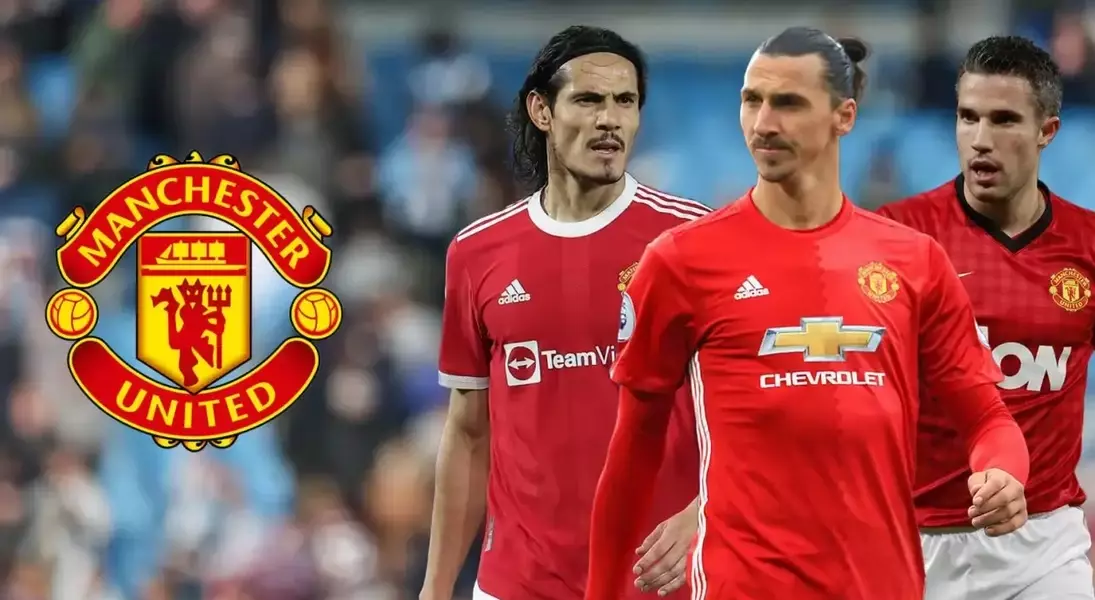
Manchester United has cultivated a distinctive tradition of acquiring seasoned attackers, a strategy that has often yielded impressive results on the pitch. As discussions around the potential transfer of Aston Villa's Ollie Watkins gain traction, it's timely to reflect on how older, more experienced goalscorers have historically influenced the club's fortunes. This retrospective examines the impactful journeys of five prominent veteran strikers who, against the odds, carved out memorable chapters in Manchester United's illustrious history, proving that age is merely a number when talent and determination converge.
The Enduring Impact of Seasoned Strikers at Old Trafford
Throughout its rich history, Manchester United has occasionally turned to the wisdom and experience of veteran strikers, and these strategic acquisitions have often paid handsome dividends. This trend is particularly relevant now, as whispers link the club to Aston Villa's formidable forward, Ollie Watkins. A closer look at five iconic figures reveals the profound influence these seasoned professionals have had at the Theatre of Dreams.
In late 2020, during the unique challenges of the pandemic era, Edinson Cavani, then 33, joined Manchester United on a free transfer. Arriving from Paris Saint-Germain as their all-time leading scorer, his move provided a much-needed morale boost following a significant defeat. Despite often starting from the bench, the Uruguayan phenomenon embraced the iconic No. 7 shirt and delivered 10 league goals and 17 across all competitions in his debut season, playing a crucial role in securing a second-place finish in the Premier League. However, his second season was marred by the return of Cristiano Ronaldo, who not only claimed Cavani's starting spot but also his coveted jersey, leading to a noticeable decline in his contributions and a somewhat strained departure in 2022.
The much-anticipated return of Cristiano Ronaldo to Old Trafford in the summer of 2021 was met with immense fanfare. At 36, Ronaldo proved his enduring class by finishing the 2021/22 season as the club's leading scorer with 24 goals in 38 appearances, often delivering decisive moments in an otherwise turbulent campaign. His individual brilliance shone through despite the team's struggles, earning him the Player of the Season award. However, the arrival of Erik ten Hag as manager signaled a shift in strategy, with Ronaldo finding himself on the bench more frequently. This led to a very public fallout, culminating in his departure from the club in November 2022, effectively concluding his illustrious second stint at Manchester United.
When Zlatan Ibrahimović arrived at Old Trafford in 2016, at the age of 34, he brought with him an aura of unparalleled confidence and an impressive scoring record from Paris Saint-Germain. Under Jose Mourinho, the Swedish maestro defied expectations, becoming United's top scorer with 27 goals in his inaugural season. His crucial contributions were instrumental in securing the League Cup and Europa League titles. A severe knee injury unfortunately cut his season short and impacted his subsequent contract. Upon his recovery, the arrival of Romelu Lukaku saw Zlatan's starting place and No. 9 shirt claimed, leading to his eventual move to LA Galaxy in March 2018. Nevertheless, his initial season remains a cherished memory for many United supporters.
The signing of Robin van Persie from Arsenal in the summer of 2012, at 29, was a bold statement of intent, especially given Manchester City's interest. His move proved to be a masterstroke, as the Dutch striker's immediate impact was nothing short of transformative. In his debut season, he netted 26 league goals, securing the Golden Boot and, more importantly, guiding Manchester United to their 20th league title under the legendary Sir Alex Ferguson. Van Persie's almost "Cantona-esque" influence was undeniable, establishing him as a fan favorite. However, Ferguson's unexpected retirement in 2013 marked a downturn. While Van Persie continued to score in double figures under David Moyes and Louis van Gaal, the post-Ferguson era proved challenging, highlighting the profound impact of the managerial change on the team's overall performance and his own output.
Defying the common narrative of immediate success, Teddy Sheringham experienced a challenging first season at Old Trafford after joining in 1997 at 31, tasked with the near-impossible feat of replacing Eric Cantona. Despite a slow start, failing to reach double figures in the league, Sheringham's resilience paid off spectacularly. In his second season, though playing fewer Premier League games, he delivered career-defining goals from the bench in both the FA Cup final and the dramatic Champions League final in 1999, cementing his place as a hero of the historic Treble-winning side. His third season was still a personal battle, but in his fourth and final year, at 35, Sheringham finally broke the 20-goal barrier across all competitions, scoring 15 in the league and earning the prestigious PFA Player of the Year award, demonstrating remarkable longevity and determination.
The narratives of these veteran strikers at Manchester United underscore a compelling truth: experience, skill, and an unwavering drive can defy age. While each player's journey had its unique challenges and triumphs, their collective impact on the club's legacy is undeniable. For Manchester United, investing in seasoned talent has frequently provided not just goals, but also leadership, resilience, and crucial moments of glory, serving as a powerful reminder that wisdom often brings an invaluable edge to the beautiful game.
