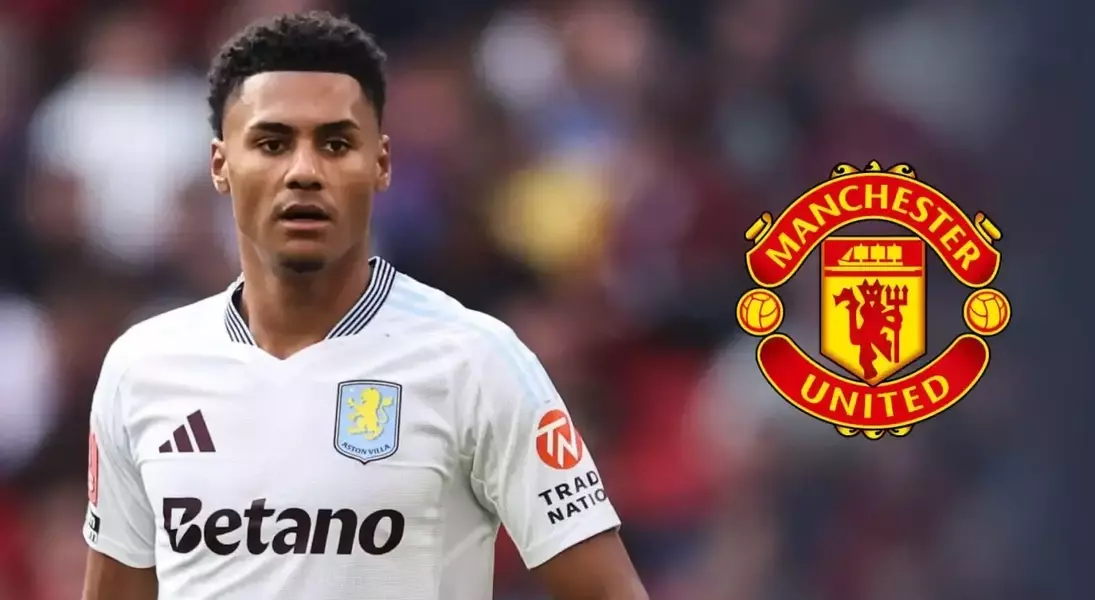
The potential transfer of Ollie Watkins to Manchester United has ignited a spirited debate, particularly concerning the proposed £45 million valuation. This discussion has brought to light conflicting perspectives, especially from certain media outlets and sports journalists, whose past commentaries and current analyses warrant closer examination. The perceived reasonableness of United's offer contrasts sharply with an Aston Villa-aligned journalist's impassioned rejection, raising questions about objectivity and factual accuracy in sports reporting. The narrative surrounding this transfer is further complicated by the media's propensity to sensationalize, often disregarding historical context or empirical data in favor of speculative and emotionally charged reporting.
Moreover, the debate extends beyond mere figures, touching upon the critical factor of a player's age in determining their market worth. As Watkins approaches the age of 30, a common threshold for declining transfer values and future sell-on potential, Manchester United's pragmatic approach to his valuation appears to align with broader market trends for seasoned players. This careful financial consideration, however, clashes with the passionate opinions of those who believe Watkins's talent transcends typical age-related depreciation. The media's role in shaping public perception and driving transfer narratives is undeniably significant, frequently prioritizing dramatic headlines over a balanced and well-reasoned assessment of market dynamics.
The Valuation Discrepancy: A Journalist's Critique and Market Realities
The proposed £45 million valuation of Ollie Watkins by Manchester United has sparked considerable discussion, with one prominent journalist, a known Aston Villa supporter, vehemently disagreeing with the figure. This particular individual's past journalistic endeavors have been marked by controversial viewpoints, including an infamous column from 2012 that advocated against perceived anti-British bias in football, raising questions about his impartiality when discussing British players' market worth. His current critique of Watkins's valuation appears to stem from a similar nationalistic sentiment, suggesting that British talent is consistently undervalued. He points to other players like Bryan Mbeumo and Matheus Cunha, whose higher valuations, he claims, expose an inconsistency in United's assessment of Watkins. However, his numerical comparisons contain clear mathematical errors, undermining the factual basis of his arguments. The broader market for players around Watkins's age typically sees much lower transfer fees, indicating that United's offer is, in fact, a sensible and market-aligned proposition, despite the passionate counterarguments.
Delving deeper into the journalist's past, his 2012 column, published in the Sunday Mirror, presented several highly questionable predictions and opinions. For instance, his assertion that David Moyes would be a perfect successor to Arsene Wenger at Arsenal, or even Sir Alex Ferguson at Manchester United, proved demonstrably false within a year. Similarly, his comparison of then-uncapped British players like Grant Holt and Rickie Lambert to established international talents like Olivier Giroud and Luis Suarez, suggesting the former were superior, demonstrated a clear bias and a lack of foresight. These historical examples highlight a pattern of subjective and often misguided commentary that now seems to influence his current strong stance on Watkins's valuation. While he argues that Watkins is undervalued by £30 million compared to Bryan Mbeumo's £65 million fee, a simple calculation reveals this to be incorrect. Furthermore, his dismissal of age as a limiting factor in a player's value contradicts established transfer market dynamics, where a player approaching 30 typically experiences a significant decline in sell-on potential. For Villa, a pragmatic decision might indeed involve accepting a substantial offer, given the limited historical precedent for high transfer fees for players in that age bracket. This critical analysis underscores the importance of discerning between informed commentary and biased, sensationalized reporting in the volatile world of football transfers.
Media Narratives and Player Perceptions in Transfer Speculation
The media's handling of the Ollie Watkins transfer saga also highlights a broader tendency to create dramatic narratives around player loyalty and past allegiances. News outlets have framed Watkins's potential move to Manchester United as an 'awkward question' for him, implying a conflict of interest because he reportedly supported Arsenal as a child. This angle, however, conveniently overlooks the common professional reality that footballers often play for clubs other than their childhood favorites. Such sensationalism extends to resurrecting old quotes from Watkins's former teammates, like Bryan Mbeumo, which are then presented as 'speaking volumes' about potential reunions. Yet, upon closer inspection, these quotes are often years old and extracted from their original context, serving only to fuel speculative headlines rather than providing fresh or relevant insights into current transfer dealings. The emphasis on these manufactured narratives overshadows a more realistic understanding of the business side of football and the pragmatic considerations that drive club decisions.
The recurring use of the phrase 'speaks volumes' in headlines, particularly when referencing outdated comments, is a testament to the media's reliance on clichés and their desperation to generate content. In Watkins's case, a five-year-old quote from Bryan Mbeumo about their playing relationship is repurposed to suggest a profound implication for a potential transfer. This practice not only misleads readers but also demonstrates a lack of new, substantive information. While the Express later reported that the 'Watkins silence' was 'broken' by Mbeumo himself, this subsequent 'breaking news' merely reaffirmed Mbeumo's high opinion of Watkins—a sentiment hardly surprising from a former teammate. This cycle of building a story around old information and then presenting a mundane update as significant highlights the media's role in constructing rather than simply reporting transfer narratives. It also underscores how player perceptions are often shaped by these external narratives, regardless of the underlying professional realities. Ultimately, the focus shifts from the strategic and financial complexities of a transfer to the personal, often manufactured, dramas that captivate public attention, illustrating a broader pattern in sports journalism where sensationalism often takes precedence over objective reporting.
