

Manchester United, a globally renowned football institution, finds itself in a peculiar position. Despite a recent history of underperformance in domestic competitions and a period of financial introspection, the club continues to assert its presence vigorously in the transfer market. This seemingly paradoxical situation prompts a deeper look into the intricate financial mechanisms that allow United to pursue high-value targets while adhering to increasingly stringent financial regulations. The club's strategic financial management, encompassing player amortization, income generation, and credit facilities, forms the bedrock of its continued spending power, even as it navigates substantial existing transfer debts and aims for greater fiscal stability.
Manchester United's Bold Financial Play in the Summer Transfer Window
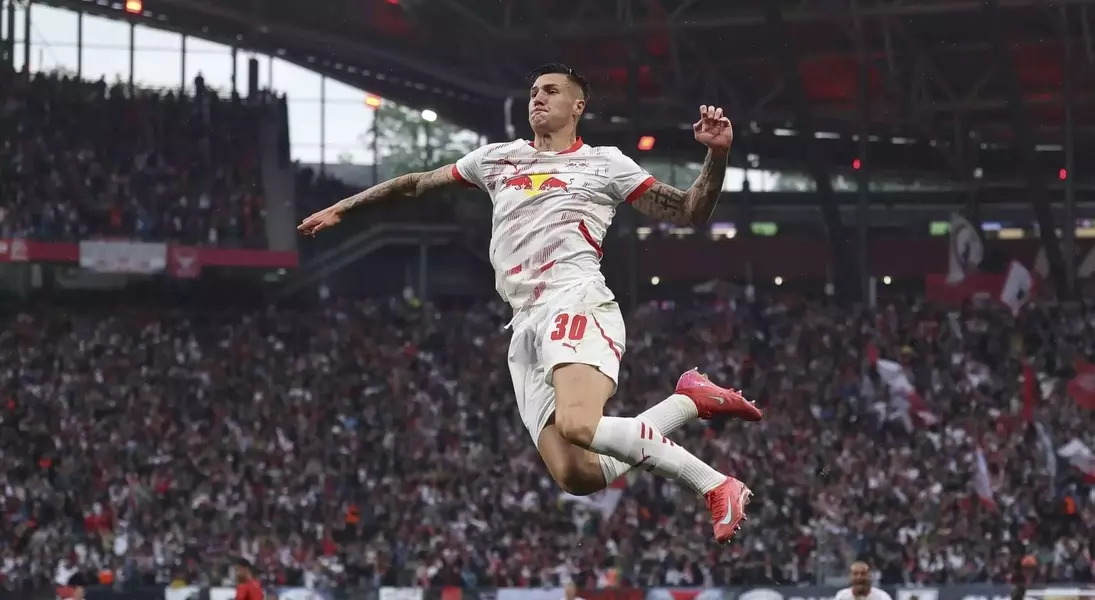
In a surprising turn of events for many observers, Manchester United, a footballing giant, has been notably active in the current transfer window, despite previous concerns regarding their financial health. On August 6, 2025, reports solidified their impending acquisition of Benjamin Sesko from RB Leipzig. This move follows the earlier arrivals of Matheus Cunha and Bryan Mbeumo, whose combined transfer fees alone amount to a significant sum. Such ambitious spending comes after a period where the club's owner highlighted the necessity of cost-cutting measures, and a season that saw United's lowest domestic league finish in half a century, with no European football revenue on the horizon. Questions have naturally arisen regarding the club's financial dexterity. Sources within the club suggest that while direct player sales have been limited, United has benefited from sell-on clauses for former players like Alvaro Carreras, Anthony Elanga, and Maxi Oyedele, bringing in over £20 million. Furthermore, a £5 million payment from Chelsea related to Jadon Sancho's loan has contributed to their coffers. The club's ability to maintain high transfer activity is also attributed to careful management of Profit and Sustainability Rules (PSR), with estimates suggesting a substantial loss could be absorbed without breaching regulations. Additionally, United's use of revolving credit facilities, and a recent repayment of £50 million on existing RCF borrowings in April 2025, has effectively expanded their capacity to borrow further, potentially up to an additional £140 million. While the full financial details of the 2024-25 season await release in September, these strategic financial maneuvers underscore United's commitment to reinforcing its squad despite a complex economic backdrop.
From a journalist's perspective, Manchester United's aggressive approach to the transfer market offers a compelling narrative on modern football economics. It highlights that traditional indicators of financial health, such as recent domestic performance or even public statements from ownership, do not always tell the whole story. The club's ability to leverage complex financial instruments, including careful PSR calculations, staggered transfer payments, and strategic use of credit facilities, reveals a sophisticated financial operation working behind the scenes. This situation prompts a critical reflection: while fans often focus on on-field results, the true power players in today's football landscape are increasingly those with an astute understanding of financial engineering. It underscores the growing importance of financial transparency and accountability in the sport, as clubs navigate the fine line between ambitious investment and long-term sustainability. Ultimately, United's current strategy serves as a fascinating case study in how a club can maintain its competitive edge and allure in the global transfer market, even when facing significant internal and external financial pressures, demonstrating that financial acumen can be as crucial as sporting prowess.
