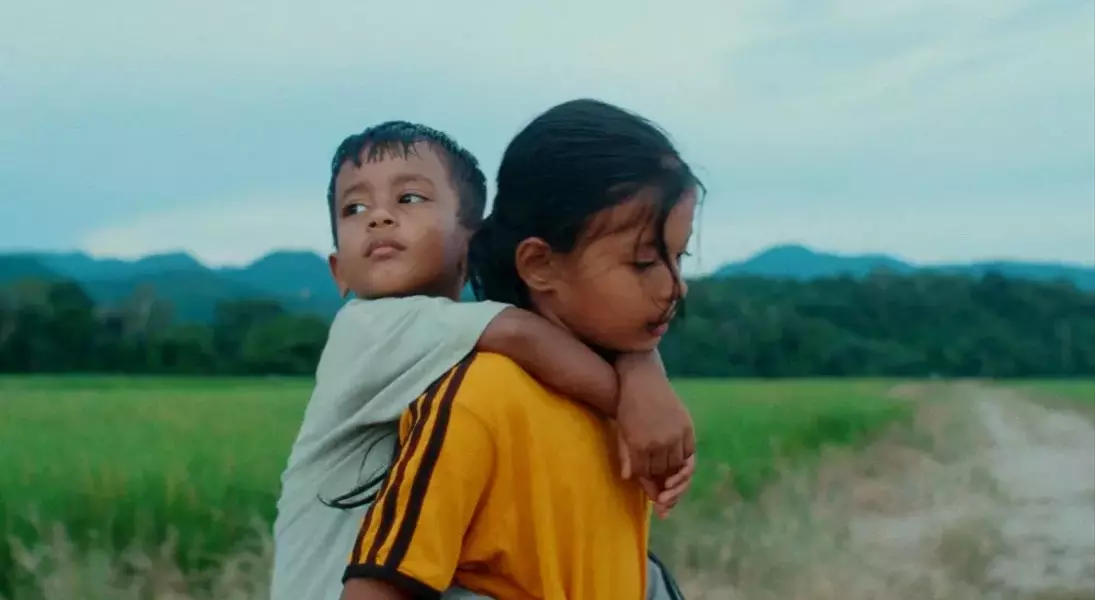
A compelling new cinematic work, “Lost Land” (Harà Watan), from the insightful Japanese director Fujimoto Akio, is poised to make its global debut within the prestigious Horizons competition at the celebrated Venice Film Festival. This profound film offers an intimate and moving perspective on the plight of Rohingya refugees, as seen through the innocent yet resilient eyes of children. Its narrative weaves a tale of survival, hope, and the profound human desire for belonging amidst unimaginable adversity.
A Cinematic Journey into the Heart of the Rohingya Experience
In a world premiere event at the revered Venice Film Festival, the evocative trailer for “Lost Land,” known internationally as “Harà Watan,” has been exclusively unveiled. This cinematic masterpiece, crafted by the distinguished Japanese filmmaker Fujimoto Akio, promises to be a deeply affecting drama illuminating the arduous journey of Rohingya refugees. The narrative centers on the innocent four-year-old Shafi and his courageous nine-year-old sister, Somira. Their heart-wrenching odyssey commences from a refugee settlement in Bangladesh, driven by the desperate hope of reuniting with their dispersed family in Malaysia. What begins as a precarious sea voyage, shared with fellow Rohingya displaced from their homes, swiftly transforms into a stark test of human endurance and spirit. A sudden, calamitous incident at sea strands the young siblings, leaving them utterly alone and disoriented on the shores of Thailand, far from any familiar solace.
Director Fujimoto, whose previous works, “Passage of Life” and “Along the Sea,” sensitively explored themes of migration, felt a profound call to undertake this project. His decision was fueled by over a decade of immersion in Myanmar, a land where discussions surrounding the Rohingya community are often met with a chilling silence. He eloquently shared his motivation, stating, “That pervasive silence became an unbearable weight, compelling me to create this film. I felt an undeniable urge to depict the journey of the Rohingya people, a journey born of their quest for a sanctuary where they could finally live in harmony and peace.”
Adding to the film’s profound authenticity, this poignant drama was meticulously captured in the Rohingya language, featuring a cast of over 200 Rohingya individuals. Strikingly, the lead roles are portrayed by a real-life brother and sister, whose personal histories deeply resonate with the film’s narrative. While none of the cast members possessed formal acting training, their lived experiences lent an undeniable, raw power to their performances. Fujimoto reflected on this, noting, “The sheer weight of their personal journeys imbued their on-screen presence with an unmistakable strength and genuine authenticity.”
The film’s vital significance was further underscored by co-producer Sujauddin Karimuddin, a prominent Rohingya human rights advocate. He emphasized that “Lost Land” holds a singular distinction as “the inaugural Rohingya-language motion picture, performed entirely by Rohingya individuals.” Karimuddin passionately articulated the film’s role beyond entertainment, asserting, “In an era where forces of genocide relentlessly endeavor to obliterate not only the Rohingya people but also our cherished language, our vibrant music, and our very existence, this film emerges as a resolute act of linguistic preservation, a potent form of resistance, a vital remembrance, and an unwavering testament to truth.”
This ambitious international co-production is a testament to global collaboration, bringing together talent and resources from Japan, France, Malaysia, and Germany. The film’s captivating visual tapestry is woven by the acclaimed cinematographer Kitagawa Yoshio, renowned for his collaborations with the Oscar-winning director Hamaguchi Ryusuke on films such as “Evil Does Not Exist.” The evocative musical score is composed by Ernst Reijseger, whose extensive work with the legendary Werner Herzog has earned him widespread recognition. “Lost Land” is skillfully produced by Watanabe Kazutaka through E.x.N K.K., with additional co-producers including Angèle de Lorme (Panorama Films), Karimuddin (Elom Initiatives), Elise Shick (Cinemata), Christian Jilka (Scarlet Visions), and Eric Nyari (Cineric Creative). Further production support comes from Dongyu (Kunizane Mizue) and KinemaTowards (Yasukawa Shogo). Rediance is managing the international sales for this profoundly important film.
“Lost Land” transcends mere storytelling; it is a profound testament to the human spirit’s resilience and a critical call for global awareness. As a journalist, I am deeply moved by Fujimoto Akio’s unwavering commitment to giving voice to the voiceless. The decision to cast real Rohingya refugees, particularly the children in lead roles, elevates the film from a cinematic production to a powerful, living document. It reminds us that behind every statistic and every news headline lies a human story, often filled with unimaginable hardship and an unyielding desire for peace. This film offers a unique opportunity for audiences worldwide to connect with the Rohingya experience on a deeply personal level, fostering empathy and understanding. It stands as a vital piece of advocacy, using the universal language of cinema to preserve culture, challenge silence, and demand justice for a community that has endured so much.
