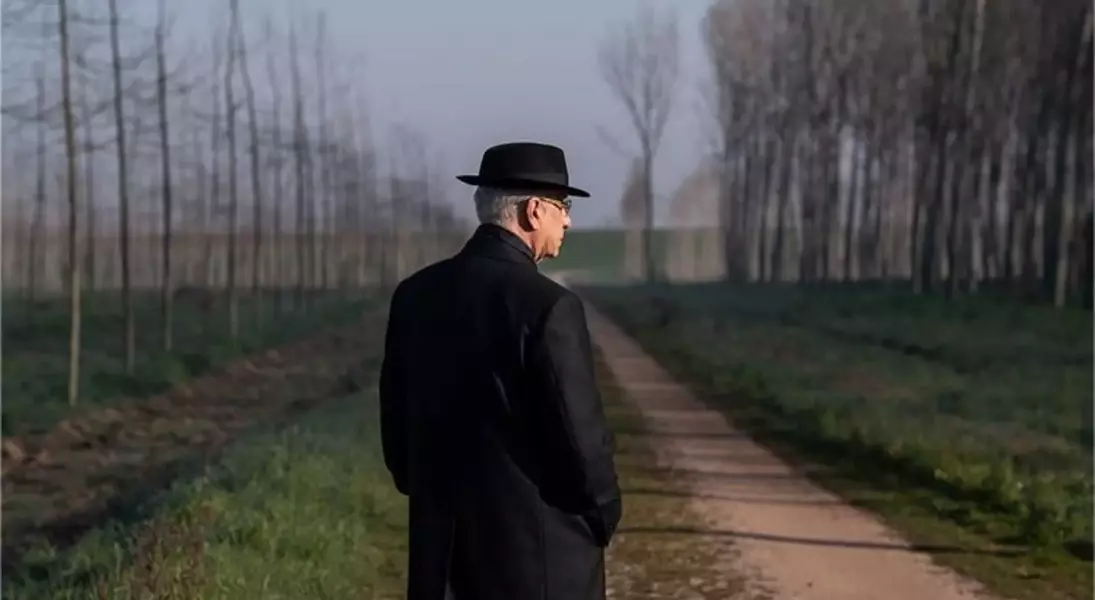
Paolo Sorrentino's latest cinematic offering, 'La Grazia,' presents a compelling character study of a distinguished political figure in the twilight of his leadership, magnificently brought to life by Toni Servillo. Diverging from the director's earlier explorations of morally ambiguous power figures, this film centers on a president of integrity grappling with ethical choices and personal revelations. It's a profound narrative that navigates themes of duty, legacy, and human frailty, set against the backdrop of Italian governance, and stands as a testament to the collaborative synergy between Sorrentino's artistic vision and Servillo's formidable acting prowess.
In 'La Grazia,' Servillo embodies Mariano De Santis, the fictional Italian Republic president. Unlike the unscrupulous Giulio Andreotti, whom Servillo portrayed in Sorrentino's 2009 work, 'Il Divo,' De Santis is depicted as a man of law and quiet principle. Yet, beneath his composed exterior lies a wellspring of profound emotion and unexpected self-doubt. The film meticulously details the nuanced final months of his presidency, illustrating how his seemingly mundane daily schedule is punctuated by weighty decisions concerning significant legislative issues, notably a controversial euthanasia bill, and requests for pardons for individuals with complex histories.
Sorrentino's distinctive directorial style, characterized by its artistic grandeur and sharp wit, permeates 'La Grazia,' even as it adopts a more subdued and mature tone compared to his previous ventures. The narrative skillfully intertwines De Santis's public responsibilities with his private internal conflicts. His reflections, often occurring during solitary moments on the Quirinale roof, accompanied by his trusted cuirassier, or in contemplative conversations with a serene, dreadlocked Pope, reveal a soul searching for 'leggerezza'—lightness—amidst the burdens of power and a deep-seated personal sorrow stemming from the loss of his wife, Aurora, and a decades-old infidelity.
The film brilliantly examines the intricate relationship between legal truth and lived experience, particularly through the interactions between De Santis's daughter, Dorotea, a formidable scholar, and an abrasive prisoner seeking clemency. This interaction challenges Dorotea's perceptions and prompts her to re-evaluate her own life choices. Further enriching the story are captivating supporting characters, such as the colorful art critic Coco Valori, whose initial comedic appearance evolves into a deeply moving portrayal. Even seemingly small moments, like De Santis's fascination with a contemporary rap song or his poignant observation of an aging foreign dignitary, serve to humanize him and underscore his journey of introspection and the subtle changes within him.
'La Grazia' culminates in a symbolically rich departure, as De Santis leaves the seat of power, a procession down Rome's elegant Via dei Condotti playfully contrasted with the presence of a robot police dog. The film is a dazzling display of cinematic artistry, with cinematographer Daria D'Antonio's visuals adding a luxurious sheen. Beyond its aesthetic brilliance, the movie's true impact lies in its emotional depth and its exploration of forgiveness and wisdom. It subtly conveys how Mariano, in a world often devoid of moral clarity, achieves a profound sense of grace, making this one of Toni Servillo's most remarkable performances to date, resonating deeply with its audience long after the credits roll
