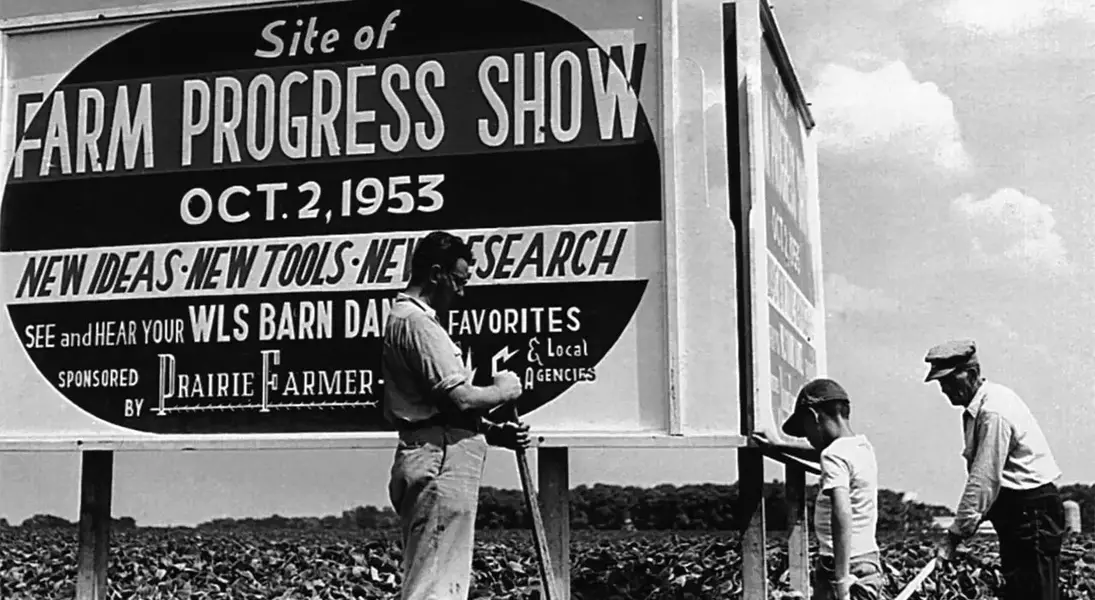
Since its inaugural event in 1953, the Farm Progress Show has served as a pivotal gathering for the agricultural sector. This retrospective explores the diverse array of host farms and locations that have defined the show's journey, highlighting its remarkable resilience and continuous adaptation throughout the years. What started as a modest exhibition has grown into a major fixture, consistently bringing together farmers, innovators, and industry leaders to explore advancements and share knowledge within the farming community.
Over the decades, the Farm Progress Show has witnessed significant changes, including its strategic shift to semi-permanent venues in Decatur, Illinois, and Boone, Iowa, from 2007 onwards. This evolution underscores the show's commitment to providing a dedicated and expansive environment for showcasing the latest in agricultural technology and practices. Despite challenges, such as the pivot to a virtual format in 2020, the event's enduring spirit and its importance to the farming landscape remain undiminished.
Evolution of the Farm Progress Show Locations
The Farm Progress Show's journey began modestly in 1953 on Earl Buss's farm in Armstrong, Illinois, marking the first of many host locations that would shape its identity. Over the subsequent decades, the show moved across various farms in Illinois, Indiana, and Iowa, each contributing to its rich tapestry. This nomadic period, spanning from the 1950s through the early 2000s, saw the exhibition grace numerous family farms and agricultural centers, fostering a unique connection with the local farming communities that hosted it.
This early era of rotating venues allowed the Farm Progress Show to engage with a broad spectrum of farming practices and regional agricultural landscapes. Each new location brought a fresh perspective and tailored experience, reflecting the diverse conditions and innovations prevalent across the Midwest. Notable sites included Camden, Indiana, in 1954; Belvidere, Illinois, in 1955; and numerous others such as Farmer City, Illinois, and Van Horne, Iowa, illustrating a dynamic period of growth and outreach that laid the groundwork for the show's future success. The diversity of hosts, from individual farmers like Earl Buss to larger entities such as Amana Farms Inc., showcases the collaborative spirit central to the show's enduring legacy.
Adapting to Modern Times and Expanding Reach
A significant transformation for the Farm Progress Show occurred in 2007 when it transitioned from a traveling exhibition to alternating between two semi-permanent sites: Decatur, Illinois, and Boone, Iowa. This strategic decision provided greater stability and allowed for the development of more sophisticated infrastructure, enhancing the overall experience for exhibitors and attendees alike. The shift to dedicated locations marked a new chapter, enabling the show to expand its scope and capacity to host a larger array of demonstrations and exhibits.
The move to fixed venues has facilitated the continuous growth of the Farm Progress Show, reinforcing its status as a premier event in agricultural trade and innovation. Despite this evolution, the core mission of connecting farmers with cutting-edge technology and practices has remained constant. Even in unprecedented times, like the 2020 pandemic, the show demonstrated its adaptability by transitioning to a virtual format, ensuring that the agricultural community could still access vital information and maintain connections. This blend of tradition and forward-thinking adaptation ensures the Farm Progress Show continues to be a vital resource for the agricultural industry.
