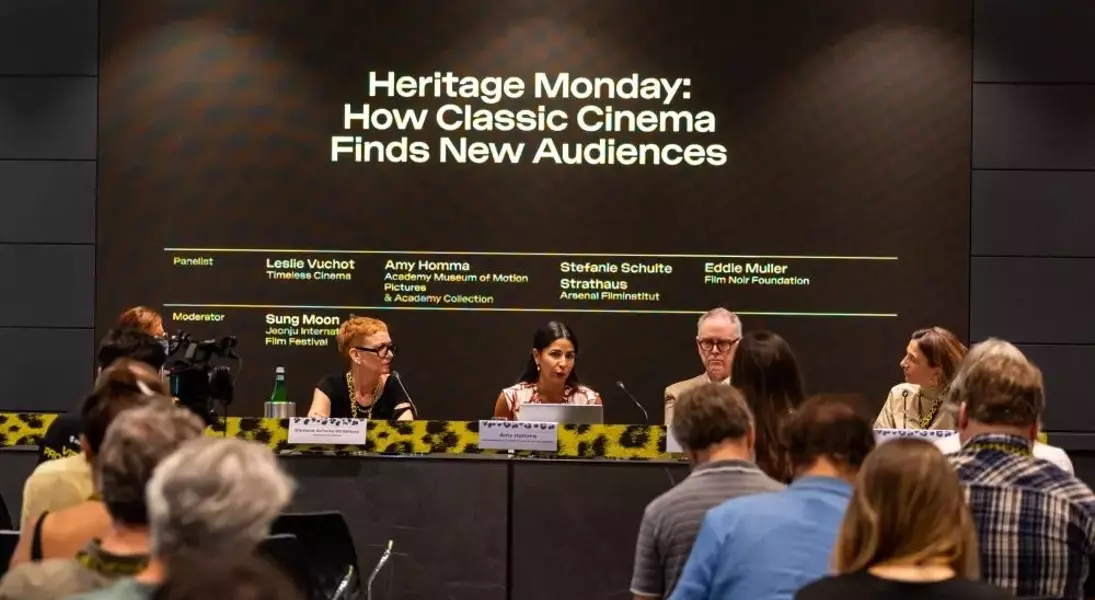
The "Heritage Monday" initiative at the Locarno Film Festival has become a prominent platform, underscoring a burgeoning fascination with cinematic preservation and archival screenings. This year's focus centered on bridging the gap between historical cinema and younger demographics, tackling the complexities of funding, intellectual property rights, and the sheer volume of material in archives. Despite these challenges, experts expressed a hopeful outlook, emphasizing community involvement and innovative outreach methods to ensure that the rich legacy of film continues to inspire and educate new generations.
Discussions among film preservationists, curators, and programmers at the Locarno Film Festival revealed a significant trend: young individuals are increasingly drawn to vintage cinema. This phenomenon reflects a desire to delve into the historical roots of filmmaking, understanding the craft and inspiration behind older works. Engaging this demographic requires creative strategies, such as immersive screening experiences and educational programs, to connect them with black-and-white classics and the timeless artistry of cinematic pioneers.
Engaging Young Audiences with Classic Cinema
The Locarno Film Festival's "Heritage Monday" recently showcased an increasing fascination among younger audiences for classic films, highlighting a collective desire to explore the origins of cinematic storytelling. Panelists, including Leslie Vuchot from Timeless Cinema and Eddie Muller from the Film Noir Foundation, observed that when young people are given a voice, their discussions often revolve around historical rather than contemporary movies. This suggests a deep-seated curiosity about how films were produced in the past and the foundational inspirations of early filmmakers. The initiative aims to foster this enthusiasm by providing platforms where these enduring works can be appreciated and studied.
To effectively captivate the younger generation, various innovative approaches have been implemented. Eddie Muller, for instance, has successfully recreated the authentic film-going experience of the mid-20th century, complete with double features, which has proven highly popular. He also integrates school outreach programs, exposing students to classic black-and-white films and witnessing their profound reactions to legendary actors like Humphrey Bogart and Lauren Bacall. Similarly, Amy Homma from the Academy Museum of Motion Pictures advocates for a pragmatic and audience-centric approach, emphasizing engaging viewers where they are. This includes unique events like bringing a live Dalmatian to a screening of "101 Dalmatians" and hosting interactive drawing classes led by animators, thereby enriching the viewing experience and promoting a deeper appreciation for film techniques and history.
Preserving Film Heritage Amidst Modern Challenges
The preservation of film heritage faces several significant obstacles, ranging from securing adequate financial resources to navigating complex intellectual property rights. Experts at the Locarno Film Festival underscored the persistent need for funding, whether through private donations, large organizational grants, or grassroots efforts, to support the intricate processes of film restoration and archival maintenance. Another critical issue lies in identifying and acquiring the rights for older films, a challenge that extends even to subtitles, which might require costly duplication due to their own copyrights. These hurdles necessitate a more coordinated and collaborative approach among international archives, cinematheques, and cultural organizations to safeguard cinematic history.
Beyond financial and legal complexities, the sheer volume of cinematic material poses a formidable challenge for institutions like the Motion Picture Academy, which, despite its global reputation, struggles to manage an ever-growing archive with static staffing and budgetary constraints. Additionally, climate-controlled archives, crucial for preserving delicate film reels, are gradually diminishing. However, there is a prevailing sense of optimism within the film heritage community. Amy Homma notes a rising public interest in film preservation, while Stefanie Schulte Strathaus highlights the potential for historical films to offer unique perspectives on future possibilities. She advocates for building communities not just of passive audiences but of active participants who contribute creatively to restoration efforts, fostering educational engagement and artistic collaboration to ensure the enduring legacy of filmmakers' works.
