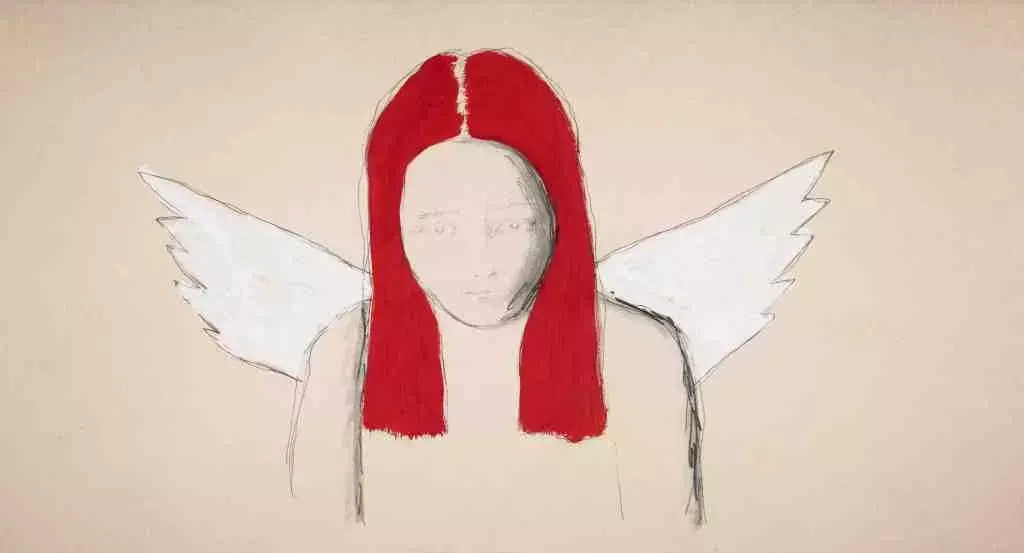


At the prestigious Locarno Film Festival, the creative minds behind the animated short film "Piluk," a production by the National Film Board of Canada, offered insights into their distinctive artistic methodology. This cinematic endeavor, which captivated audiences with its world premiere in the Pardi di Domani section, deliberately eschews advanced technology, instead relying on the fundamental tools of pencil, paper, and the human voice to weave its narrative. The directors articulated their commitment to an authentic and handcrafted approach, highlighting the film's ability to convey profound emotion through minimalist visuals and a powerful vocal soundtrack, leaving ample room for viewers' personal interpretations.
The core of "Piluk" lies in its narrative simplicity and profound visual artistry. The film follows the odyssey of a young girl named Piluk, born with an extraordinary pair of wings, as she traverses diverse landscapes. Her journey is marked by encounters with various animals, all conveyed without any spoken dialogue. Instead, the story unfolds through the intricate dance of animation and the compelling expressiveness of a choral soundtrack, which features evocative throat-singing. This unique artistic choice deliberately fosters an environment where ambiguity is celebrated, allowing the audience to engage deeply and draw their own conclusions from the unfolding events. Marc Séguin, one of the film's directors, emphasized the artistic choice to revert to traditional craftsmanship, eschewing modern digital tools and AI. He believes that the raw textures of pencil and paper still possess an untapped potential for storytelling, stating, "Given all the technology that surrounds us, I still think that not all has been said with paper and pencil." This sentiment underscores the film's commitment to a purist animation style.
Elisapie Isaac, the other half of the directorial duo and an Inuk musician, extended this minimalist philosophy to the film's auditory landscape. Drawing inspiration from indigenous oral storytelling traditions, Isaac initially intended to contribute only to the pre-production phase. However, witnessing the team's dedication to avoiding over-production, she felt compelled to experiment with the nuances of the human voice. This led to a sound design that blends seamlessly with the imagery, creating a sense of organic unity. She highlighted the intentional ambiguity of the vocal elements, noting that perfect melodies or explicit lyrics would have constrained the audience's emotional freedom. Instead, the soundtrack aims to create an unpredictable and open-ended auditory experience, aligning with the film's overall aesthetic of inviting personal engagement.
Producer Jelena Popović, who assumed her role midway through the project, noted that despite Séguin's established reputation in painting and both directors' prior experiences in filmmaking, animation was a novel medium for them. The NFB, therefore, embraced its role in guiding these artists through unfamiliar creative territories while ensuring their unique artistic visions remained uncompromised. Popović stressed that the NFB, being publicly funded and not profit-driven, serves as an "ally of the artist." This ethos is particularly evident in their commitment to supporting Indigenous storytellers, recognizing the importance of preserving "narrative sovereignty" for these creators. She explained that the NFB provides a "creative laboratory" where artists can explore and develop their ideas without the commercial pressures often found in the private sector. The true measure of success, for Popović, is the realization of the artists' original vision, reflecting a deep passion for animation as a multifaceted art form that integrates visual arts, drama, and music.
The animation team at the NFB studio, under the leadership of Parissa Mohit, played a pivotal role in translating the directors' vision into the film's distinctive visual style. Mohit, along with technical director Eric Pouliot and other in-house experts, meticulously refined the mise-en-scène and created the illusion of movement, working closely with Séguin and Isaac. This collaborative environment ensured that the film's scratchy, impressionistic linework, which favors evocative representation over strict realism, was brought to life authentically. The backgrounds are deliberately sparse, further enhancing the film's minimalist aesthetic and focusing attention on Piluk's journey and emotional landscape. Popović emphasized that animation, while painstakingly long to produce, offers an economical yet impactful way of storytelling, relying on archetypes and stereotypes to communicate universal themes. Through "Piluk," Séguin and Isaac demonstrate a masterful command of this economy, achieving maximum emotional resonance with the simplest of artistic means.
The collaborative endeavor behind "Piluk" exemplifies the power of minimalist artistry combined with innovative sound design to create a deeply resonant narrative. The filmmakers' decision to prioritize hand-drawn animation and a dialogue-free, vocally rich soundtrack underscores a commitment to artistic authenticity and an invitation for audiences to engage on a profoundly personal level. This approach, supported by the National Film Board of Canada, not only showcases a unique vision but also highlights the enduring strength of traditional creative methods in a technologically advanced era, proving that sometimes, the simplest textures yield the most profound stories.
