
A growing trend among enthusiasts is reshaping the landscape of living room entertainment, with a focus on powerful, versatile personal computing for gaming. This new approach offers a compelling alternative to dedicated gaming consoles, leveraging the flexibility and extensive game libraries of PC platforms. By integrating a modular desktop system with an open-source operating environment, users can enjoy high-fidelity gaming experiences directly on their television screens, alongside a fully functional desktop for productivity. This convergence of capabilities addresses the long-standing desire for a unified home entertainment and computing hub, delivering both performance and convenience in a compact, adaptable package.
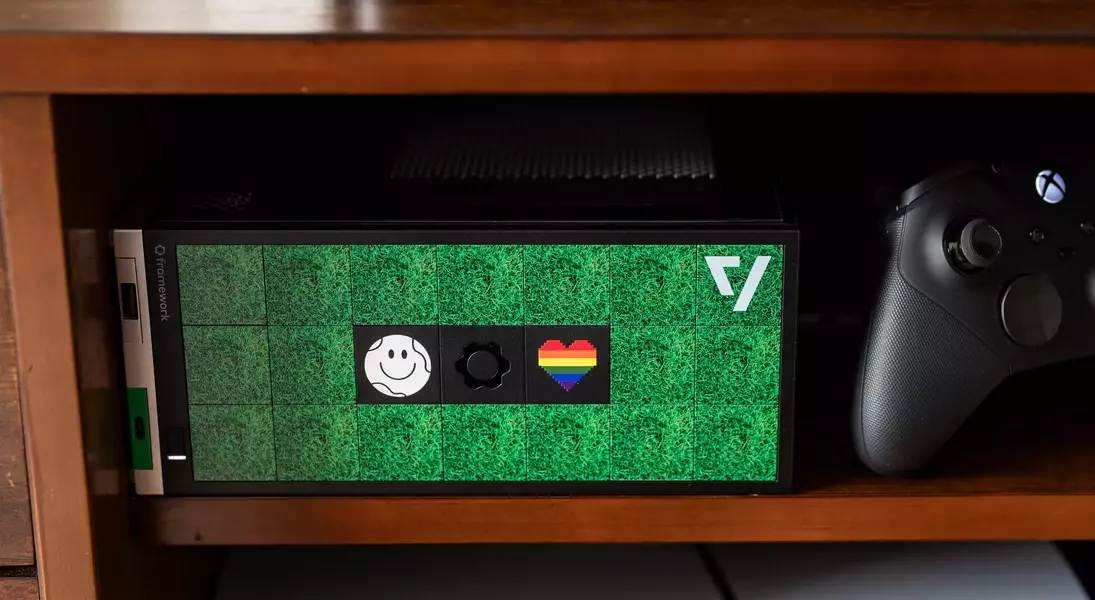
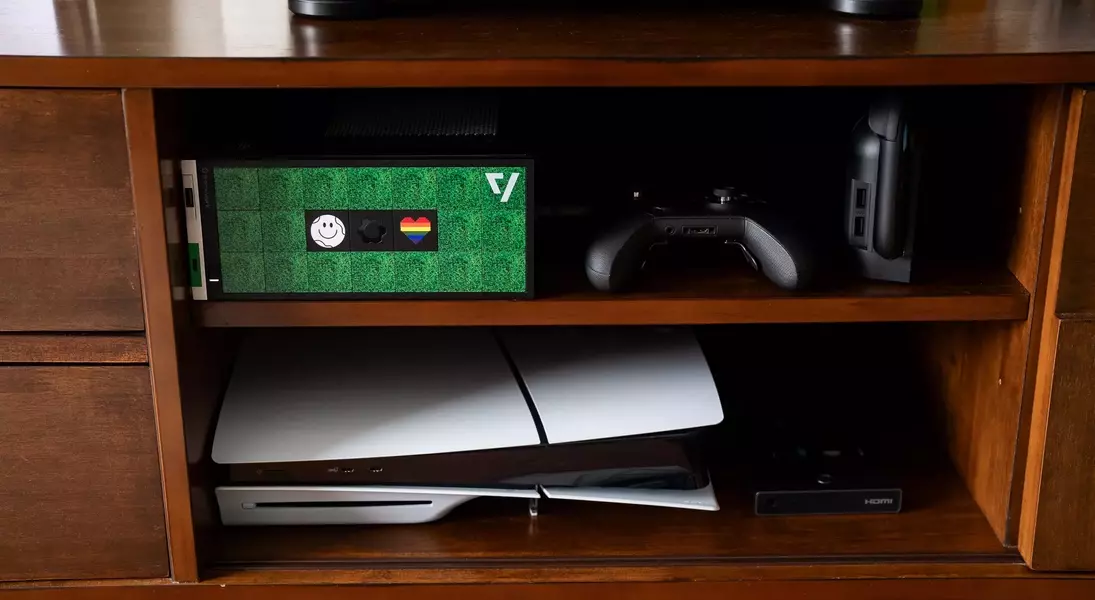
For years, the dream of a seamless PC gaming experience in the living room remained elusive. Traditional gaming laptops often suffered from excessive noise and cumbersome designs, while conventional desktop computers were too bulky for a home entertainment setup. Navigating Windows with a gamepad proved challenging, and past attempts at console-like PC gaming systems, such as Valve's Steam Machines, did not achieve widespread success. However, a recent development involving the Framework Desktop and the Bazzite Linux distribution has revitalized this vision. This innovative combination provides a powerful yet compact gaming solution that integrates effortlessly into the living room environment, offering a sophisticated alternative to traditional consoles like the PlayStation 5.
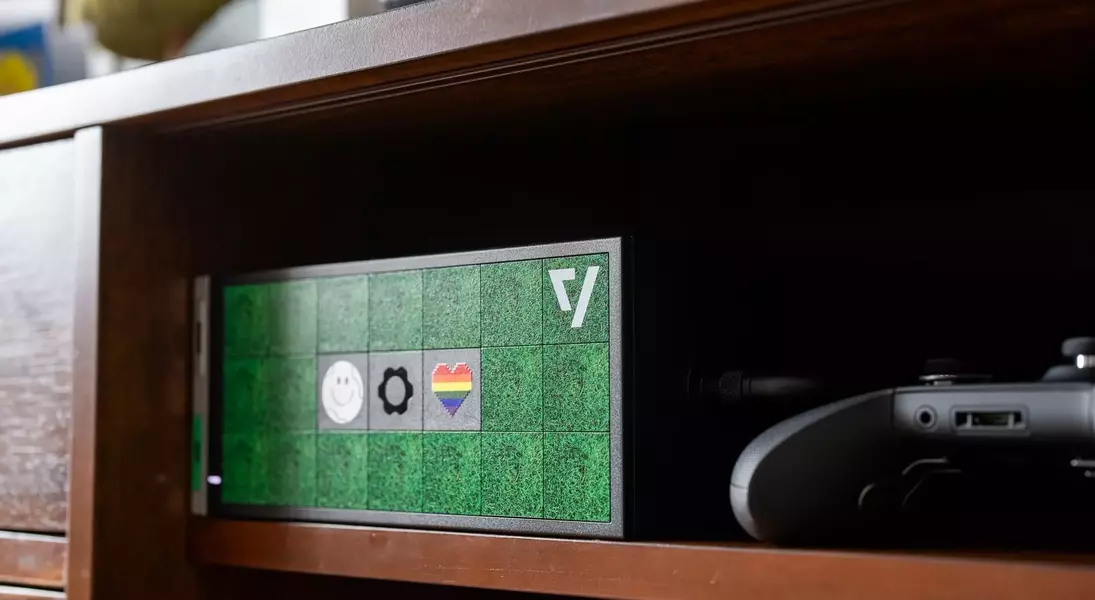
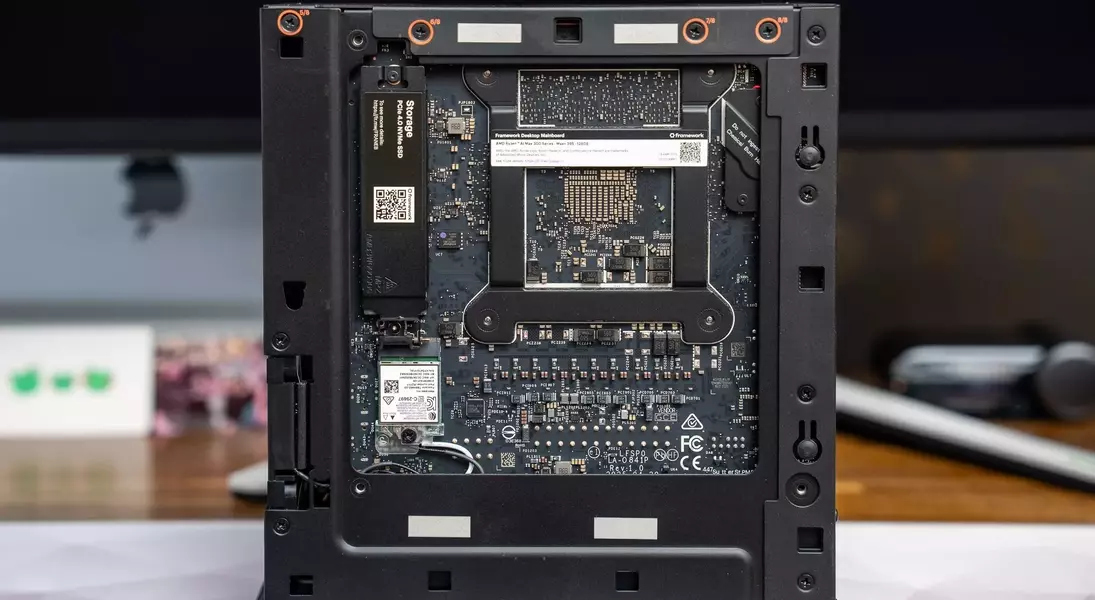
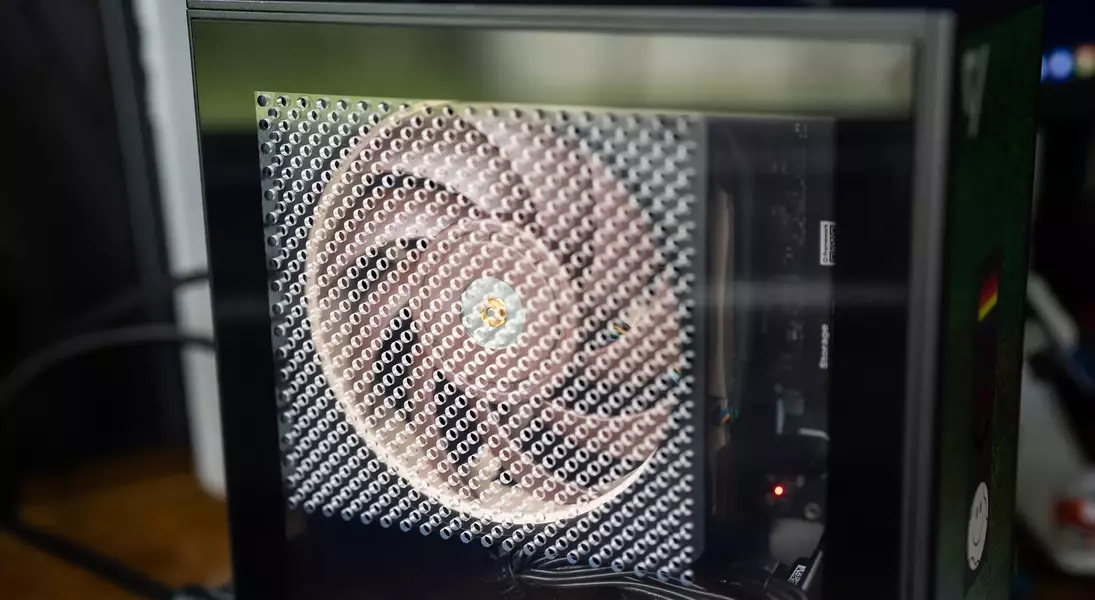
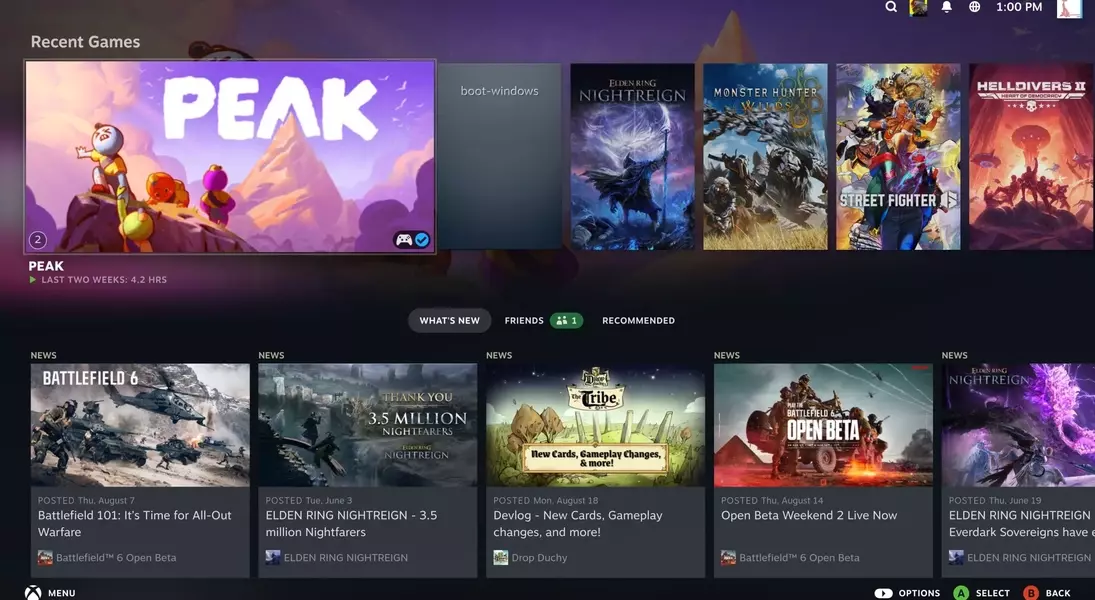
The Framework Desktop, renowned for its modularity and repairability, serves as an ideal foundation for this living room PC gaming setup. Its compact 4.5-liter design is significantly smaller than many gaming PCs and even current-generation consoles. Paired with Bazzite, an open-source Linux distribution inspired by SteamOS, the system transforms into a highly capable gaming machine. Bazzite offers a user-friendly interface that mimics the Steam Deck's game mode, complete with the Proton compatibility layer for running Windows games. This allows users to enjoy a vast library of PC titles at resolutions up to 4K and frame rates around 60fps, all from the comfort of their couch. The system also boasts quiet operation and a convenient remote wake-up feature, further enhancing its suitability for the living room.
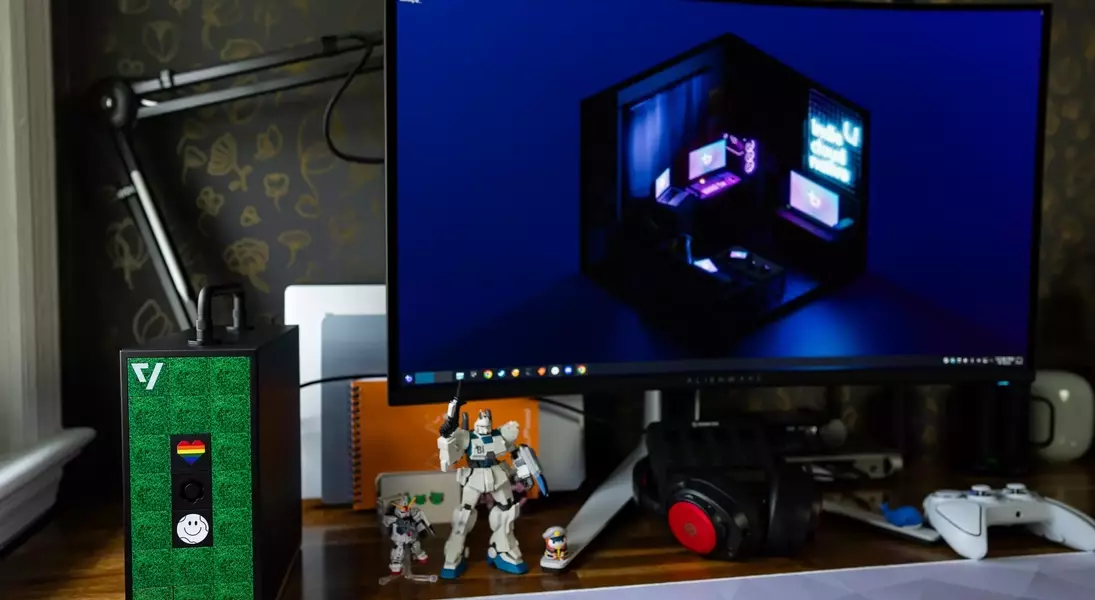
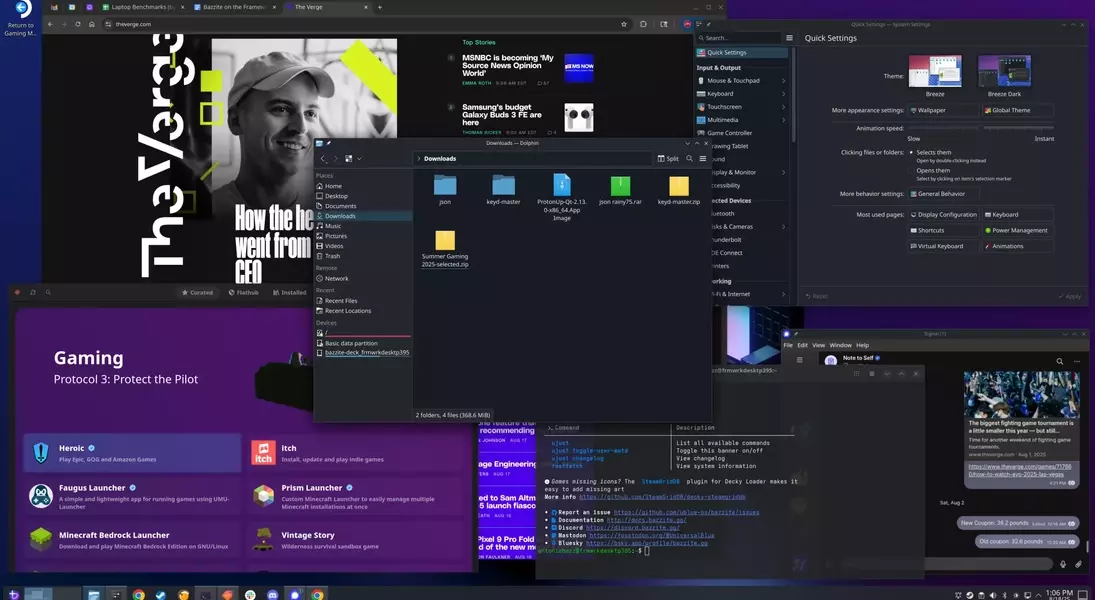
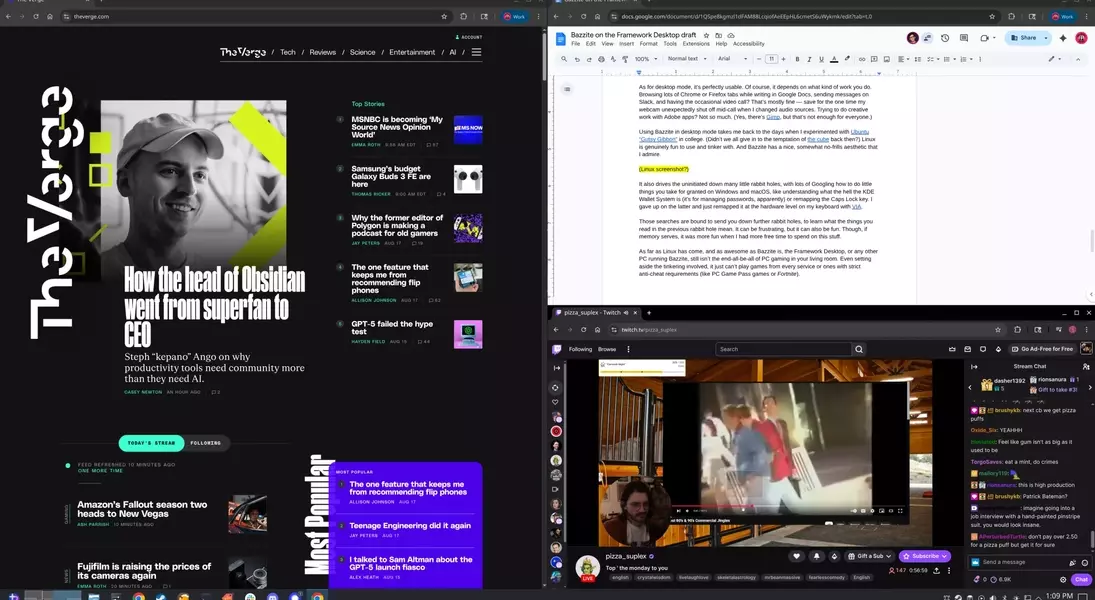
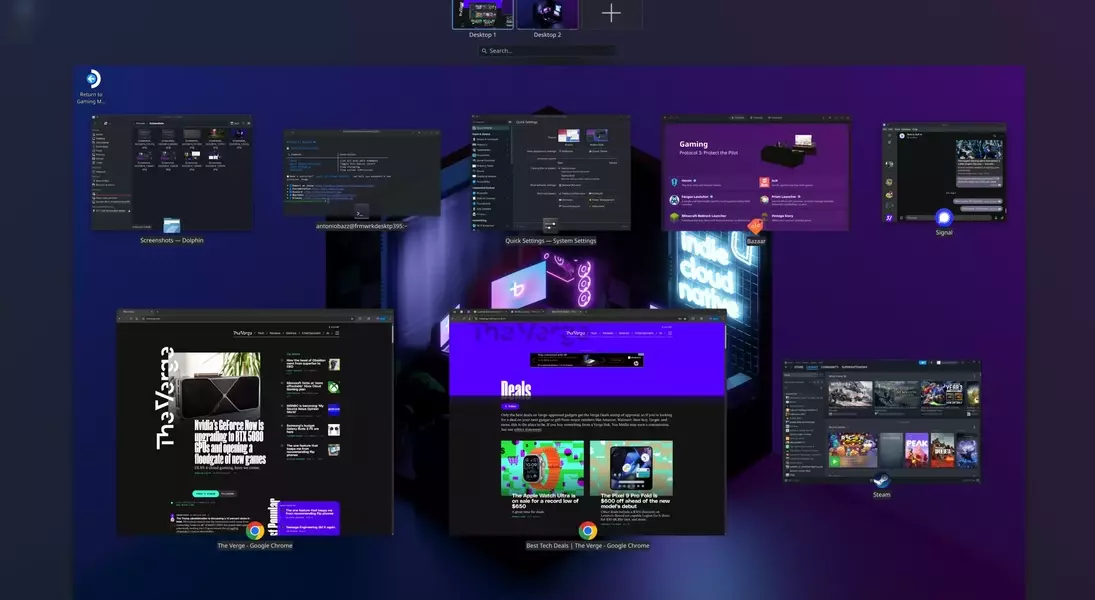
Beyond gaming, the Framework Desktop running Bazzite functions as a capable everyday computer. Users can easily switch to a desktop mode, providing access to a full Linux environment for work and productivity. This dual functionality allows for a clear separation between professional tasks and leisure activities, as the compact nature of the Framework Desktop makes it easy to transition between a desk and a living room setup. This versatility positions the system as a true all-in-one solution for both computing and entertainment, catering to the modern user's diverse needs.
While the transition to Linux-based gaming and computing offers numerous advantages, it may present minor challenges for those accustomed to Windows or macOS. Compatibility with certain professional applications, such as Adobe Creative Cloud, can be limited, though many essential tools like Chrome, Slack, and Spotify offer native Linux support. Occasional command-line interactions might be necessary for specific configurations. However, the overall user experience on Bazzite is lauded for its cleanliness and simplicity, reminiscent of early, experimental Linux distributions that captured the imagination of tech enthusiasts. The platform's robustness and growing community support continue to make it an appealing choice for users looking to break free from proprietary operating systems.
For those interested in exploring this innovative PC gaming solution, setting up Bazzite on a Framework Desktop is a relatively straightforward process. The modular design of the Framework Desktop, particularly its multiple NVMe slots, simplifies dual-boot configurations, allowing users to run both Windows and Linux on separate drives. This separation provides a secure and efficient way to manage different operating environments, ensuring stability and preventing potential conflicts from system updates. Detailed guides and community resources are readily available to assist with the installation and optimization process, making it accessible even for users with limited Linux experience.
Despite its many strengths, a Bazzite-powered Framework Desktop may not entirely replace a dedicated gaming PC for all users. Certain games and services, particularly those with stringent anti-cheat measures or platform exclusivity like PC Game Pass, may not be fully compatible with Linux. Performance benchmarks also indicate that some titles might run slightly slower on Linux compared to Windows with identical settings. Nevertheless, the continuous advancements in Linux gaming compatibility, coupled with the increasing popularity of Bazzite and devices like the Steam Deck, suggest a promising future for open-source living room PC gaming. This evolving ecosystem represents a significant step towards realizing the long-held dream of a versatile and powerful gaming machine in every home.
