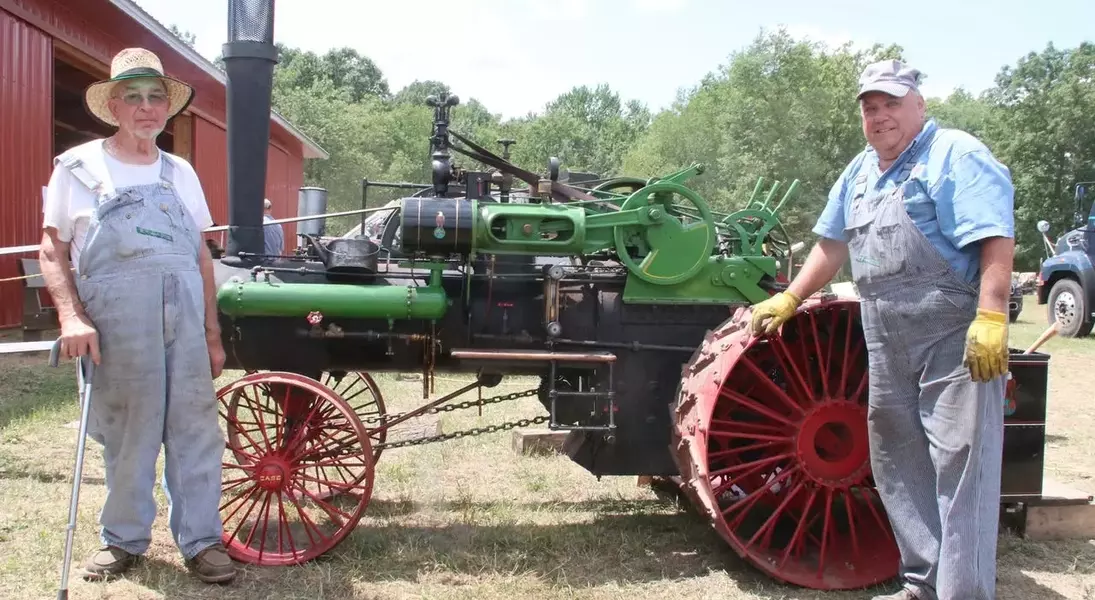
This article explores the enduring fascination with historical agricultural machinery, specifically focusing on Gery Schacht's dedication to collecting and showcasing miniature steam engine models. It highlights the intricate details of maintaining such a specialized hobby and the joy these replicas bring to enthusiasts and the public alike.
The Enduring Charm of Scaled-Down Powerhouses: A Farmer's Dedication
Early Beginnings and a Lifelong Fascination with Steam
Gery Schacht's journey into the world of steam engines began in 1971 when he started his farming career near Stanley, Wisconsin. His childhood was deeply influenced by the powerful threshing machines his father, Harry, operated, igniting a passion that would last a lifetime. This early exposure to the raw power and mechanical ingenuity of steam technology laid the foundation for his remarkable collection.
The Expansion of a Unique Collection and Its Challenges
In 1970, the father-son duo acquired a fully operational 1916 Case 65 model, a significant addition for $2,500. Two years later, their collection grew with a 1920 24-hp Minneapolis engine, purchased for $15,000, which actively participated in threshing events throughout the 1980s and continues to perform at various exhibits today. Schacht describes his involvement with steam engines as more than a pastime; it's a profound interest, comparing it to other cherished hobbies like fishing or golf. He notes that once you experience the thrill of operating these machines, the passion becomes deeply ingrained. This deep-seated enthusiasm led him to invest $22,000 in a half-scale 1917 Case 65-hp steam engine model from Melvin Millhause, a craftsman from Ellsworth who meticulously constructed it over seven years before its first operation.
The Intricacies and Grandeur of the Miniature Marvel
The half-scale model of the 1917 Case 65-hp steam engine is a precise miniature, mirroring every detail of its full-sized counterpart. Schacht emphasizes the necessity for such models to feature a certified, factory-made boiler if they are to be publicly displayed. This impressive miniature, weighing 4,300 pounds when filled with water, measures 5 feet in width and 11 feet in length, and is powered by a stationary steam engine capable of running on wood or coal. Reaching its optimal operating speed takes about an hour and a half, with the most critical aspect being the meticulous maintenance of water pressure to prevent catastrophic failure. The J. I. Case Co. was a prominent producer of steam engines, traction engines, and steam tractors, having built 30,000 steamers before transitioning to gas tractors in 1927. These powerful machines were instrumental in transforming the Midwestern prairies into fertile agricultural land. Acquiring replacement parts for these vintage machines or addressing malfunctions presents considerable challenges, often requiring custom fabrication or expert machining. Beyond parts, the most demanding task after achieving operational speed is precisely timing the engine, a process that can be temperamental. Moreover, successfully passing state boiler inspections is a constant concern, demanding a proficient troubleshooter to manage the equipment effectively. Optimal performance relies on maintaining a consistent sound at both ends of the pistons.
Captivating Audiences at Regional Events and Beyond
This remarkable miniature steam engine is a beloved highlight at numerous regional gatherings. Beyond its appearances at the Badger Steam and Gas Engine event, Schacht proudly exhibits it at Pioneer Park in Eau Claire, the North Central Steam and Gas Engine Days in Edgar, Wisconsin, and the Western Minnesota Steam Threshers Reunion in Rollag, Minnesota. Schacht notes the model's remarkably quiet operation, even with the flywheel in motion. He praises its manageability, ease of transport, and robust durability, highlighting its versatility for various tasks, such as cutting 4-foot pieces of wood or preparing inch-stakes for lumber. For Schacht, the act of working with this engine throughout the day offers a deeply rewarding and almost therapeutic experience.
