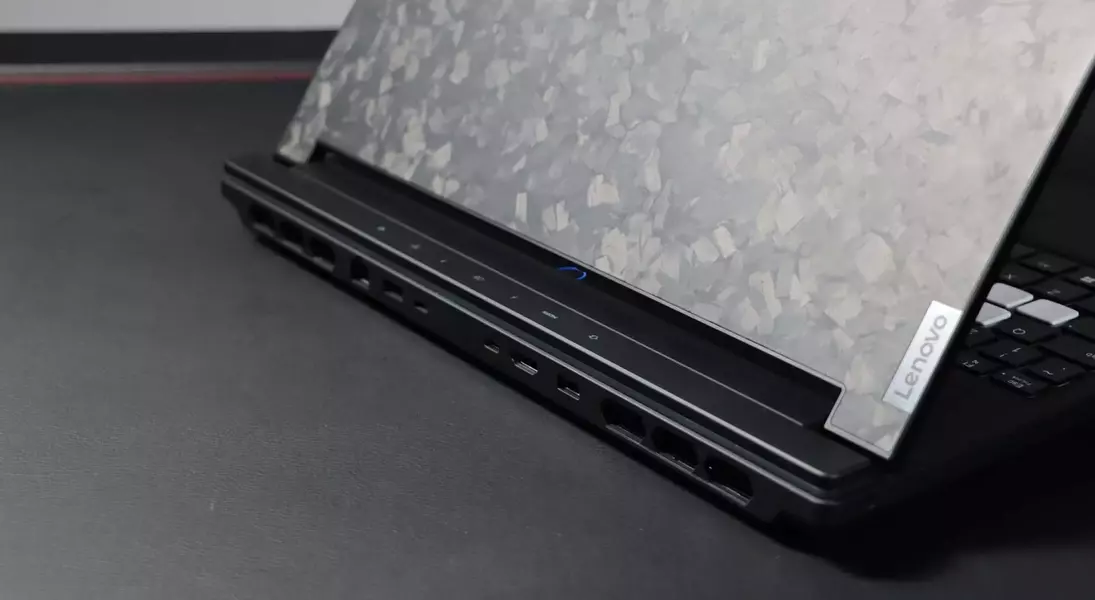

The persistent global challenge of memory and NAND flash scarcity is compelling major tech companies to reassess their supply chains. Faced with escalating component prices and limited availability, laptop manufacturers are exploring unconventional solutions. This landscape has notably paved the way for Chinese-made Solid State Drives (SSDs) to enter the mainstream market, fundamentally altering traditional sourcing dynamics.
Lenovo's Strategic Shift to YMTC SSDs
Recently, industry observers noted that Lenovo's new ThinkBook 14 G9 IPL laptop models are being equipped with SSDs produced by Yangtze Memory Technologies Corp. (YMTC), a prominent Chinese memory manufacturer. This integration marks a significant departure from the customary reliance on established Western and Asian suppliers such as Samsung, Western Digital, or Kioxia. The decision underscores the profound impact of the 'memory crisis' on manufacturers, pushing them to seek alternative, potentially more cost-effective, component providers.
According to comprehensive evaluations conducted by Notebookcheck, the YMTC 512 GB SSDs found in the ThinkBook 14 G9 IPL demonstrated sequential read speeds of approximately 3950 MB/s and write speeds of about 2514 MB/s. While these figures are acceptable for standard office use, they fall short of the performance benchmarks typically seen in SSDs from more renowned brands. This performance differential suggests that Lenovo's adoption of YMTC components is primarily driven by economic considerations rather than a pursuit of superior speed, allowing the company to manage rising production costs during this period of global component instability.
YMTC, established in 2016 with considerable government backing, has rapidly grown into a significant player in the memory sector, boasting over 8,000 employees globally and a valuation of $22 billion as of last year. Its partnership with a global giant like Lenovo could substantially bolster its market presence and solidify its position as a viable alternative in the global NAND flash supply chain. For consumers, this trend means a new factor to consider when purchasing laptops: balancing potential cost savings against the possibility of slightly reduced storage performance. The shift reflects a broader industry response to supply chain pressures, hinting at a future where component diversity and strategic partnerships become even more critical.
The integration of YMTC SSDs into Lenovo's product line signals a strategic adaptation to current market realities. While it provides an avenue for manufacturers to navigate the complexities of component shortages and rising costs, it also introduces a new dimension for consumers to evaluate. The trade-off between cost-effectiveness and peak performance will undoubtedly influence purchasing decisions. This development highlights the growing importance of regional supply chains and the increasing global competitiveness in the semiconductor industry, urging a deeper understanding of component origins and their implications for device performance.
