
This feature delves into two distinct but equally compelling narratives: the historical journey of a unique Minneapolis-Moline tractor, showcasing its deep connections to foundational agricultural machinery companies, and the profound impact of Quentin Williamson, a celebrated figure in soil conservation whose dedication transformed farming practices across Indiana. Both stories, while separate, underscore the importance of heritage and foresight in shaping the agricultural landscape. From the intricate lineage of a vintage machine to the pioneering efforts of a devoted conservationist, the article highlights how past innovations and personal commitments continue to resonate within the farming community.
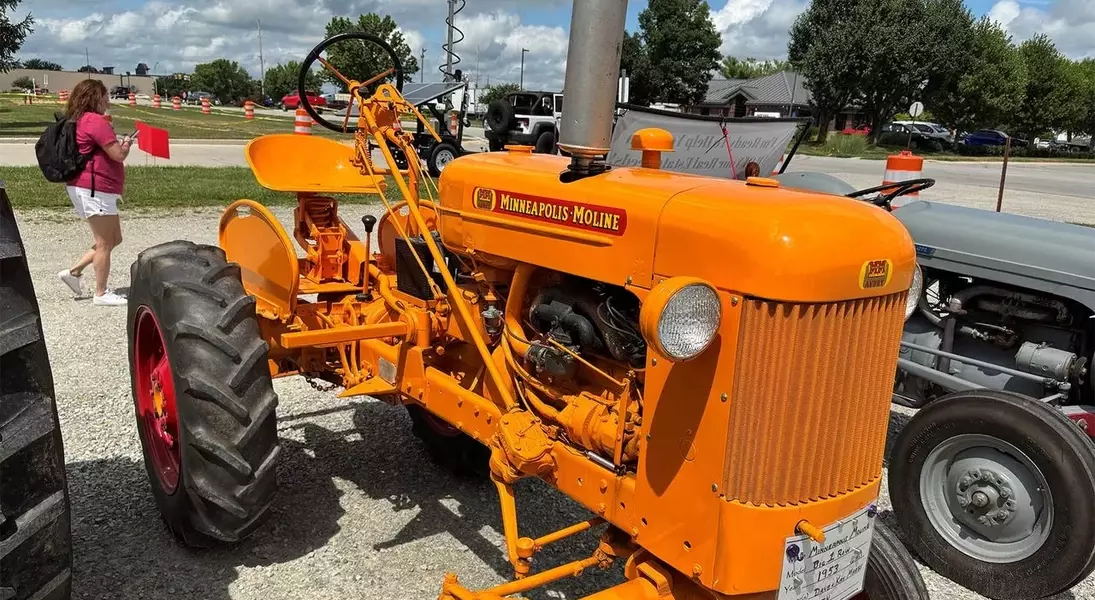
Dave and Kay Mares recently showcased a remarkable piece of agricultural history at the 2025 Hamilton County Fair in Indiana: a Minneapolis-Moline tractor. This isn't just any tractor; its distinctive orange hue and traditional design belie a complex origin tracing back to the B.F. Avery Co., which Minneapolis-Moline acquired in 1951. The specific model, the BG, emerged in 1953, with production generally believed to have concluded around 1955, though some sources suggest it might have extended to 1957. This model was a successor to the Avery V, yet in terms of operational capacity, it more closely paralleled the Avery F. Adding another layer to its heritage, the Avery F itself was a rebranded version of a tractor originally from the Cleveland Tractor Co., also known as Cletrac. Furthermore, Avery distributed Cletrac's General GG model under its own 'General' branding, a practice also adopted by Massey-Harris and Montgomery Ward. This intricate web of corporate acquisitions and rebranding underscores a fascinating period in the evolution of farm machinery, where companies merged, designs were shared, and new identities were forged, contributing to the diverse array of equipment available to farmers. The Moline B, a one-plow tractor, boasted 27 horsepower on the belt, reflecting the technological advancements of its era.
In a separate but equally significant part of the agricultural story, the article commemorates the life and contributions of Quentin Williamson, a titan in the field of soil conservation. Williamson, who passed away in July at the age of 95, was renowned for his extraordinary ability to gather large audiences for discussions on soil health, no-till farming, and conservation practices. His success stemmed from a simple yet powerful formula: curating events with top-tier speakers, including farmers who had successfully adopted conservation tillage, ensuring excellent catering, and most importantly, extending personal invitations. Williamson would frequently make individual phone calls or even drive to farmers' homes, looking them in the eye and emphasizing their importance to the discussions. This personal touch, born from genuine care, distinguished his approach and fostered deep trust within the farming community. His methods, though not explicitly part of his job description at the Wayne County Soil and Water Conservation District (SWCD), proved incredibly effective. In the 1980s, 1990s, and into the 2000s, meetings organized by Williamson in Wayne County, Indiana, consistently drew the largest farmer attendance, whether it was for the annual SWCD gathering or a winter no-till seminar. He understood that a direct, heartfelt appeal resonated far more than impersonal letters or digital messages.
Williamson's innovative spirit extended to orchestrating highly attended field days at the SWCD's plots near Economy, Indiana. These events were more than just talks; they provided practical demonstrations, allowing farmers to witness firsthand the benefits of no-till and other conservation methods. He actively involved participants, even persuading the author to deliver a keynote speech from a hay wagon. The meetings often concluded with community gatherings, like an old-fashioned pork roast, fostering a sense of camaraderie and shared purpose. Quentin Williamson’s legacy is deeply etched into the landscape of eastern Indiana, where many rolling hills now remain green year-round, a testament to his unwavering commitment to sustainable agriculture. His passing marks the end of an era, but his pioneering efforts and the personal connections he forged continue to inspire. His work laid the groundwork for modern conservation practices, demonstrating that genuine care and direct engagement are powerful tools for change.
The narratives of the Minneapolis-Moline tractor and Quentin Williamson highlight the interwoven nature of agricultural progress. The evolution of farm machinery, exemplified by the vintage tractor's complex lineage, reflects a history of adaptation and innovation driven by industry and necessity. Concurrently, the impactful work of conservation pioneers like Williamson demonstrates that technological advancements must be complemented by dedicated human effort to ensure the long-term health and productivity of the land. Both elements – the tools and the stewardship – are indispensable to the enduring vitality of farming, illustrating a rich past that continues to shape the future of agriculture.
