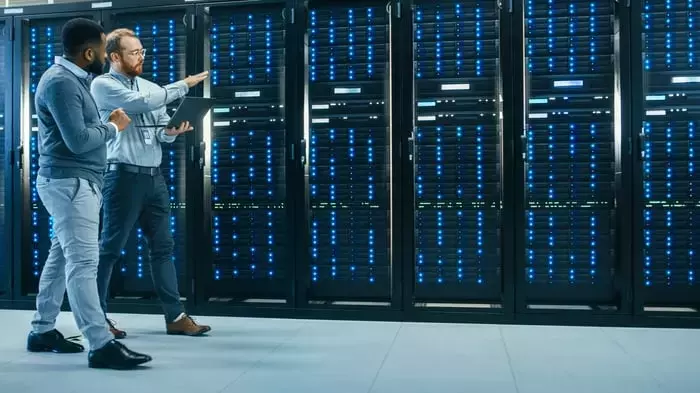
In the dynamic world of artificial intelligence, major technology corporations are allocating substantial resources to construct expansive data centers. These facilities are the backbone for advanced AI training, necessitating vast quantities of specialized components. While chip manufacturers like Nvidia have seen tremendous growth supplying graphics processing units and custom AI accelerators, the less-heralded yet equally vital component of data storage is experiencing an unprecedented surge in demand.
This demand for storage has propelled Seagate Technology to an unexpected leadership position in the S&P 500. Their hard drives are essential for 'nearline' storage, a cost-effective method for managing the immense datasets critical for large language models. Seagate's financial performance reflects this trend, with a remarkable 39% revenue increase and gross profit margin expanding to 35.2% in fiscal 2025. This growth highlights a supply-constrained market where Seagate and its primary competitor, Western Digital, are flourishing. Both companies are benefiting from the insatiable need for data center infrastructure, with forecasts predicting the data center storage market to grow from $13 billion in 2024 to $23 billion by 2028, suggesting a sustained period of expansion.
Despite the cyclical nature of the hard drive industry, Seagate appears to have established a technological advantage with its heat-assisted magnetic recording (HAMR) process, aiming for mass production of 40TB hard drives by early 2026. This puts Seagate ahead of Western Digital by approximately six months, potentially allowing them to capture additional market share. While Seagate's valuation might seem modest compared to some AI stocks like Palantir, it's crucial to consider the cyclical patterns of the storage sector. The current favorable conditions have led to elevated earnings multiples for both Seagate and Western Digital, making it prudent for investors to carefully assess entry points into these stocks.
The current landscape underscores the critical role of robust infrastructure in powering technological advancements. As AI continues its rapid evolution, the demand for efficient and vast data storage solutions will only intensify. Companies like Seagate and Western Digital, by providing these fundamental components, are not merely profiting from a market trend but are actively enabling the future of artificial intelligence. Their success is a testament to the fact that innovation, combined with strategic positioning within essential industries, can lead to remarkable achievements, contributing positively to the broader economic and technological landscape.
