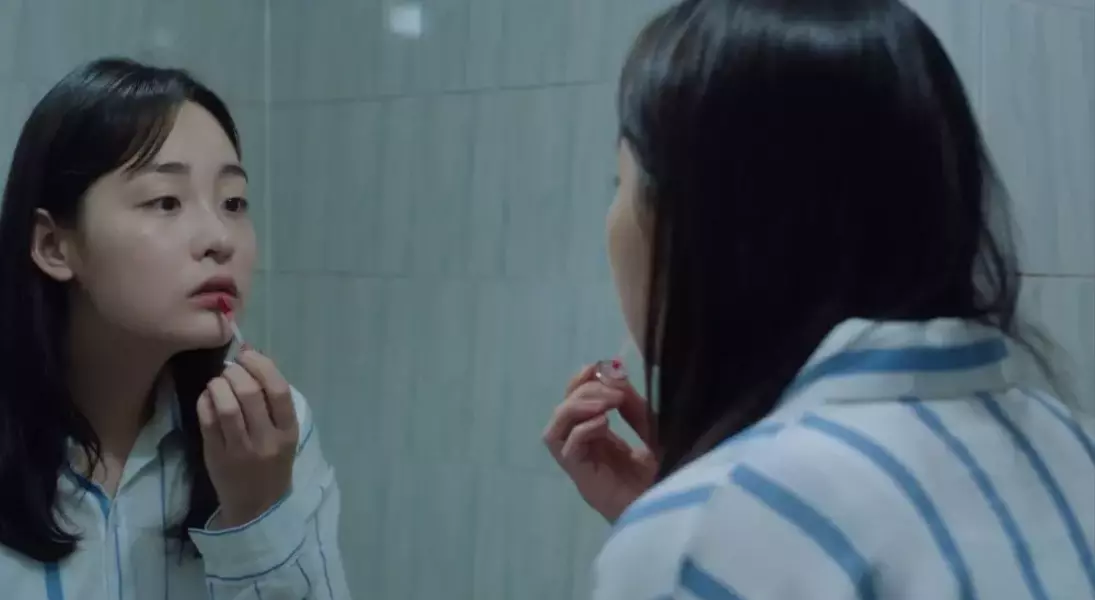
Danish director Frederik Sølberg's film, 'Hana Korea,' recently captivated audiences at the Busan International Film Festival, earning the Flash Forward competition's audience award. This cinematic work delves into the complex journey of North Korean defectors as they navigate life and integration in South Korea. The film's inception traces back to an impactful encounter in Seoul, evolving through years of dedicated research and collaborative efforts, culminating in a unique Danish-Korean co-production that reimagines traditional filmmaking approaches. The narrative is deeply rooted in real-life experiences, offering a nuanced perspective on a rarely explored subject.
The genesis of 'Hana Korea' sparked from director Sølberg's initial visit to South Korea fifteen years prior. During his first evening in Seoul, a casual conversation with two Korean men, deeply moved by the division of their homeland, planted a profound seed. Their heartfelt wish for 'hana Korea,' signifying 'one Korea,' resonated with Sølberg and ignited his curiosity. This pivotal moment propelled him into extensive research, particularly focusing on Hanawon, South Korea's integration facility for North Korean refugees. His initial endeavors included producing a radio documentary about the center, which further solidified his vision for a feature film centered not on North Korea itself, but on the profound personal transformations experienced by those seeking a new life in the South.
A significant turning point occurred in 2019 when Sølberg, alongside Danish producer Sara Stockmann and Korean producer Heejung Oh, met Hyorin, a young North Korean woman whose personal stories became the bedrock for the film's main character, Hyesun. Hyorin's candor and unique perspective deeply impressed the filmmakers. She courageously urged Sølberg to tell her story, emphasizing that his outsider status, as a non-Korean, would allow for a more objective and impactful narrative. This collaboration blossomed into a close friendship, with Hyorin remaining actively involved throughout the production process, even inviting Sølberg to her wedding as a testament to their bond.
The screenplay, crafted in collaboration with Sharon Choi, renowned for her work with Bong Joon Ho, artfully translated Hyorin’s experiences into the fictional life of Hyesun. Sølberg lauded Choi's exceptional ability to weave deep insights into the challenges faced by young Korean women with intellectual ponderings on identity and belonging, all while maintaining a keen sense of narrative structure and character development. For the demanding lead role, Sølberg cast Kim Minha, fresh from her critically acclaimed performance in Apple TV's 'Pachinko.' Her compelling portrayal in the series convinced Sølberg she was the ideal choice, demonstrating an innate understanding of the film's thematic direction.
Minha’s preparation for the role involved an immersive effort to master the distinct North Korean dialect from Ryanggang Province. Her dialect coach advised her to shed preconceived notions of North Korean speech often heard in media. She dedicated considerable time to rigorous training, receiving precise and direct feedback on every take to ensure authentic representation. Minha approached Hyesun's character arc with meticulous attention, focusing on the gradual evolution from a guarded individual to someone more adaptable and open as she settled into her new life. She aimed to convey these subtle shifts through nuanced expressions, vocal tones, and physical gestures, highlighting Hyesun's journey toward emotional liberation.
Sølberg, in collaboration with cinematographer Stephanie Stål Axelgård, devised a unique visual language to parallel Hyesun's path to freedom. The film employs 'slow cinema tableaux' with fixed frames when Hyesun is confined or restricted, transitioning to more dynamic, hand-held shots as she grows and embraces her newfound liberty. This cinematic strategy extends beyond mere framing, encompassing the deliberate use of time, silence, blocking, lighting, color, and production design to amplify Hyesun's emotional odyssey. The filmmakers prioritized a style that not only elevates Hyesun's emancipation from her circumstances but also symbolizes her reclaiming control over her own narrative, both within the story and through the camera's lens.
A pivotal element of the film's narrative structure is the inclusion of letters Hyesun writes to her mother, a detail inspired by Hyorin's own heartfelt correspondence. Sølberg revealed that early in development, they gained access to Hyorin's actual letters, which offered profound insights into the weighty decisions she made and the enduring significance of her family throughout her journey. These letters proved invaluable for Minha, providing a deep well of inspiration for her character. She found the voiceovers derived from these letters particularly precious, feeling a strong connection to the real woman who inspired Hyesun.
'Hana Korea' exemplifies an innovative model for international co-production. Despite primary funding from the Danish Film Institute, the team established a framework of equal partnership between Danish and Korean producers. Sølberg emphasized that the film's success, both artistically and narratively, hinged on fully integrating the Korean perspective from its earliest stages. This collaborative spirit permeated every phase of production, from initial research to the final cut, with both leadership teams sharing joint responsibilities. This approach ensured that the film was grounded in authentic experiences, avoiding simplified portrayals. Through extensive consultations with nearly 30 North Korean defectors and various experts, the filmmakers aimed to craft a story that truly resonated with those whose lives it represents. As Sølberg poignantly stated, Hyorin's constant reminder of the story's real-life gravity instilled a profound sense of responsibility to create a film that honors her and her fellow North Koreans, making them feel seen and recognized. With REinvent managing international sales, 'Hana Korea' is poised for a wider global release, sharing this powerful narrative with audiences worldwide.
