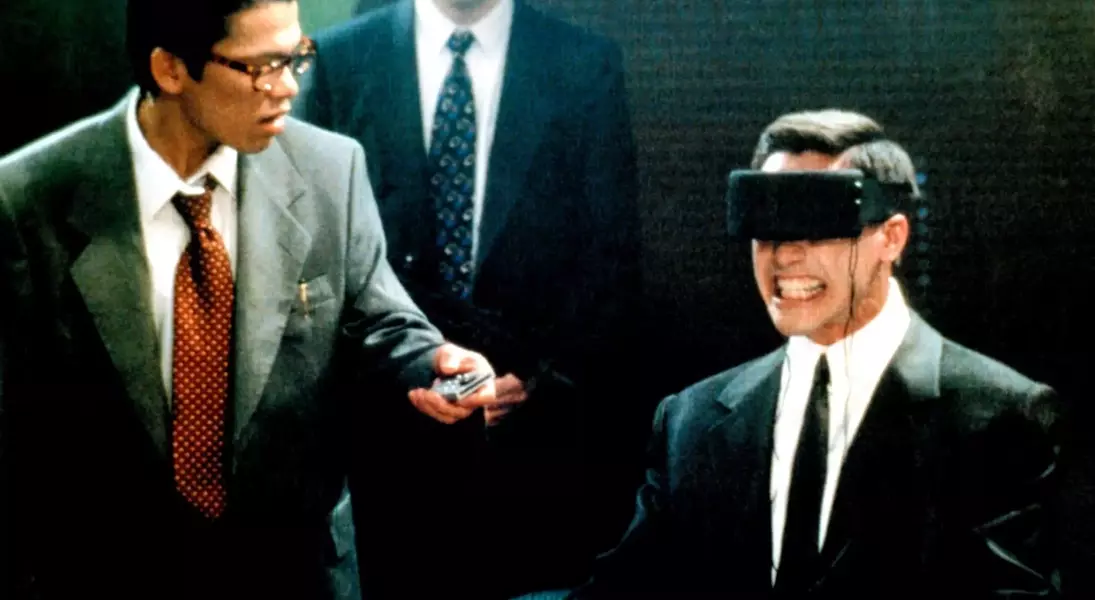

This article explores Keanu Reeves' unusual portrayal in the 1995 cyberpunk action film 'Johnny Mnemonic', which is set to be removed from Netflix at the end of June. Unlike his typical understated roles, Reeves delivers a surprisingly animated performance in this adaptation of William Gibson's short story. The narrative centers on a data courier burdened with an excessive amount of sensitive information stored in his brain, forcing him into a desperate race against time to offload it before suffering fatal consequences or succumbing to dangerous adversaries. The piece delves into the film's distinct dystopian aesthetic, its reception during its initial release, and its enduring appeal as a cult classic, despite its acknowledged flaws and complicated production history.
Keanu Reeves has long been recognized for his composed and often subtle acting style, which typically forms the anchor around which films are constructed. He is known for his reliability and his positive interactions with film crews. However, 'Johnny Mnemonic' presents a rare instance where Reeves deviates from this norm, offering a more expressive and uninhibited performance. This departure is also evident in roles such as Johnny Silverhand in 'Cyberpunk 2077' and his cameo in 'Always Be My Maybe'.
The film 'Johnny Mnemonic' draws its inspiration from a work by William Gibson, a foundational figure in cyberpunk literature. Reeves' character is a specialized courier tasked with the perilous job of transporting digital data securely within a cerebral implant. This already hazardous profession becomes even more critical when the volume of data surpasses what his neural system can safely manage. Faced with a dire situation in New Jersey—stranded, without support, and with a malfunctioning data implant—he must find a way to extract the information within a few days or risk severe brain damage. Adding to his predicament, he is pursued by a Yakuza faction intent on his demise, compelling him to form an alliance with a mercenary, Jane, to locate an illicit solution.
Positioned alongside other '90s dystopian narratives like 'Total Recall' and 'Strange Days', 'Johnny Mnemonic' crafts a visual landscape of stark contrasts: from pristine, high-end environments to widespread urban decay, mirroring a future set in 2026. The film's aesthetic foreshadowed visual themes later seen in cyberpunk productions such as 'Altered Carbon'. A particularly memorable moment, which periodically resurfaces online, involves Reeves' character experiencing a dramatic outburst after a narrow escape from an assassin. This scene, showcasing Reeves' uncharacteristic frenzy, stands out as a captivating anomaly within the film's otherwise intense atmosphere.
'Johnny Mnemonic', while perhaps not a masterpiece by conventional standards, offers an undeniably engaging viewing experience. Despite its often incoherent plot and challenging production journey—initially conceived as a low-budget art film that unexpectedly ballooned into a $30 million production fraught with studio interference—it remains a fascinating example of '90s cyberpunk cinema. Critics at the time were largely dismissive, and audiences found it perplexing. Nevertheless, the film’s blend of intricate kills, enigmatic techno-cults, rogue artificial intelligences, and elaborate set designs, all revolving around Reeves as an unlikely action hero perpetually in over his head, makes it a worthwhile watch. Before its removal from Netflix, viewers are encouraged to dedicate a couple of hours to this unique cinematic offering. For those who connect with its peculiar charm, an extended black-and-white cut by director Robert Longo is also available on Blu-Ray.
