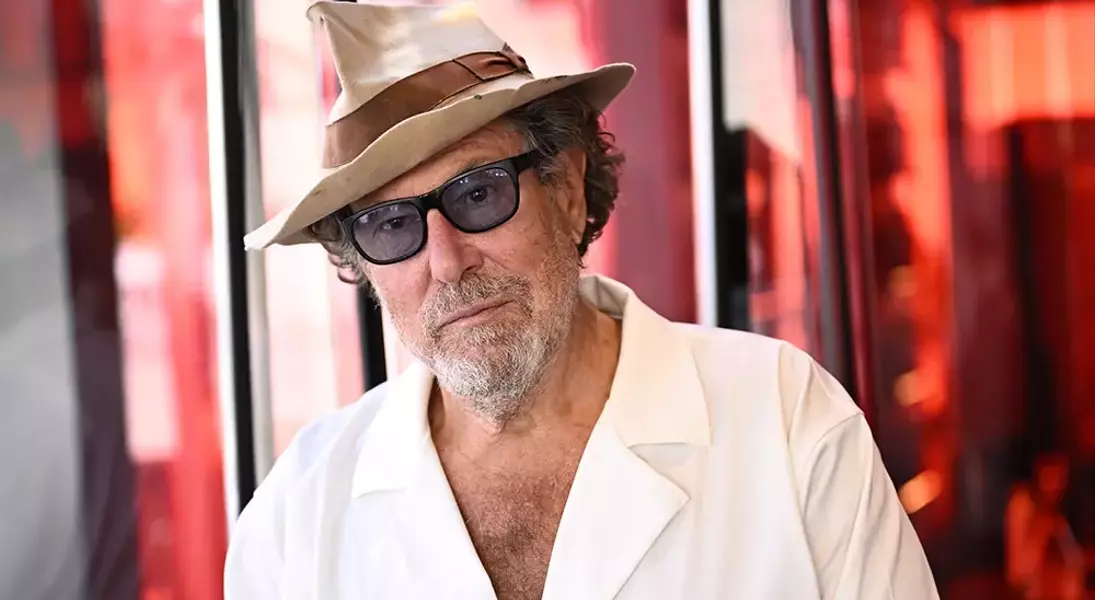
Director Julian Schnabel has unequivocally dismissed demands from Gaza advocacy groups for the Venice Film Festival to exclude actors Gal Gadot and Gerard Butler from the premiere of his latest cinematic work, \"In the Hand of Dante.\" The controversy arose from the actors' expressed support for Israel, prompting an open letter from filmmakers and artists that called for a strong condemnation of the ongoing conflict and the disinvitation of certain celebrities. Schnabel, however, maintained that his casting decisions were based solely on artistic merit, stressing the importance of focusing on the film's creative achievements rather than external political debates. While Gadot and Butler ultimately did not attend the festival, Schnabel's resolute stance underscores a broader discussion about the intersection of art, politics, and activism within the global film community.
His film, an ambitious adaptation of Nick Tosches' novel, delves into a profound journey inspired by Dante Alighieri's epic poem. The narrative weaves a complex tapestry involving a rediscovered manuscript of \"The Divine Comedy,\" leading its protagonist, played by Oscar Isaac, through a transformative odyssey. The production's challenging scope, spanning various iconic European and American locations, required an exceptional ensemble. Schnabel successfully enlisted a talented cast, notably securing a unique appearance from legendary filmmaker Martin Scorsese in a pivotal role, further emphasizing the artistic integrity and collaborative spirit that defined the project.
Artistic Integrity Over Political Agendas
In response to the recent controversies surrounding his film's stars, Julian Schnabel strongly advocated for the separation of artistic work from political disputes. He explained that his choice of actors, including Gal Gadot and Gerard Butler, was solely based on their professional capabilities and their ability to embody their roles effectively. Schnabel firmly believes that artists should not face boycotts due to their personal views or political affiliations, asserting that such actions detract from the essence of creative expression. He made it clear that his primary concern is the film's artistic quality and its narrative impact, not the off-screen political stances of his cast members. This position highlights a deep commitment to the integrity of the filmmaking process, prioritizing performance and storytelling above external pressures.
During a press conference for \"In the Hand of Dante\" at the Venice Film Festival, Schnabel directly addressed the calls for disinvitation. He emphasized that the focus should remain on the film itself, which represents a significant artistic endeavor. His remarks came after an open letter from activists urged the festival to take a strong stance against the Gaza conflict and to bar certain celebrities who have publicly supported Israel. Despite the festival organizers confirming that Gadot and Butler were not officially disinvited, their absence from the event underscored the ongoing sensitivity of the issue. Schnabel's defense of his actors reflects a broader principle of artistic freedom, asserting that creative talent should be judged on its own merits, unburdened by geopolitical considerations. He conveyed that the artistic value and the compelling performances within \"In the Hand of Dante\" are what truly matter, encouraging audiences and critics to engage with the film on its own terms rather than allowing external political pressures to overshadow its artistic essence.
The Cinematic Vision: A Journey Through Dante's Legacy
\"In the Hand of Dante\" is an ambitious cinematic undertaking that reimagines Nick Tosches' novel, delving into a complex narrative inspired by Dante Alighieri's iconic \"The Divine Comedy.\" The film centers on the discovery of a rare, handwritten manuscript of the epic poem, which embarks on a tumultuous journey from the Vatican Library to the underworld of New York City's organized crime, eventually finding its way to Tosches himself. This intricate plot serves as a metaphorical backdrop for Tosches' personal odyssey, mirroring Dante's own descent and eventual spiritual awakening. The film’s intricate storyline and profound themes were a significant draw for its cast, particularly Oscar Isaac, who embraced the dual challenge of portraying both Tosches and Dante, captivated by the project's seemingly impossible yet compelling nature.
The production of \"In the Hand of Dante\" presented considerable challenges, demanding extensive shooting across diverse and historically rich locations such as Sicily, Venice, Verona, Rome, and New York. Oscar Isaac dedicated himself to his roles, immersing himself in the source material by studying Tosches' writings, poetry, and multiple translations of \"The Divine Comedy\" in both English and Italian. This rigorous preparation allowed him to authentically embody the complexities of his characters and to navigate the film's profound narrative layers. Julian Schnabel revealed that the project's inception was inspired by a gift of books from Johnny Depp, who initially intended to be involved. However, it was Isaac's unwavering commitment upon reading the script that ultimately brought the film to fruition. The ensemble cast also boasts an impressive array of talent, including Jason Momoa, John Malkovich, Louis Cancelmi, Sabrina Impacciatore, and Franco Nero. A notable highlight is the appearance of acclaimed director Martin Scorsese in a small yet impactful role as the sage Isaiah, who guides Dante. Schnabel praised Scorsese's support and eagerness to participate, emphasizing that his presence perfectly completed the visionary cast of \"In the Hand of Dante.\"
