This article provides an in-depth review of the new documentary 'Karl', focusing on its strengths and limitations in portraying the complex life and influential career of the iconic fashion designer, Karl Lagerfeld. It explores how the film navigates his famously private persona and assesses its overall impact as a tribute to his legacy.
Unveiling the Enigma: 'Karl' — A Celebration of Style and Persona
Understanding the Man Behind the Icon: Karl Lagerfeld's Elusive Public Persona
By his own admission, Karl Lagerfeld preferred to remain an enigma. He once stated that he had so meticulously crafted his public image that understanding his true self was an impossibility, even for those closest to him. Despite this desire for privacy, his ambition to be perceived was undeniable. Over seven decades, he cultivated a monumental career, becoming one of fashion's most impactful, recognizable, and celebrated designers of all time.
'Karl': A Documentary's Quest for Connection and Creative Heart
The documentary 'Karl', directed by Nick Hooker, endeavors to bridge the gap between Lagerfeld's carefully constructed public image and the creative essence of the man beneath. While the film may not offer an exhaustive or definitive exploration, it presents a compelling journey into the life of a figure whose influence continues to resonate for decades following his passing.
Crafting a Posthumous Portrait: Archival Insights and Creative Storytelling
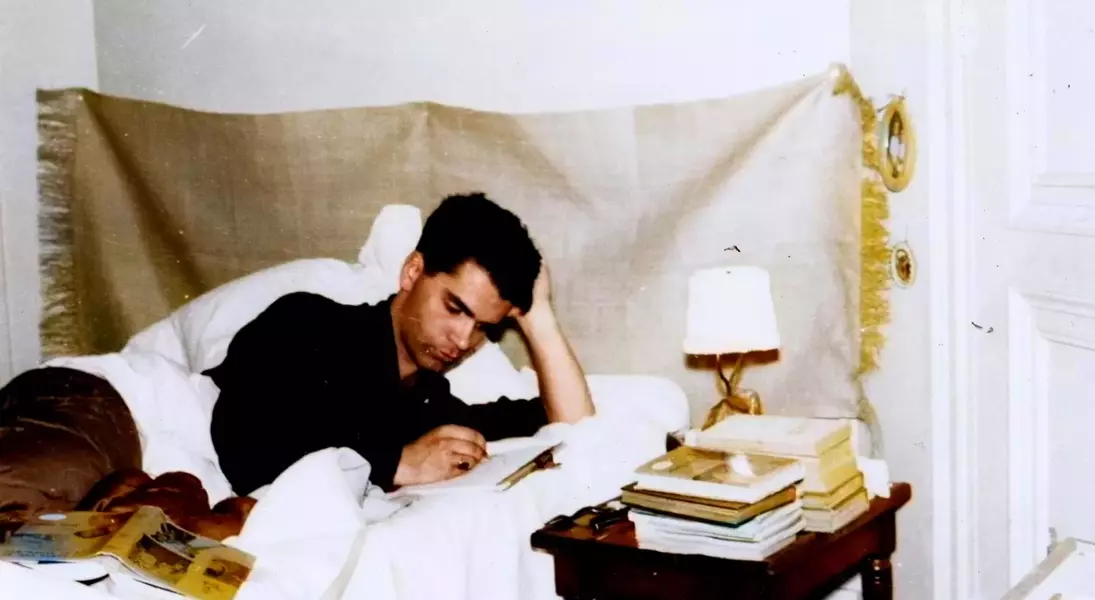
As Lagerfeld passed away in 2019, this film serves as a posthumous tribute, meaning he did not contribute new interviews. Instead, Hooker skillfully weaves together undated historical photographs, vintage footage, Lagerfeld’s own artistic sketches, and excerpts from his writings—some even brought to life through AI-generated narration of his voice. Adding a touch of artistic flair, animated segments by Rohan Patrick McDonald, characterized by their bold and simplistic aesthetic mirroring Lagerfeld’s drawing style, vividly depict moments from his early life for which no visual records exist.
Deconstructing a Controlled Image: Perceived Aversion to Emotion and Intimacy
Lagerfeld projected an image of detachment, asserting a lack of emotional vulnerability, including jealousy or anger. Yet, his intricate relationships, such as those with long-term partner Jacques de Bascher (as depicted in the 'Becoming Karl Lagerfeld' series) and creative collaborator Inès de la Fressange, hinted at a more complex emotional landscape. While he acknowledged periods of lacking control, the film does not extensively explore these. His approach to dieting, which he described as “fascistic,” further underscores his rigid self-discipline: “There’s no discussion. There is an order, you follow it.”
Perspectives from the Inner Circle: Friends and Colleagues Share Their Insights
Given Lagerfeld's innate reserve, the film predominantly relies on accounts from those within his close circle to illuminate his character. Interviews with associates from Chanel, Fendi, and his own label, alongside celebrity friends like Penelope Cruz and Lily-Rose Depp, offer heartfelt testimonies about his significance in their lives, often evoking visible emotion. While these insights provide a sense of his personal impact, they offer a less precise understanding of his broader cultural influence. The narratives, though touching, maintain a certain distance, akin to hearing about a remarkable friend of a friend rather than experiencing the connection firsthand.
A Sympathetic Gaze: Balancing Praise with Limited Scrutiny
Predictably, 'Karl' presents an overwhelmingly favorable depiction, brimming with commendation and exercising caution with critique. The film acknowledges Lagerfeld's occasional contentious public remarks, yet the specific examples provided are so understated that viewers unfamiliar with his career during the 2010s might question the extent of his controversial nature, contrary to the claims of his former publicist. Additionally, a brief mention of a disappointing collection from 1998 stands as nearly the sole professional setback highlighted, in a narrative that otherwise paints a picture of an impeccable career.
Highlighting Professional Innovation and Artistic Impact
The documentary enthusiastically showcases Lagerfeld’s brilliance, relentless work ethic, and unique charm, building a compelling, though not necessarily profound, argument. It meticulously details his professional breakthroughs: his groundbreaking role in revitalizing Chanel when younger designers rarely helmed established houses, his ability to infuse the venerable brand with a fresh, alluring appeal, and his pioneering high-low collaborations, notably with H&M. His celebrity status grew to such an extent that he even lent his voice to the 'Grand Theft Auto' video game in the 2000s, cementing his cultural footprint.
Exploring the Essence of Design: Visual Splendor and Interpretive Narratives
While the film excels in presenting Lagerfeld’s visual legacy, its analysis of what made his designs truly exceptional is less defined. Designer Tom Ford, one of the documentary's most compelling interviewees, articulates Lagerfeld’s impact through personal admiration, exclaiming, “The first few seasons of Chanel were STARTLING!” However, this enthusiasm is not consistently matched by a deeper cultural or artistic examination of the designs themselves. Ford’s insights are more attuned to Lagerfeld’s iconic public persona than his artistic genius, at least in the segments included. Meanwhile, Tilda Swinton offers a somewhat convoluted tribute, praising Lagerfeld for his “dignity of women” and a “liberated spirit,” a sentiment that, while well-intentioned, lacks clear articulation.
The Allure of the Work Itself: A Visual Feast
Ultimately, the documentary's greatest asset is its decision to allow Lagerfeld’s creations to speak for themselves. It is genuinely captivating to witness a textile designer elaborate on translating a “grocery store” theme into a dense red tweed, designed to evoke the texture of raw meat. Similarly, the sight of models in Barbie-inspired ensembles strutting to “Short Dick Man” is undeniably engaging. One doesn't need to be a fashion connoisseur to appreciate the meticulous craftsmanship of these intricate garments, the graceful movement of the models, or the sheer spectacle of his increasingly elaborate runway shows. The visual splendor alone is remarkable.
A Glimpse, Not a Definitive Account: The Enduring Elusiveness of Karl
Nevertheless, viewers might not gain much beyond this surface appreciation. Karl Lagerfeld’s extensive life, profound work, and lasting influence are too vast a subject to be comprehensively covered within a 110-minute documentary. Thus, 'Karl' functions more effectively as an expansive overview for those already familiar with and admiring of his work, rather than a foundational primer for newcomers or an in-depth analytical deep dive for experts.
The Poetic Paradox: Embracing the Designer's Chosen Distance
Lagerfeld himself frequently recedes and re-emerges from the narrative's focus, a stylistic choice that perhaps aligns with his own wishes. He once articulated, “I don’t want to be a reality in people’s lives. I want to be a fleeting presence, appearing and disappearing.” It is arguably impossible to truly intimately understand a figure who so ardently resisted personal closeness. Yet, in capturing this very elusiveness, the documentary manages to uncover a truth that resonates profoundly.
