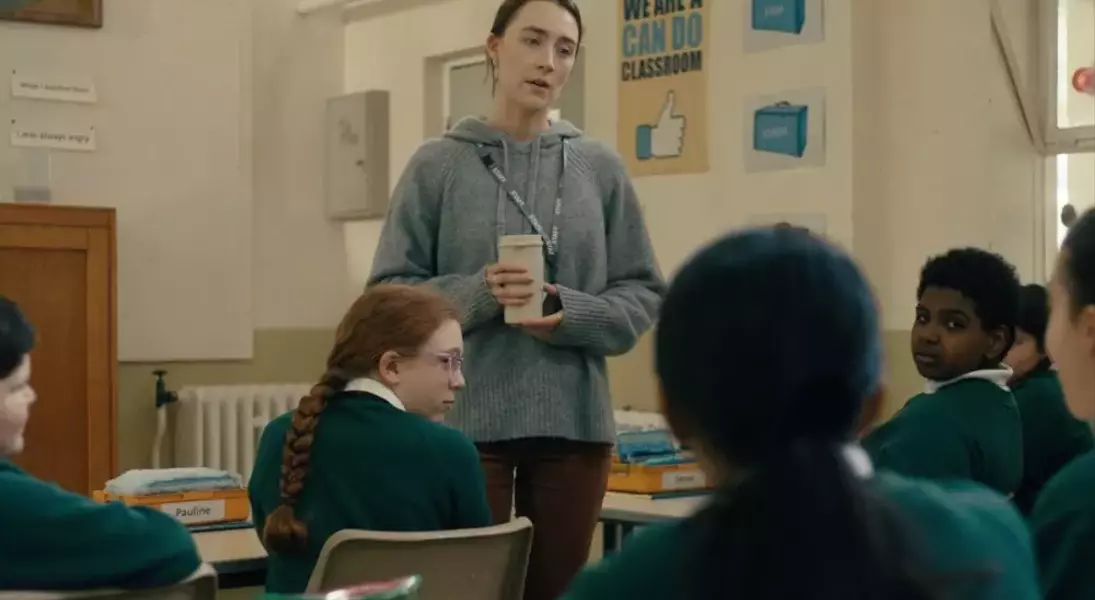
Jonatan Etzler's debut English-language film, 'Bad Apples,' has captivated audiences at its premieres at the Toronto International Film Festival (TIFF) and the San Sebastian Film Festival. This darkly comedic and thrilling narrative, adapted from Rasmus Lindgren’s novel 'De Oönskade,' explores themes of societal convenience and the human condition through a twisted, high-octane plot. Etzler sheds light on the film's Scandinavian influences, the intricacies of working with child actors, and his deliberate use of humor to navigate complex moral questions, inviting viewers to reflect on their own roles in a world where prosperity often coexists with hidden suffering.
Filmmaker Jonatan Etzler Unveils 'Bad Apples' at Renowned Festivals
On September 26, 2025, Swedish director Jonatan Etzler provided an exclusive glimpse into the creation of his first English-language feature film, 'Bad Apples.' Following its successful premiere at the Toronto International Film Festival (TIFF) and its selection to open the New Directors Competition at San Sebastian, the film has garnered significant attention. Etzler conveyed his satisfaction with the enthusiastic reception, noting that audiences particularly appreciated the film's audacious tone.
The film introduces Maria, portrayed with increasing intensity by the talented Saoirse Ronan. Initially depicted as a mild-mannered teacher facing immense personal struggles, Maria's life takes an unexpected turn when she reaches her breaking point. She finds herself in an unconventional predicament, holding a volatile student named Danny hostage in her basement. This drastic act, stemming from her desperation to ensure his absence during a school audit, sets off a chain of events that transforms her life.
Etzler, alongside Jess O’Kane, meticulously crafted the screenplay from Rasmus Lindgren’s acclaimed debut novel, 'De Oönskade.' The narrative skillfully develops its characters from seemingly simple beginnings into complex individuals. As Maria's control over Danny evolves, her life remarkably begins to improve, while the film's star pupil, Pauline, played by newcomer Nia Brown, grows closer to her favorite teacher. The shifting sympathies between characters manipulate audience emotions, challenging perceptions of who is truly the victim and who the aggressor.
A notable aspect of the production involved directing child actors, including Eddie Waller as Danny and Nia Brown as Pauline, alongside numerous school-aged extras. Etzler embraced the challenge, fostering a playful atmosphere on set to encourage authentic performances. He lauded casting director Fiona Weer, renowned for her work on the 'Harry Potter' series, for her exceptional ability to discover such remarkable young talent. Etzler also commended his adaptable crew for their readiness to follow the unpredictable flow of scenes involving children.
Etzler recounted the difficult search for an actor to embody Danny, emphasizing the need for someone capable of conveying underlying anger. He praised Eddie Waller for perfectly capturing this essence. He also shared an anecdote about Nia Brown, who, despite no prior on-screen experience, quickly developed a professional demeanor, even questioning her character's motivations, showcasing a remarkable innate understanding of her role.
The film's aesthetic and musical score play crucial roles in establishing its menacing atmosphere. From the cool, somber tones of Maria’s basement to the subtle, clever details in the schoolroom signage, every element of the production design, overseen by Jacqueline Abrahams ('The Lobster'), contributes to the intense character study. Swedish sound designer Andreas Franck, a frequent collaborator on Ruben Östlund’s films, and composer Chris Roe ('After Love') further enhanced the film’s impact with an organic, rhythm-driven score. Etzler described the score as a continuous, pumping machine, reflecting Maria’s unstoppable actions, utilizing orchestral arrangements and flutes to create an airy yet unsettling quality.
Etzler highlighted the significant Scandinavian presence in the film, from its novelistic origins to the contributions of Swedish cinematographer Nea Asphäll and editor Robert Krantz, with post-production completed in Sweden. He amusingly observed that audiences from the U.K. perceived the film as distinctly Scandinavian, while Swedish viewers found it quite British, showcasing its unique blend of cultural influences.
Produced by Oskar Pimlott at Pulse Films in the U.K. and acquired by Paramount’s Republic Pictures, 'Bad Apples' delivers a profound commentary on the human condition. It critically examines how collective comfort often comes at the expense of vulnerable outsiders, using dark comedy as a vehicle to provoke intense emotional responses. Etzler believes his sardonic approach will encourage audiences to lower their defenses and engage deeply with the subject matter, prompting self-reflection on their own complicity in such societal dynamics.
The film's narrative resonates with Ursula K. Le Guin’s short story, 'The Ones Who Walk Away From Omelas,' which illustrates a utopian society built upon the suffering of a single child. Etzler mused that this mirrors contemporary Western society, where many luxuries are predicated on unseen suffering. He hopes that by presenting these complex issues through laughter, a natural reaction to discomfort, 'Bad Apples' will spark vital global discussions upon its theatrical release, prompting audiences worldwide to confront these uncomfortable truths.
The film 'Bad Apples' serves as a compelling reminder of the intricate connections between individual actions and broader societal structures. It challenges viewers to examine the ethical compromises often made for collective convenience and to acknowledge the hidden costs of prosperity. Through its unique blend of dark humor and suspense, Jonatan Etzler masterfully guides the audience through an unsettling yet profoundly thought-provoking narrative, urging a deeper understanding of human responsibility and empathy.
