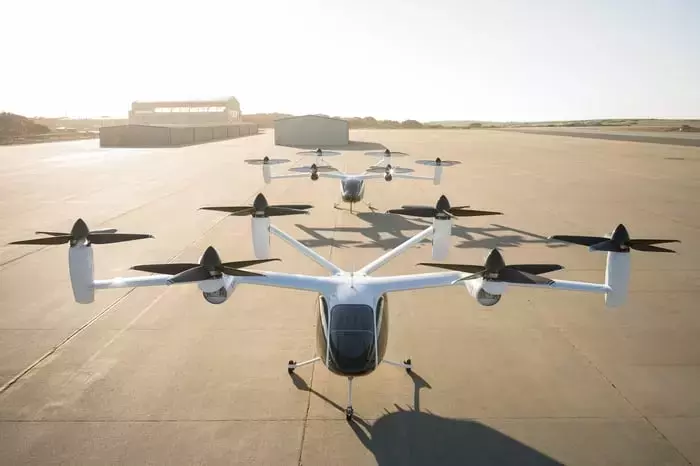
Joby Aviation, a leading innovator in electric vertical takeoff and landing (eVTOL) technology, has recently experienced a significant surge in its stock valuation. The company's share price approximately doubled by mid-October 2025, driven by substantial progress towards regulatory approval and increasing market optimism for urban air mobility solutions. Despite not yet generating considerable revenue, Joby is nearing a critical milestone: full Federal Aviation Administration (FAA) certification, which could transform the burgeoning eVTOL market.
Joby Aviation's Ascent Towards Commercial Viability
In a noteworthy development, Joby Aviation, an emerging leader in the electric vertical takeoff and landing (eVTOL) sector, has garnered significant investor attention. As of October 14, 2025, the company's stock, trading under the ticker JOBY on the NYSE, recorded an impressive 7.99% gain, with a closing price of $18.11. This positive momentum comes as Joby Aviation's share price has seen an approximate doubling throughout 2025, buoyed by the prospect of FAA certification and favorable governmental support. A recent executive order from the White House, aimed at accelerating eVTOL deployment, has further fueled optimism. Currently, Joby's first conforming aircraft is undergoing final assembly in preparation for FAA flight testing, a crucial step toward commercial operation. While the company is in its developmental phase and not yet generating substantial income, analysts, including those from Morgan Stanley, project the urban air mobility market to reach a staggering $9 trillion by 2050. This vast addressable market underscores the potential for Joby's technology to revolutionize urban transportation by alleviating traffic congestion in major metropolitan areas. However, the company faces financial considerations, having reported approximately $991 million in cash by the end of June, with an annual burn rate of about $500 million. A recent stock sale on October 7, which raised $514 million, provided a cash infusion but also resulted in shareholder dilution. This dynamic presents a mixed landscape for investors, where aggressive portfolios might embrace the inherent risks and long-term potential, while more conservative strategies may opt to await concrete commercial results.
The journey of Joby Aviation offers a compelling lesson in the complexities and opportunities of investing in disruptive technologies. The company's trajectory highlights the delicate balance between groundbreaking innovation, regulatory hurdles, market potential, and financial sustainability. For investors, it underscores the importance of thorough due diligence, examining not just the 'what' (eVTOL aircraft) but also the 'how' (FAA certification process) and the 'when' (path to profitability). The prospect of urban air mobility transforming cityscapes is exciting, but Joby's story reminds us that even with strong tailwinds, the path to commercial success is often long and capital-intensive. It challenges us to consider whether a company's vision and technological prowess can outpace its burn rate and secure its place in a future market that is still largely theoretical.
