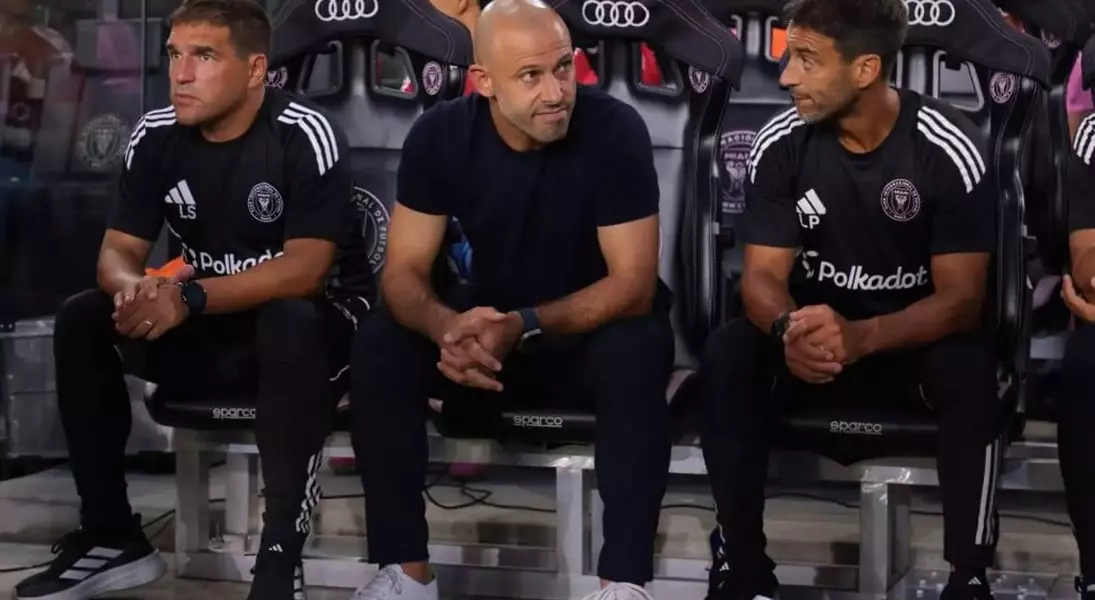
A recent Leagues Cup quarterfinal match witnessed an extraordinary display of coaching persistence, as Inter Miami's head coach, ejected from the game, continued to influence play from the stands. This unprecedented incident has sparked discussions regarding the boundaries of sideline conduct and fair play within professional soccer. The victory, hard-fought and narrowly secured, highlights the team's resilience under unusual circumstances.
Extraordinary Sideline Drama Unfolds in Leagues Cup Quarterfinal
In a captivating Leagues Cup quarterfinal held at Chase Stadium, Inter Miami triumphed over Tigres with a 2-1 scoreline, a victory overshadowed by the controversial actions of their head coach, Javier Mascherano. During the halftime interval, Mascherano was issued a red card, necessitating his departure from the technical area. However, rather than retreating entirely, the veteran coach took a strategic position in the stands, directly behind his team's bench. From this vantage point, Mascherano was seen vocally guiding his assistant coaches on the field. More strikingly, in the 58th minute of the match, he was observed communicating via mobile phone with assistant coach Lucas Rodriguez Pagano, who was simultaneously holding his own device on the touchline. This digital exchange seemingly allowed Mascherano to continue issuing tactical instructions and even direct player substitutions, including a notable interaction with Benjamin Cremaschi.
Despite Mascherano's earlier expulsion, Inter Miami had established a 1-0 lead. Tigres managed to equalize in the 67th minute, setting the stage for a tense finale. Star forward Luis Suárez then emerged as the hero, converting his second penalty kick of the night in the 89th minute to secure the decisive goal. The final moments of the game were filled with heightened drama, as Tigres struck the post twice with a single header in stoppage time, narrowly missing an opportunity to level the score. The Miami squad played this crucial match without their talisman, Lionel Messi, who was sidelined due to an aggravated injury sustained in a previous encounter against the LA Galaxy.
The events surrounding Mascherano's continued involvement have raised significant questions about the regulations governing coach conduct after a red card. Typically, an ejected coach is required to observe the remainder of the game from a remote location, far removed from the field of play, with explicit prohibitions against communicating with their team. A Leagues Cup spokesperson confirmed that coaches shown red cards are strictly forbidden from issuing instructions to players or staff. This incident prompts a closer examination of existing rules and their enforcement in the dynamic world of professional soccer.
As a sports observer, this incident provides a fascinating glimpse into the competitive spirit and ingenuity that can emerge under pressure. While the ethical implications of Mascherano's actions certainly warrant scrutiny and clarification from league authorities, one cannot help but admire his unwavering dedication to his team's success. It underscores the profound impact a coach can have, even when physically removed from the immediate action. This episode serves as a powerful reminder that in the heat of competition, the drive to win can push individuals to explore unconventional methods, prompting essential discussions about sportsmanship, rules, and the evolving nature of the game itself.
