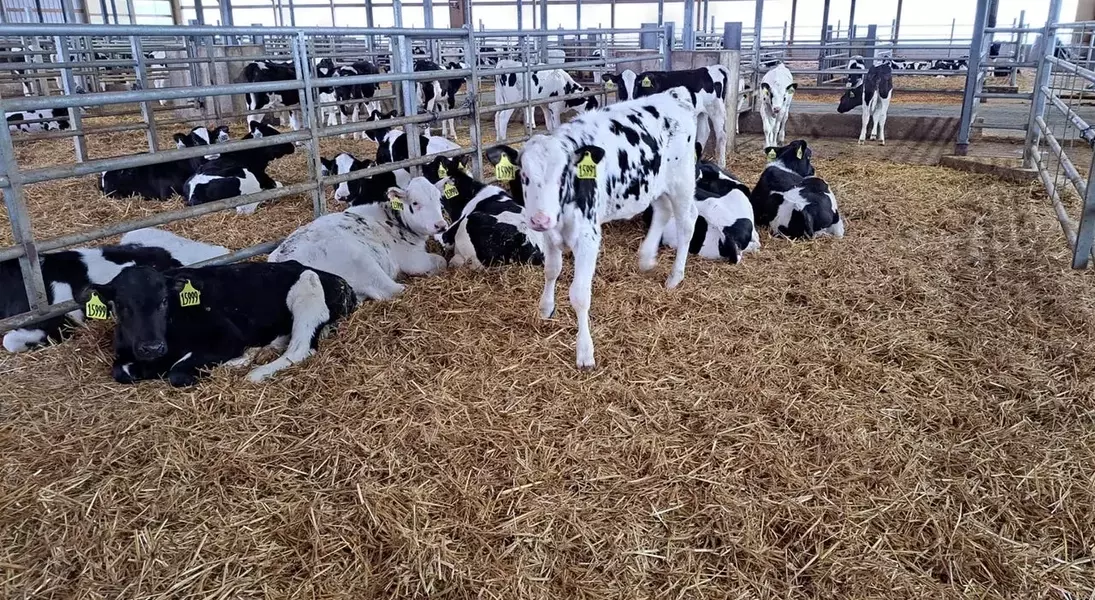
The upcoming Smart Calf Rearing Conference marks a significant milestone, bringing together global expertise to revolutionize dairy calf management in Wisconsin. This international gathering emphasizes the integration of scientific research with practical farm applications, offering dairy producers and industry professionals an unparalleled opportunity to explore advancements in calf health, nutrition, and welfare. Attendees will delve into a diverse range of topics, from early-life management strategies to the latest in automated feeding technologies, all designed to foster robust growth and overall well-being in young dairy animals. The conference underscores a collective commitment to enhancing efficiency and sustainability within the dairy sector by promoting best practices in calf rearing.
A core focus of the event is to bridge the gap between academic research and on-farm implementation. Experts from leading institutions and companies will share their insights on emerging concepts, providing actionable strategies that producers can integrate into their daily operations. The conference’s comprehensive agenda reflects a holistic approach to calf development, acknowledging the critical role of early-life experiences in shaping the long-term productivity and health of dairy herds. Through interactive sessions, expert presentations, and practical demonstrations, participants will gain valuable knowledge and tools to improve their calf rearing protocols, ultimately contributing to a more resilient and prosperous dairy industry.
Advancing Calf Health and Nutrition
The 2025 Smart Calf Rearing Conference, making its inaugural appearance in the United States in Wisconsin, is poised to redefine calf management. This collaborative initiative, spearheaded by the University of Wisconsin-Madison alongside the University of Guelph, Foerster-Technik, and Trouw Nutrition, gathers forward-thinking farmers, industry frontrunners, and scientific experts. The conference is designed to foster an environment where innovative calf care practices are shared and developed, ensuring that the latest research findings are translated into tangible benefits for dairy operations. A key highlight, the Producer Day on September 27 at the Arlington Agricultural Research Station, offers a unique opportunity for local dairy producers and calf raisers to engage directly with cutting-edge concepts in a hands-on setting. This dedicated session, priced at an accessible $50 including lunch, is meticulously crafted to integrate scientific principles with practical farming scenarios, promoting an evidence-based approach to calf rearing.
Esteemed speakers will cover critical aspects of calf development and health. Michael Steele from the University of Guelph will introduce novel concepts in colostrum and milk nutrition, emphasizing their profound impact on early-life vitality. Following this, an insightful session will explore practical strategies for successful pair or group housing, a method gaining traction for its potential benefits in social development and stress reduction. Dr. Terri Ollivett from the UW-Madison School of Veterinary Medicine will present research-driven approaches to enhancing calf health, sharing strategies that are both effective and practical for producers. The morning program culminates with Bob James, a professor emeritus from Virginia Tech University and a renowned consultant in calf-raising, who will elaborate on the successful implementation of auto feeder systems, covering facilities, personnel training, health protocols, and feeding plans. This comprehensive approach ensures that attendees receive a well-rounded understanding of modern calf management techniques, from fundamental nutrition to advanced technological applications.
Innovation in Management and Welfare
Beyond the foundational elements of nutrition and health, the conference extends its focus to innovative management practices and the overall welfare of dairy calves. A notable segment of the Producer Day features Bethany Dado-Senn, a technical specialist from Vita Plus, who will offer perspectives on the unique challenges and opportunities within Midwest calf rearing, highlighting aspects of innovation and overcoming obstacles. Her presentation will be followed by a dynamic panel discussion featuring leading Wisconsin dairy farmers and calf raisers, including Laura Raatz of Wagner Farms, Sam Peetz of Rosy-Lane Holsteins, and Dean Helt of Helt Dairy. These industry leaders will share their real-world experiences and inventive solutions in calf housing and management, providing invaluable insights directly from successful operations. This direct exchange of knowledge offers practical takeaways and inspires new approaches to farm management, demonstrating how innovation can be successfully integrated into existing systems.
The Producer Day concludes with an immersive tour of the newly renovated calf research barn at the Arlington Agricultural Research Station. This facility, where dairy replacement heifers and beef crosses are engaged in various experiments, showcases the state-of-the-art Foerster Technik CalfRail system. This innovative automated milk-feeding technology revolutionizes how calves are fed, allowing for flexible feeding of calves housed individually, in pairs, or in groups. The CalfRail system is designed to deliver precise, individualized portions of warm, freshly prepared milk or milk replacer up to eight times daily. A significant feature of this system is its capability to automatically collect individual feed intake data, enabling precise monitoring of each calf’s progress and health. In addition to the Producer Day, the conference includes scientific sessions from September 24-26 at the Memorial Union on the UW-Madison campus. These sessions will delve into cutting-edge research across calf health, nutrition, physiology, and welfare, including discussions on reducing methane emissions, the impact of antioxidants on immunity, the microbiome's role in antibiotic-free rearing, colostrum quality, the effects of transportation stress, and data-driven welfare practices. These advanced discussions reinforce the conference's commitment to promoting sustainable and ethical calf rearing practices, pushing the boundaries of current understanding and preparing the industry for future challenges.
