This article delves into the groundbreaking work of contemporary Native American artists who are challenging prevailing notions of technology and art. By drawing upon rich Indigenous philosophies, they propose a paradigm shift from extractive, data-driven systems to models rooted in reciprocal relationships, consent, and a holistic understanding of intelligence. Their creations highlight the deep historical connection between Indigenous cultures and technological innovation, advocating for a future where technology serves to foster connection and respect rather than isolation and exploitation.
Bridging Ancient Wisdom and Future Tech: A New Indigenous Art Movement
Reconceptualizing Art and Technology: An Indigenous Lens on Innovation
In many Native American linguistic traditions, the concept of 'art' does not refer to a static object but to a dynamic process encompassing profound thought, prayer, and communal practice. It is inherently linked to daily life, serving as a medium for ceremony, instruction, and design. This perspective views creation not merely as an aesthetic pursuit but as a carrier of knowledge and a driver of responsibility. The true strength of these practices lies in their capacity to educate, connect, and evolve through active engagement, a stark contrast to many contemporary technological frameworks that prioritize preservation or display. These Indigenous principles offer a potent critique of prevalent assumptions within the tech industry regarding intelligence and human interaction.
Pioneering Artists Forging a New Path in Tech and Culture
A new generation of Native artists, including Suzanne Kite (Oglala Lakota), Raven Chacon (Diné), and Nicholas Galanin (Tlingít), are building upon these foundational principles. Their collective endeavor transcends stereotypical representations of Native crafts or mere criticism of Silicon Valley. Instead, they are united by a fundamental rejection of current extractive data models, advocating for systems built on relationality. These visionary creators place the symbiotic relationship between humans and technology at the forefront of their innovative work, seeking to cultivate more ethical and interconnected digital landscapes.
Suzanne Kite: Crafting Consent-Based AI Prototypes
Suzanne Kite's artificial intelligence installations embody a Lakota framework for data sovereignty, where true intelligence blossoms only through mutually consensual and reciprocal interactions. Unlike many modern systems that often presume user agreement through complex terms of service, Kite's interactive machines necessitate the physical engagement of the observer, offering a meaningful response in return. She emphasizes the intimate scale and transparent nature of her work, stating that her interest lies in the multi-layered complexity of art rather than mere technological advancement. Kite's work serves as a tangible example of ethical AI development.
Rethinking Intelligence: Native Technologies and the Future of Interaction
While Kite meticulously constructs functional prototypes of AI founded on consent, her contemporaries explore different facets of this philosophy through sound, robotics, and performance. Their art confronts the pervasive logic of automation, surveillance, and resource extraction. It is crucial to recognize that Native communities have always been deeply intertwined with technology; the foundational elements of America's infrastructure, including its technological advancements, are rooted in Indigenous lands, labor, and ways of living. The pertinent question is not whether Native cultures contribute to current technological progress, but why their historical and ongoing contributions have been marginalized. These artists challenge the prevailing dualities embedded in Western innovation, posing a profound query: What if the establishment of a relationship were a prerequisite for data collection? What if refusal, not extraction, were the default? These artists are not seeking inclusion within existing frameworks; rather, they are actively constructing the foundational principles for future technological paradigms.
Suzanne Kite: Artistic Explorations of Reciprocity and Sensory Data
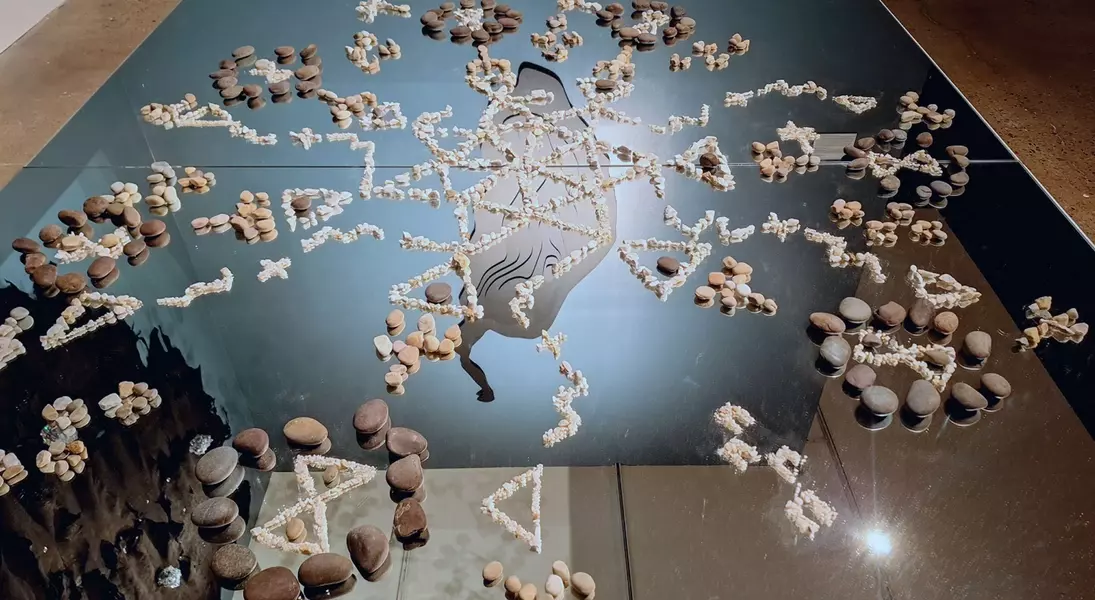
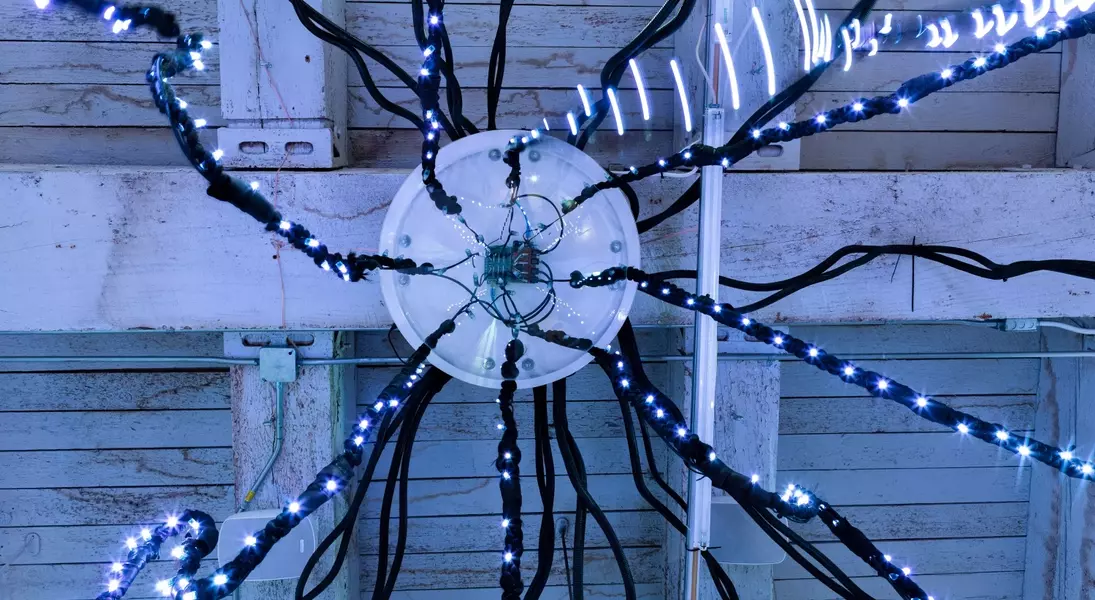
In her installation, "Wičhíŋčala Šakówiŋ (Seven Little Girls)" (2023), Suzanne Kite addresses the Western technological disconnect between knowledge and physical experience. This piece features a four-meter-long hair braid equipped with sensors, translating Kite's bodily movements into machine-learning algorithms during live performances. As she dances, the braid interprets the force and rhythm of her gestures, generating auditory feedback that fills the exhibition space. Below, stones arranged according to Lakota star maps ground the performance in traditional astronomical wisdom. Another notable work, "Ínyan Iyé (Telling Rock)" (2019), employs embedded AI to engage and respond to viewers. This installation, with its shifting lights and braided tendrils, speaks and whispers, conveying "more-than-human intelligence"—systems founded on reciprocity and mutual exchange, highlighting that all relationships necessitate shared responsibility.
Raven Chacon: Acoustical Narratives and Site-Specific Performance
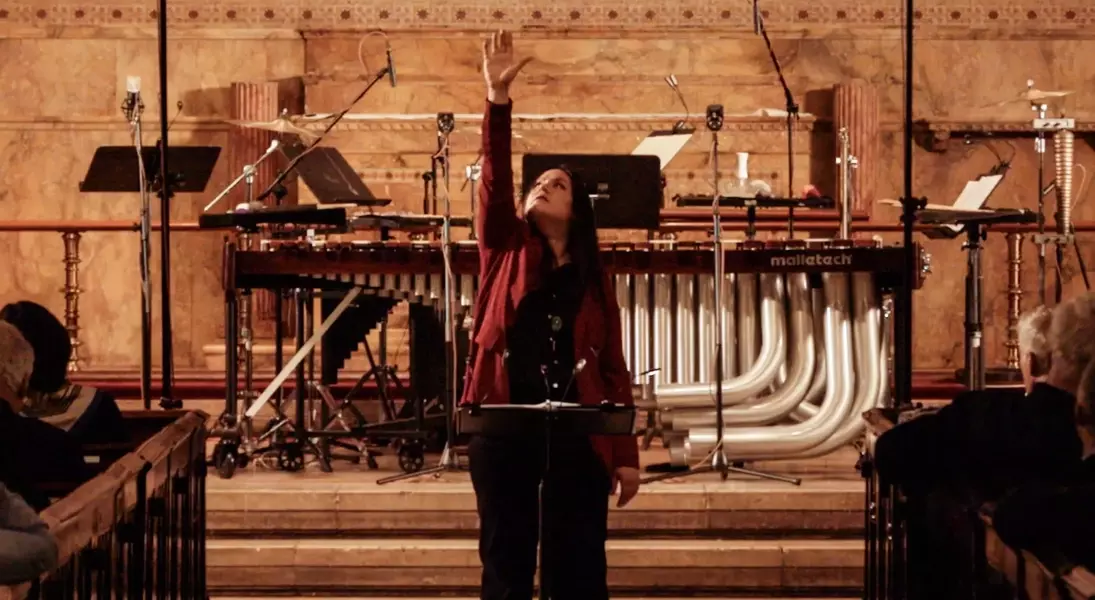
Raven Chacon's Pulitzer Prize-winning musical composition, "Voiceless Mass" (2021), premiered in a cathedral, generating "sounds the building can hear" through electronic frequencies. This piece exploits the cathedral's acoustics to evoke spectral voices without human vocal cords, creating a technological séance that gives presence to historical absences. Each site-specific performance is documented, mirroring how sensor networks register presence, but crucially, only with explicit consent from the environment and participants. Chacon's work explores the intersection of sound, architecture, and consent in capturing the ephemeral.
Nicholas Galanin: Sculptural Critiques of Automation and Colonialism
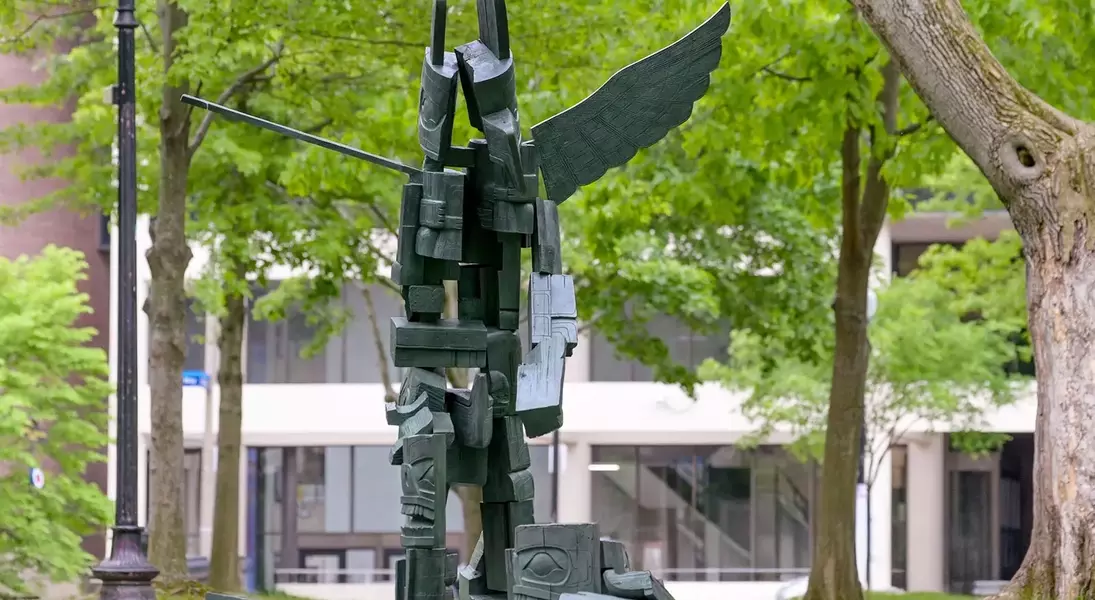
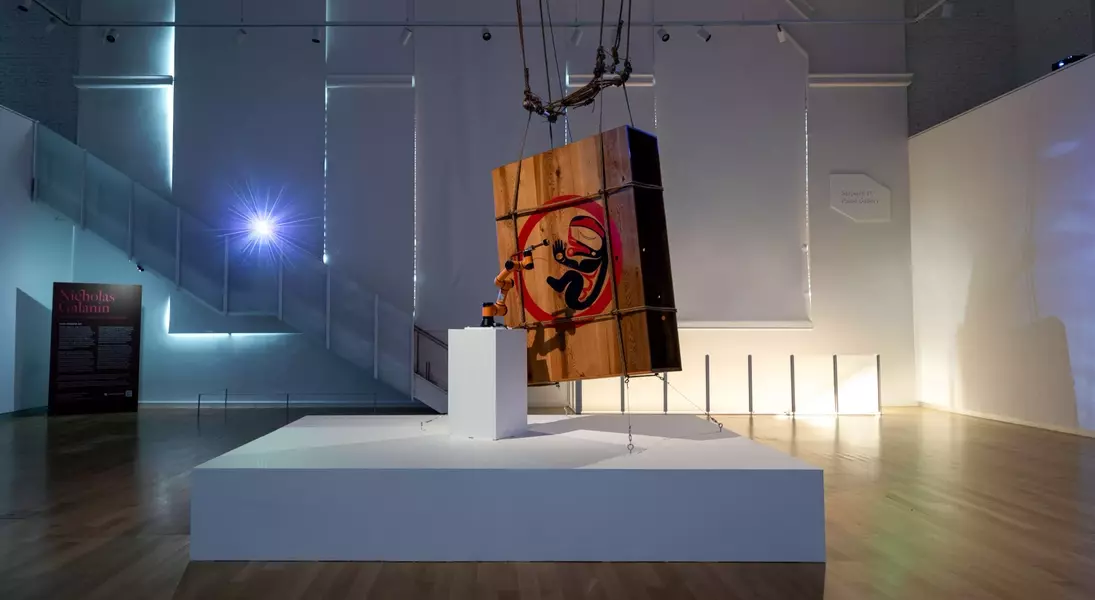
Nicholas Galanin's "Aáni yéi xat duwasáakw (I am called Land)" (2025) is a mechanical drum installation that explores the tension between automated motion and human memory. A cherrywood box drum, traditionally carved from red cedar and used in Tlingit ceremonies, hangs from the ceiling. A mechanical arm strikes the drum at a heartbeat's tempo, creating a warning pulse that highlights the conflict between automation and ancestral knowledge. His bronze sculpture, "I think it goes like this (pick yourself up)" (2025), is cast from deconstructed faux totem blocks. This work critiques the historical undermining of Native technology and culture by settler societies. Galanin emphasizes that Tlingit data is inscribed in wood, unlike modern digital records, underscoring totem poles' role as information systems encoding history, mythology, and family narratives.
