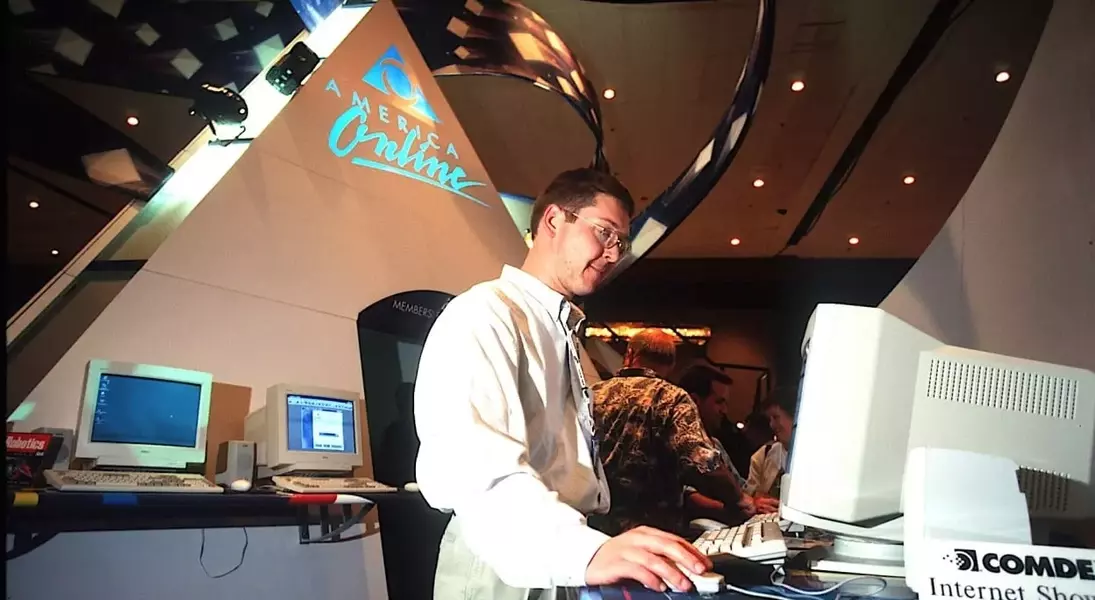
This piece examines the profound and often underestimated influence of America Online (AOL) on contemporary digital communication, contrasting its nostalgic image with its foundational contributions to modern internet services.
Bridging the Past and Future: AOL's Enduring Digital Legacy
A Farewell to Dial-Up: Reflecting on AOL's Digital Impact
The impending cessation of AOL's dial-up internet service has sparked a dual response: surprise at its continued existence and a wave of sentimental reflection on the 1990s era. However, beyond the immediate nostalgia, there's a crucial narrative being overlooked – AOL's role not just as a relic of the past, but as a silent architect of our digital present. Far from being merely a dial-up provider, AOL was a crucible of innovation, with many of its early features directly foreshadowing the functionalities that define our online lives today.
Instant Messaging: The Precursor to Modern Communication Apps
AOL Instant Messenger (AIM) stands as a testament to AOL's foresight. This popular service of the 90s and early 2000s essentially bundled the core functionalities of today's leading messaging platforms like Messenger, WhatsApp, and Slack. AIM's intuitive interface, complete with Buddy Lists and personalized icons, predated Facebook Messenger by decades. It introduced groundbreaking features such as early emoticons, multimedia messaging, and file sharing, even before the widespread adoption of such capabilities. Moreover, AIM pioneered the 'Away' status, a feature now ubiquitous in professional communication tools. Its ability to navigate network restrictions made it invaluable for rapid workplace communication, demonstrating its versatile utility for both professional and casual interactions.
SmarterChild: The Genesis of AI Chatbots
The AIM platform served as fertile ground for third-party innovations, notably the development of SmarterChild. This early AI chatbot, adopted by millions, provided users with access to vast databases, offering information on anything from movie details to sports statistics. While not as sophisticated as current AI models, SmarterChild's ability to engage in conversational exchanges and even exhibit a hint of personality, thanks to its witty script, directly influenced the development of later AI assistants like Siri. It showcased the potential for artificial intelligence to interact with and assist users in everyday digital environments.
AOL Chat Rooms: The Original Social Media Wild West
AOL's infamous Chat Rooms, where users could engage in real-time discussions with numerous strangers, were a direct antecedent to modern social media platforms, particularly Twitter. Introduced even before AIM, their popularity surged after AOL transitioned to monthly billing in 1996. These rooms, for better or worse, mirrored many of the challenges and dynamics seen in today's online communities, including anonymous interactions, heated debates, and the prevalence of inappropriate behavior. The moderation challenges faced by AOL's volunteer system in managing millions of users provided early insights into the complexities of governing large-scale online interactions.
Usenet: The Ancestor of Online Forums and Communities
Long before the advent of AIM and chat rooms, AOL provided widespread access to Usenet in 1993, a network of discussion groups known as newsgroups. This move, while initially met with resistance from existing Usenet veterans, effectively introduced millions of new users to online forums. This influx, famously termed "Eternal September," marked the beginning of large-scale online communities, laying the groundwork for platforms like Reddit and other prominent message boards. Furthermore, AOL’s moderated Q&A sessions with experts and celebrities, where questions were user-generated, were direct precursors to today's popular "Ask Me Anything" (AMA) sessions on Reddit. Beyond these specific features, AOL’s innovation extended to tools for website creation and the rapid expansion of data center infrastructure, demonstrating its far-reaching impact on the internet’s physical and functional architecture.
