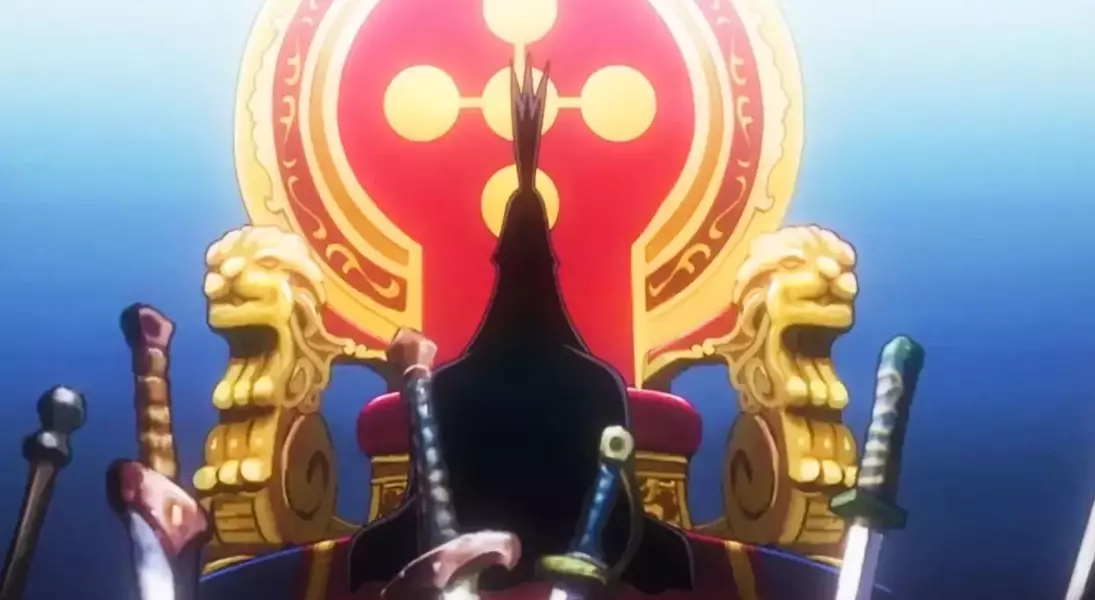
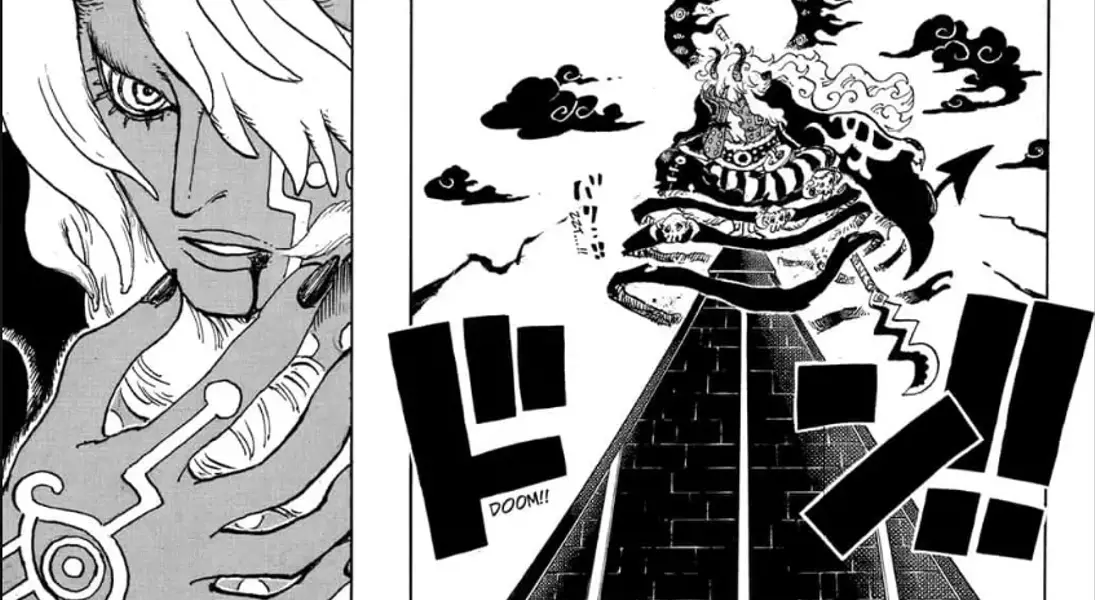
After an eight-year wait, the enigmatic Imu, the World Government's covert sovereign in One Piece, has finally been unveiled. This momentous reveal, showcased in Chapter 1179, offers readers a comprehensive look at Imu's physical form and the designation of their formidable Devil Fruit, solidifying their position as the ultimate adversary within the saga. The revelation has ignited widespread discussions among enthusiasts, who are now dissecting every detail of Imu's powers, perceived vulnerabilities, and intriguing parallels to Western interpretations of demonic figures.
The creative genius behind One Piece, Eiichiro Oda, skillfully built anticipation for Imu's grand entrance, culminating in their full appearance in the concluding panel of chapter 1179. The Straw Hat Pirates had seemingly resolved the turmoil in Elbaph, a resolution aided by the formidable Accursed Prince, Loki. His colossal transformation via the Dragon-Dragon Fruit, Model: Nidhöggr, combined with the might of his weapon, Ragnir, swiftly vanquished the Holy Knights of God, who had sought to abduct the giant offspring from the island. Witnessing this shift in momentum from Mary Geoise, Imu resolved to descend into the 'lower world' to personally address the burgeoning rebellion. Thus, Saint Nerona Imu, the architect of the World Government and the proclaimed King of the World, made their presence known in Elbaph.
In preceding narratives, Imu exerted control by inhabiting Gunko, a Holy Knight, through a pact bestowed upon their most devoted followers. However, this proved insufficient against the combined forces of Luffy and Loki, compelling Imu to adopt more drastic measures. A considerable portion of the chapter illustrates the fervent pleas of the Five Elders, who implored Imu to remain within the castle, fearing an undefined peril. Upon Imu's eventual arrival in Elbaph, they are depicted in a state of genuflection, expelling blood, a subtle indication of a vulnerability that afflicts them when present in the lower realm. This observation could elucidate why Imu typically maintains a secluded existence within Pangea Castle; it might not merely signify the detached nature of an absolute monarch but rather a pragmatic necessity stemming from an undisclosed ailment or malediction.
Imu's character design is set to spark extensive debate among fans during the hiatus before the subsequent One Piece installment. Their true gender remains ambiguous, as the facial features unveiled in the final panel exhibit masculine characteristics yet are adorned with prominent eyelashes, manicured nails, and delicate eyes. The preceding full-body depiction, however, is a treasure trove of intricate details awaiting meticulous examination. The presence of horns and a pointed tail strongly reinforces the prevailing notion that Imu is, in essence, the embodiment of evil within the One Piece universe. Any lingering skepticism should be dispelled by the nomenclature of their Devil Fruit: the 'Akuma no Mi,' a term explicitly translated as 'Devil's Fruit' in English.
In the Japanese rendition of the chapter, the term 'Devil' is rendered in katakana, whereas the identical term within 'Devil Fruit' is typically inscribed in kanji throughout the series. This distinction is profoundly significant. Katakana is traditionally employed in Japanese to transcribe terms derived from foreign languages. While One Piece frequently utilizes katakana for stylistic emphasis, in this particular instance, it might convey a more subtle layer of meaning. Imu, with their horned visage and pointed tail, aligns with the Western archetype of the Devil. Their abilities, encompassing possession, the corruption of spirits, and the conjuration of arcane symbols, strongly evoke a sense of occultism and devil worship, drawing clear parallels to Christian theological concepts and Western mythological narratives. Although prior clues hinted at this conclusion, the explicit naming of Imu's Devil Fruit and its presentation in katakana further solidifies this compelling hypothesis.
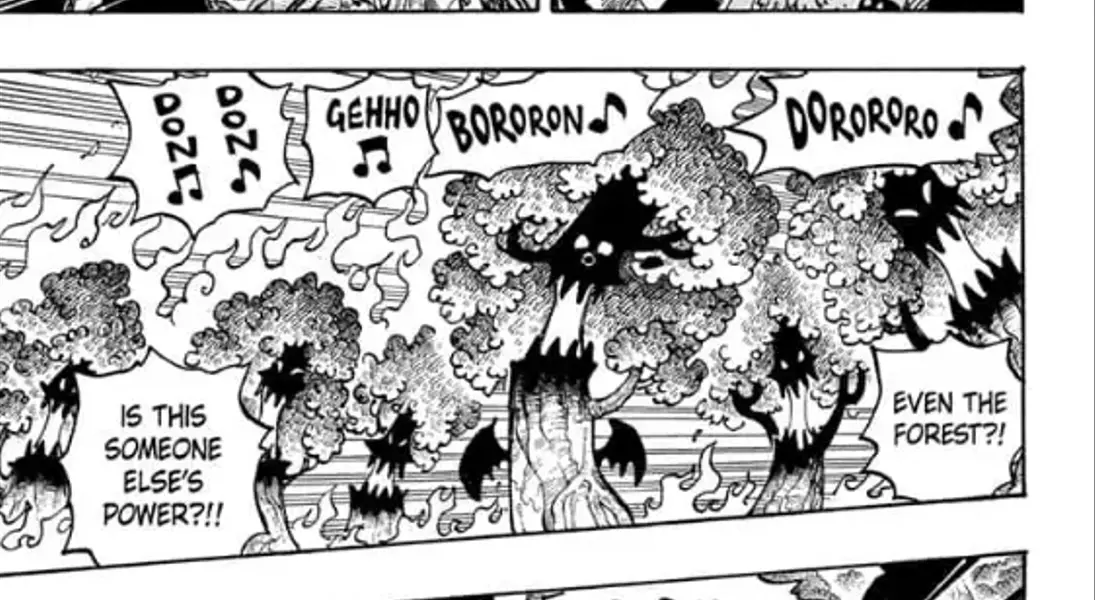
Nevertheless, an unexpected, more whimsical aspect also emerges. Upon Imu's descent into Elbaph, the surrounding flora and architectural structures become animated, displaying malevolent grins and chanting a song to herald their arrival. This peculiar phenomenon draws an interesting parallel to Luffy's Nika powers, which similarly manifest in a lighthearted manner, manipulating the environment to generate comical effects. The Devil Fruit wielded by Imu, being literally a 'Devil's Fruit,' is a stroke of pure ingenuity. For years, aficionados have pondered the identity of this 'devil of the sea' responsible for the creation of these enigmatic fruits since the inception of the series, and now, a comprehensive explanation appears to be on the horizon.
As further revelations about Imu's capabilities are anticipated in forthcoming chapters, fans are currently engrossed in dissecting the villain's visual characteristics. As observed by a user on X, based on the architectural proportions of Aurust Castle, Imu's stature is hypothesized to be comparable to that of Loki, who, even by giant standards, is colossal. Another enthusiast highlighted the striking resemblances between Imu and established portrayals of Son Goku, the legendary Monkey King from Chinese mythology. Finally, the concentric rings within Imu's pupils have drawn comparisons to the Rinnegan observed in Naruto, and it would be a compelling tribute if Oda intentionally incorporated this detail as an homage to his esteemed colleague, Masashi Kishimoto.
While much of the attention is understandably focused on Imu's appearance and formidable powers, the most exhilarating implication is that, in the forthcoming chapter, Luffy is poised to confront the series' preeminent antagonist. This formidable figure embodies a direct antithesis to every principle upheld by the Straw Hat captain. Regrettably for devoted fans, this development strongly suggests that One Piece has undeniably embarked upon its concluding phase. All exceptional narratives, inevitably, must draw to a close.
