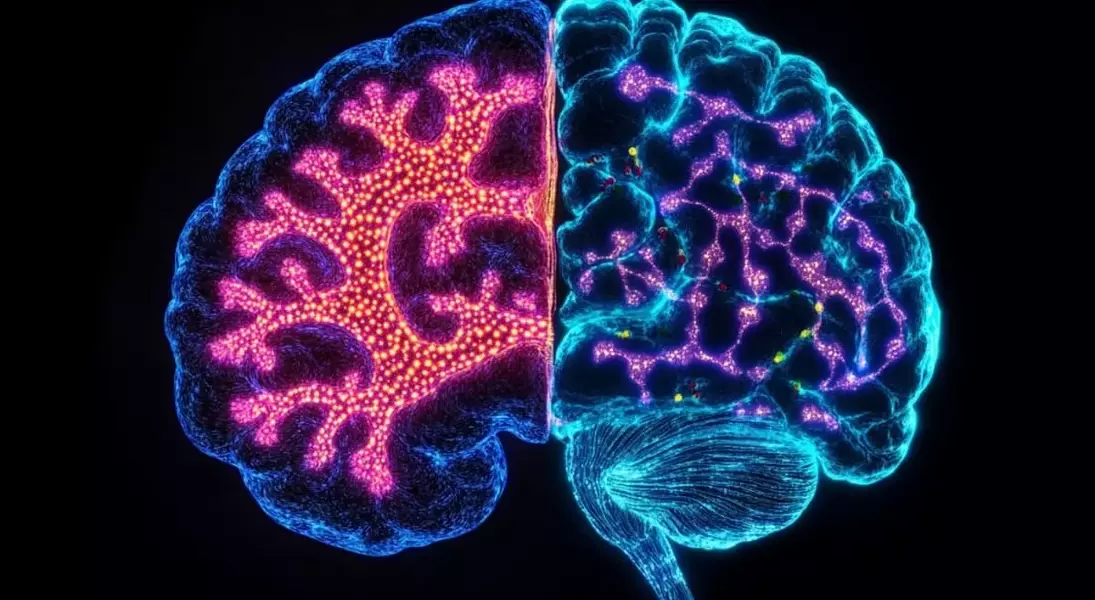
New scientific discoveries reveal that the immune molecule IL-17 plays a pivotal role in influencing behavior by directly interacting with specific brain regions. While it enhances sociability in the cortex, it simultaneously induces anxiety in the amygdala. These findings indicate that cytokines function similarly to neuromodulators, linking immune activity to emotional and social behaviors. This understanding could lead to innovative treatments for neurological conditions such as autism and depression. Researchers have identified that IL-17 acts differently in distinct parts of the brain, affecting neuron excitability and, consequently, behavior. By mapping its receptors across the brain, scientists aim to uncover how targeting IL-17 pathways might offer new therapeutic strategies.
The Influence of IL-17 on Sociability
IL-17's impact on sociability stems from its interaction with neurons in the somatosensory cortex. Here, IL-17 reduces neuron excitability, fostering more sociable behavior. This effect is part of a broader mechanism where immune molecules modulate brain functions beyond their traditional roles in inflammation control. Through its action as a neuromodulator, IL-17 not only regulates mood but also influences behavioral states significantly.
Recent studies highlight that IL-17E specifically binds to receptors in the cortex, decreasing neuron excitability and enhancing sociability. Researchers believe this molecule originally evolved as a neuromodulator before being co-opted by the immune system. Evidence suggests that IL-17 may have first appeared as a tool for regulating neural activity, later expanding its role to include immune responses. For instance, in worms, IL-17 promotes aggregation, a form of social behavior, while in mammals, it is produced by cortical neurons. This dual functionality underscores its importance in both neurological and immunological contexts.
Inducing Anxiety through IL-17 Receptors
In the amygdala, IL-17 elicits feelings of anxiety by increasing neuron excitability. This discovery strengthens the connection between the immune and nervous systems, suggesting that cytokines play a crucial role in shaping internal states. By acting on specific receptors in the basolateral amygdala (BLA), IL-17 modifies neural circuits responsible for processing emotions like fear and anxiety.
Researchers observed that IL-17A and IL-17C bind to receptors in the BLA, enhancing neuron excitability and inducing anxiety-related behaviors. Interestingly, blocking IL-17 receptors with antibodies paradoxically increases circulating levels of IL-17C, potentially explaining adverse mental health effects seen in clinical trials. Additionally, the presence of anti-inflammatory cytokine IL-10 offers a counterbalance to IL-17’s excitatory effects, providing a natural mechanism for regulating anxiety once it becomes detrimental. These interactions reveal the complexity of cytokine signaling in maintaining emotional balance and underscore the potential for developing therapies targeting these pathways to address mood disorders effectively.
