IBM's latest innovation in chip technology marks a significant leap forward, introducing a sub-1 nanometer process that could reshape the semiconductor landscape. This advancement comes at a time when chip affordability is a growing concern, prompting a critical examination of how such cutting-edge technology will impact the broader market and consumer accessibility.
The Dawn of a New Era in Semiconductor Innovation
Current Chip Landscape and Pricing Pressures
Today's leading graphics processing units from AMD and Nvidia rely on 4-nanometer class silicon, which is already quite costly. Adding to this, TSMC, a major chip manufacturer, has signaled intentions to increase its pricing for chip designers. This financial context makes IBM's new sub-1 nanometer technology both a thrilling technological breakthrough and a potential source of concern regarding future costs.
IBM's Revolutionary Sub-1 Nanometer Breakthrough
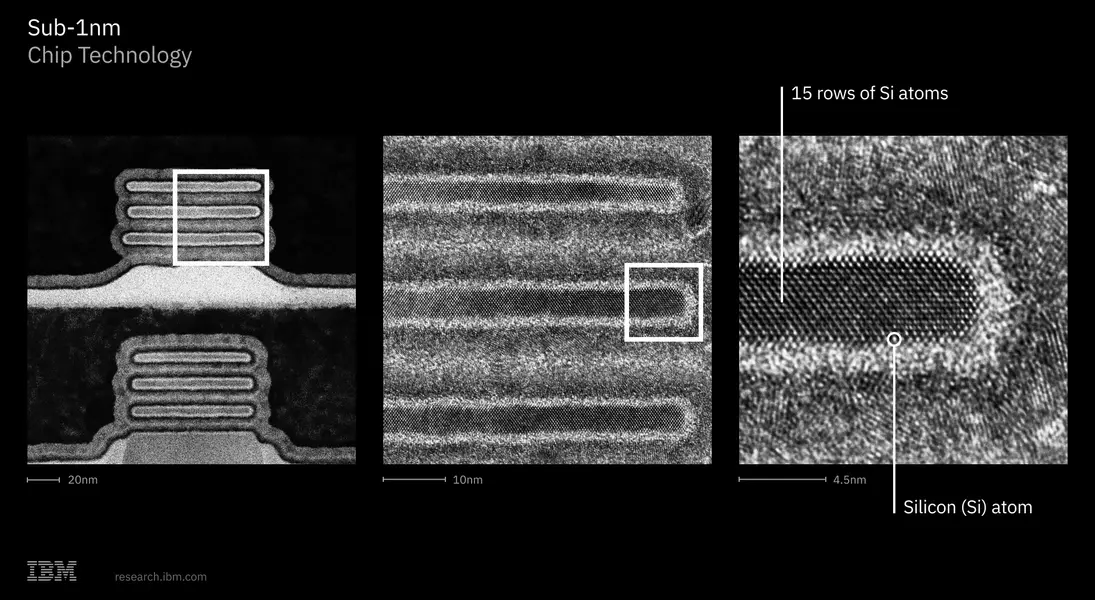
IBM has officially announced the creation of the world's first sub-1 nanometer chip technology. This innovation boasts a novel transistor architecture, dubbed 'nanostack,' operating at the 0.7 nanometer, or 7 angstrom node. This development is set to push the boundaries of what's possible in chip manufacturing.
The Nuances of Nanometer Node Terminology
Comparing different silicon nodes from various manufacturers, such as TSMC, Intel, and IBM, is notoriously complex. The term 'nanometer' itself has evolved from a precise technical specification to more of a marketing label, with actual element sizes within chips often diverging from the stated node names. For instance, TSMC's N3 and Intel's 18A nodes, while numerically different, are often considered comparable in transistor density by industry analysts.
Pushing the Boundaries of Transistor Density
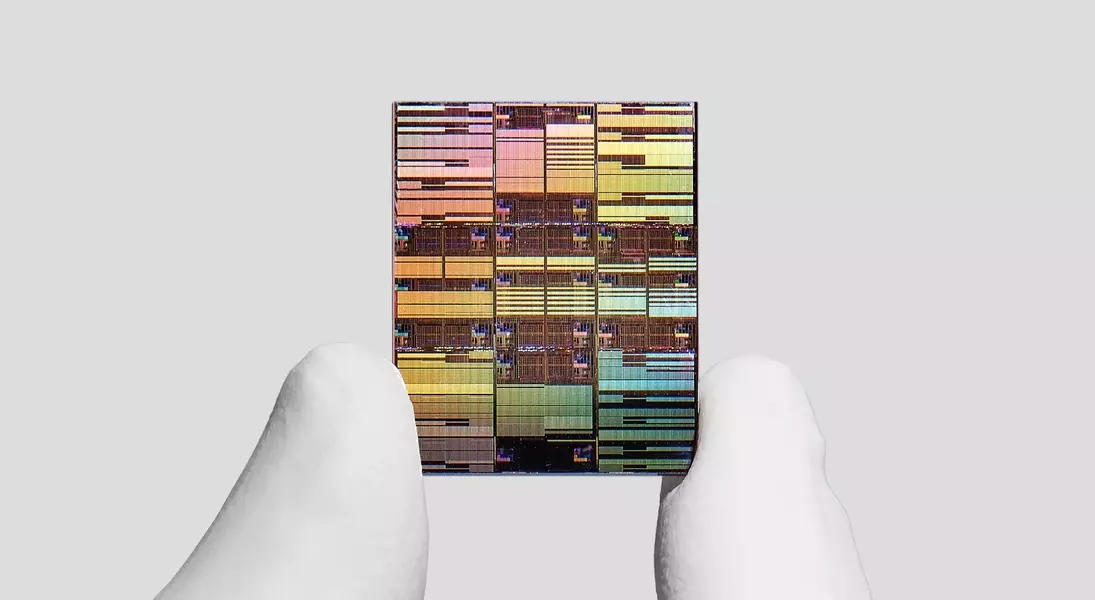
IBM asserts that its new sub-1 nanometer node can integrate approximately 100 billion transistors onto a chip no larger than a human fingernail. This remarkable feat is attributed to the 'nanostack' design, an entirely new architecture that represents a significant evolution beyond current nanosheet technologies. This design strategically stacks and staggers transistors vertically, employing 3D sequential integration to maximize transistor count. Furthermore, it allows for the use of diverse material combinations in each layer, optimizing both performance and power efficiency for individual transistors.
The Economic Implications of Advanced Chip Technology
While the technical prowess of IBM's new technology is undeniable, the fundamental question revolves around its economic viability. Moore's Law not only predicts increasing transistor density but also emphasizes the decreasing cost per transistor. If these incredibly complex chips become prohibitively expensive, their widespread adoption and impact on the consumer market could be severely limited. The true challenge lies in making this advanced technology accessible and affordable for a broader range of applications and users.
