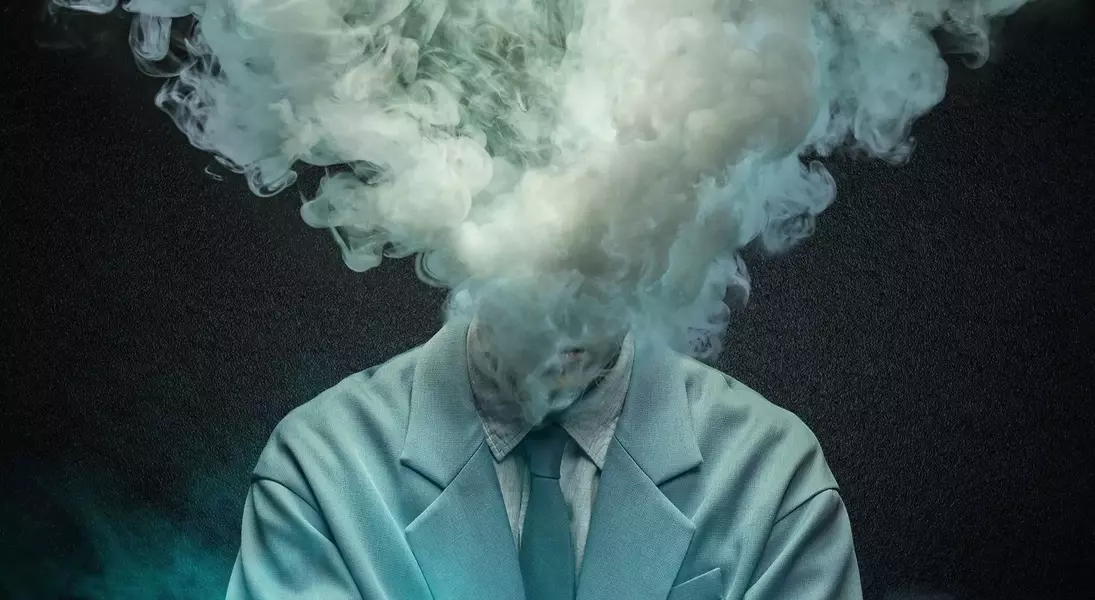
In an era saturated with nostalgic reboots and uninspired remakes, Netflix's "Human Vapor" emerges as a refreshing exception, transforming a 1960 Japanese cult classic into a captivating serialized mystery. This adaptation skillfully navigates a complex tapestry of genres, from science fiction and noir mystery to crime drama and body horror, all while retaining the essence of the original. Unlike many contemporary re-imaginings that simply rehash old narratives, "Human Vapor" builds upon its foundational material to forge a unique identity, offering a sophisticated exploration of institutional intrigue and personal motivations.
The Enigmatic "Human Vapor" Unveiled: A Deep Dive into Netflix's Latest Thriller
The narrative commences with a shocking event during a live broadcast, as environmental energy expert Professor Sano, portrayed by Morley Robertson, gruesomely disintegrates into a bloody spectacle, triggered by a mysterious gaseous entity. This dramatic opening immediately signals a departure from the original film, establishing a new and intense direction for the series. Following this unsettling incident, the story primarily follows the determined journalist Kyoko Kono, played by Yu Aoi, and the meticulous detective Kenji Okamoto, portrayed by Shun Oguri. Their intertwined past adds a layer of personal tension to their joint investigation. While Okamoto meticulously examines broadcast footage for external interference or gas leaks, Kono's pursuit of an empty box delivered to the newsroom leads her to a chilling discovery: a secret recording from the perpetrator, who ominously identifies himself as the "Human Vapor."
The villain, brought to life by the acting debut of Japanese model Uta Uchida, exudes an unsettling aura through his soft, slow monotone delivery, making his presence profoundly eerie. The series masterfully builds suspense, using subtle visual cues like lingering smoke from everyday objects to suggest the omnipresence of the Human Vapor, keeping both the characters and the audience on edge. As the plot thickens, the introduction of live-streaming siblings Kaho (Suzu Hirose) and Fujita (Kento Hayashi) initially seems tonally disparate but quickly becomes integral. Their authentic banter and role as audience surrogates allow them to stumble upon crucial clues, demonstrating that even ordinary individuals can become entangled in extraordinary mysteries. The series further expands its intricate web by integrating a compelling yakuza storyline, led by the enigmatic Yasutoshi Mori (Yutaka Takenouchi) and the Kurose-gumi syndicate. This organized crime element is not merely a plot device but rather an organic component of the larger conspiracy, adding depth and complexity as its motivations clash with law enforcement, the media, and the elusive Human Vapor.
A Breath of Fresh Air in the World of Remakes
Netflix's "Human Vapor" stands as a testament to how a classic can be revisited and reimagined without losing its soul. It's a bold and confident expansion that honors its tokusatsu roots while daring to carve out its own distinct identity. The series doesn't just entertain; it challenges the conventional approach to reboots, proving that with creative vision and a deep understanding of its source material, a legacy can be transformed into something vibrant and new. If this is the standard for future adaptations of Toho's forgotten gems, then the cinematic landscape is in for a truly exciting transformation.
