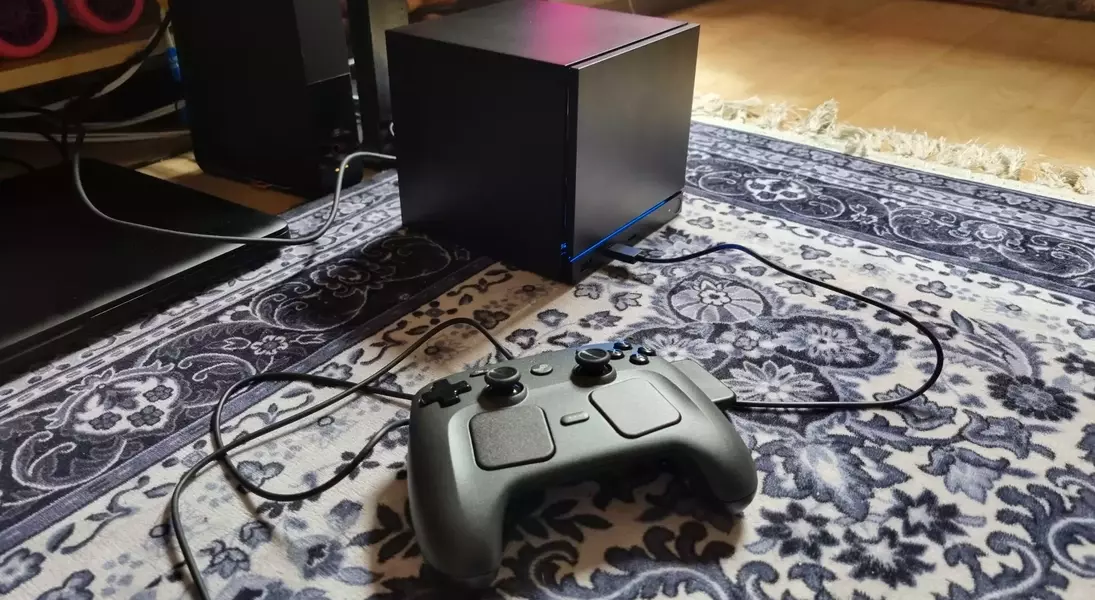
Hardware innovation, similar to game creation, thrives on progressive enhancements. It's logical to assume that the existence of the Steam Deck paved the way for the Steam Machine. During a recent conversation with Valve's engineers, Yazan Aldehayyat and Pierre-Loup Griffais, we explored whether their ongoing work on the Steam Deck reduced the development hurdles for the Steam Machine.
Pierre-Loup confirmed this, noting that while the Steam Machine presented unique challenges such as managing discrete GPUs, VRAM, and ray tracing performance, the core groundwork was largely established. He stated, "Essentially, 99% of the required effort for the Steam Machine was already accomplished." This synergy meant that extensive foundational work didn't need to be replicated.
Yazan further emphasized the practical validation provided by users who were already docking their Steam Decks to televisions and enjoying seamless experiences. This real-world usage demonstrated the viability of the Steam Machine's concept even before dedicated development began. Although the Steam Deck encountered initial challenges upon its 2022 release, including stock shortages, fan noise, controller drift, and docking issues, Valve's continuous support has since refined the device. These improvements effectively laid a robust groundwork for subsequent Valve hardware endeavors, including the Steam Machine. Valve's development philosophy centers on incremental improvements, ensuring each project builds upon its predecessors to enhance the overall user experience.
However, the journey for the Steam Machine has not been without its obstacles. Valve anticipated potential stock shortages early this year, similar to past issues. Moreover, the global memory supply crisis significantly impacted the Steam Machine, making affordability a primary concern for the engineering team. Looking ahead, while the Steam Machine may not have as extended a lifespan as the Steam Deck, new models are expected "when it makes sense." Given the ongoing challenges in the RAM market, an immediate follow-up to either device seems unlikely, emphasizing a deliberate and responsive approach to product cycles.
The iterative process in hardware development, as demonstrated by Valve, highlights a commitment to continuous improvement and user-centric design. Each product iteration not only refines existing technologies but also builds a stronger foundation for future innovations. This forward-thinking approach ensures that challenges are systematically addressed, leading to more robust and user-friendly products over time, ultimately benefiting the entire gaming ecosystem.
