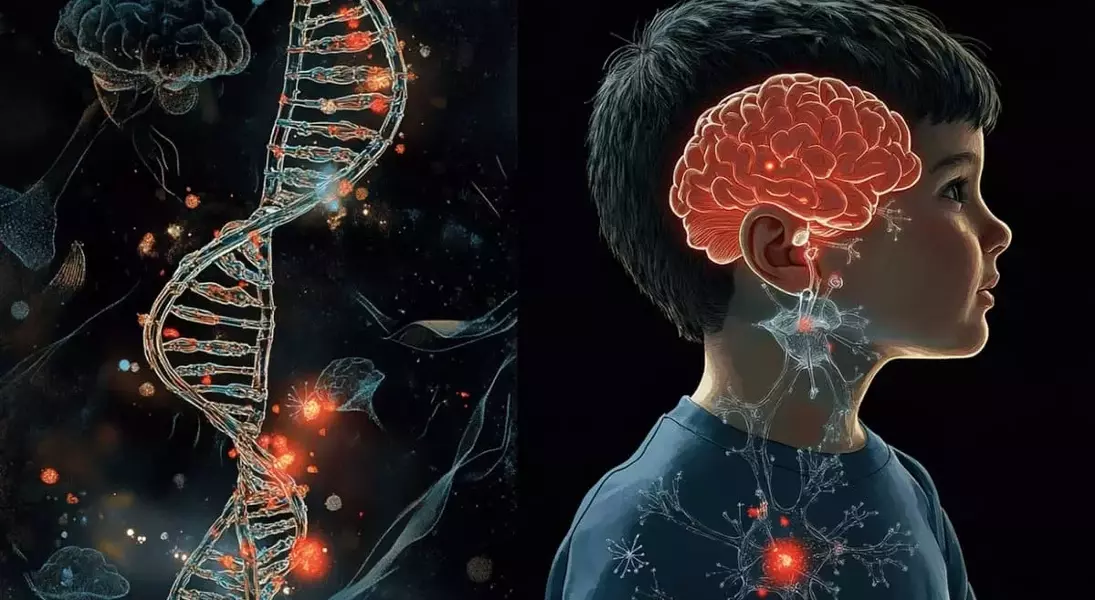
A groundbreaking study conducted by researchers from The Hospital for Sick Children (SickKids) and the University of Las Vegas Nevada (UNLV) has uncovered a significant genetic relationship between autism spectrum disorder (ASD) and myotonic dystrophy type 1 (DM1). This rare neuromuscular condition, which leads to progressive muscle weakness, shares a common genetic mechanism with ASD. Scientists have identified that tandem repeat expansions (TREs) in the DMPK gene play a crucial role in disrupting gene splicing processes essential for brain development.
Further investigation into this connection reveals how TREs impact the central nervous system. When these repeats expand within the DMPK gene, they alter RNA functionality, binding to proteins involved in regulating gene splicing during critical phases of brain growth. This interaction creates an imbalance in protein distribution, leading to improper gene splicing across multiple areas linked to cognitive functions. Consequently, individuals affected by DM1 exhibit behaviors resembling those seen in ASD, such as impaired social interactions and altered responses to unfamiliar stimuli.
The implications of this discovery extend beyond understanding the origins of these conditions. By pinpointing the molecular pathways responsible for their overlap, scientists are paving the way for innovative diagnostic methods and therapeutic strategies aimed at restoring normal protein function. Dr. Ryan Yuen, Senior Scientist at SickKids, emphasizes that identifying this shared pathway opens doors for personalized medicine approaches targeting both disorders simultaneously. Moreover, ongoing research seeks to explore whether similar mechanisms apply to other neurodevelopmental diseases, potentially revolutionizing treatment paradigms globally.
This collaboration exemplifies how interdisciplinary efforts can lead to transformative insights into complex health issues affecting diverse populations worldwide. It highlights the importance of continued investment in scientific exploration while fostering hope among families impacted by these challenging conditions. Through persistent dedication and resourceful innovation, humanity moves closer toward unlocking solutions capable of improving countless lives through advanced medical breakthroughs.
