
The agricultural commodity markets are currently navigating a complex landscape shaped by new crop projections, evolving weather patterns, and the looming shadow of international trade policies. While recent USDA data on corn and soybean output has been absorbed, market participants are now scrutinizing how these factors will interact to influence prices and supply dynamics. The anticipation of detailed crop progress reports, alongside the broader macroeconomic environment, suggests a period of heightened vigilance for those involved in the grain sector.
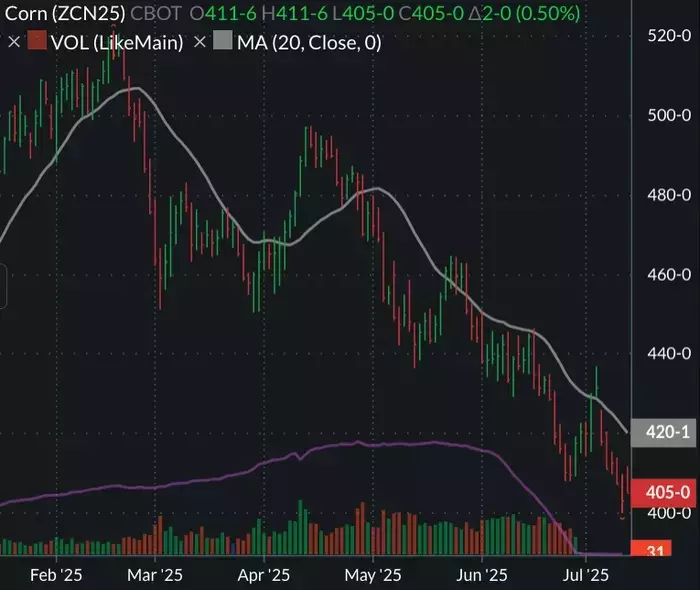
In the aftermath of the recent USDA supply and demand figures, corn and soybean futures saw an initial muted reaction, despite projections for substantial harvests. Corn prices demonstrated a slight increase, with most contracts advancing, suggesting that the market may be approaching a psychological and fundamental low point after a prolonged downturn. The USDA's latest assessment indicated a record national corn yield of 181 bushels per acre, pushing total production above 15.7 billion bushels. Interestingly, despite this vast supply, export forecasts were raised by 100 million bushels to a record 2.75 billion, while global ending stocks were unexpectedly revised downwards, defying analysts' expectations for an increase.
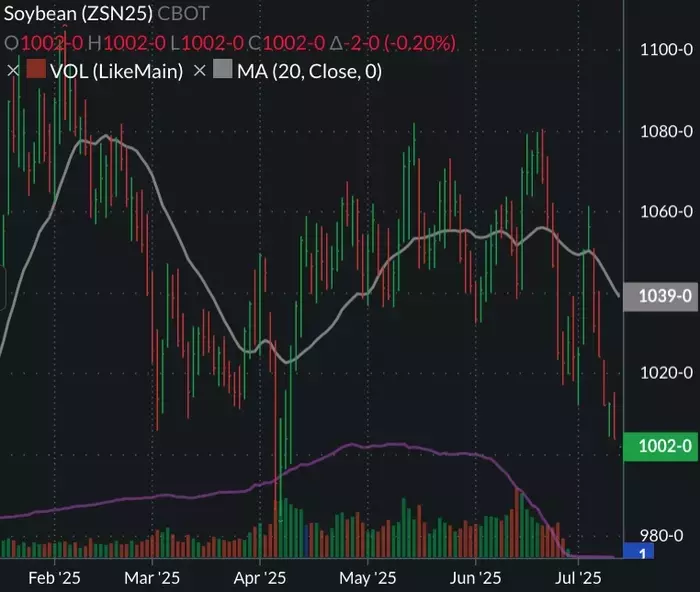
Soybean futures also experienced an upward correction, recovering some ground after recent dips below the $10 mark. The USDA report, while trimming overall soybean production slightly to 4.3 billion bushels, highlighted a reduction in export projections alongside an increase in ending stocks. This recalibration is attributed to fierce competition from South American exports, particularly from Argentina, whose soybean complex export prices are more competitive. Conversely, the domestic demand for soybeans is anticipated to strengthen, driven by a significant boost in the 2025-26 crush estimate. This surge is primarily fueled by the projected higher demand for soybean oil in biofuel production, influenced by forthcoming EPA volume proposals and various clean fuel tax incentives. These internal demand dynamics are expected to somewhat offset the pressures from a less robust export market.
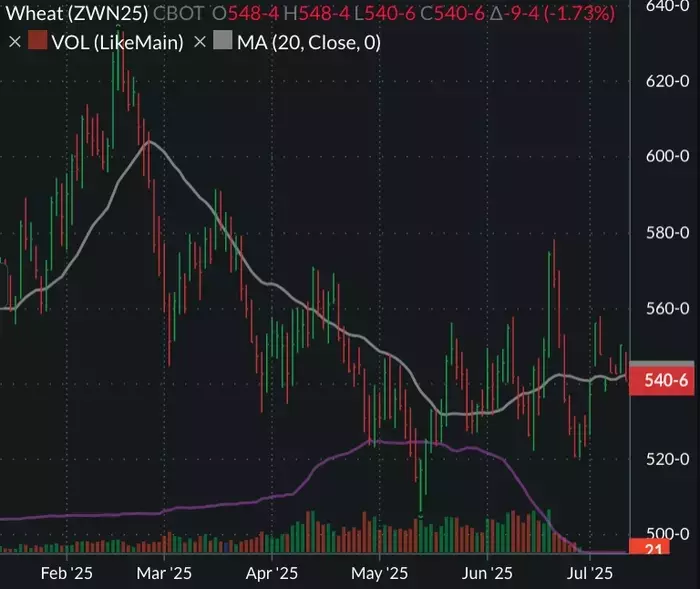
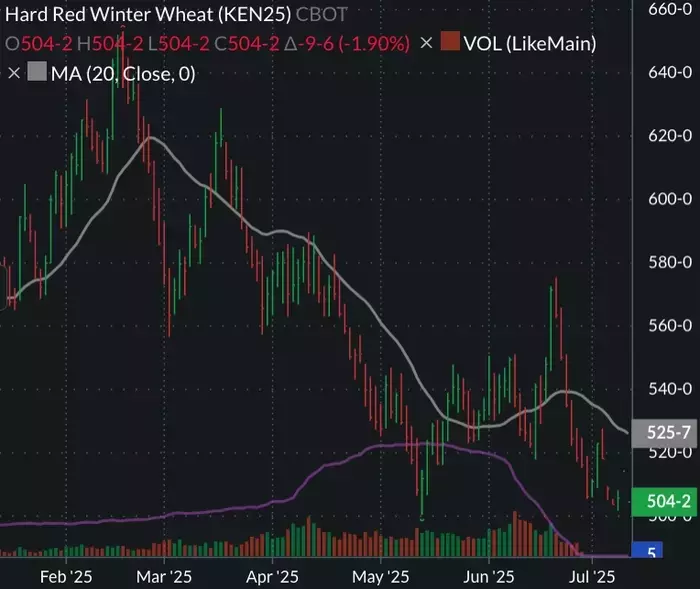
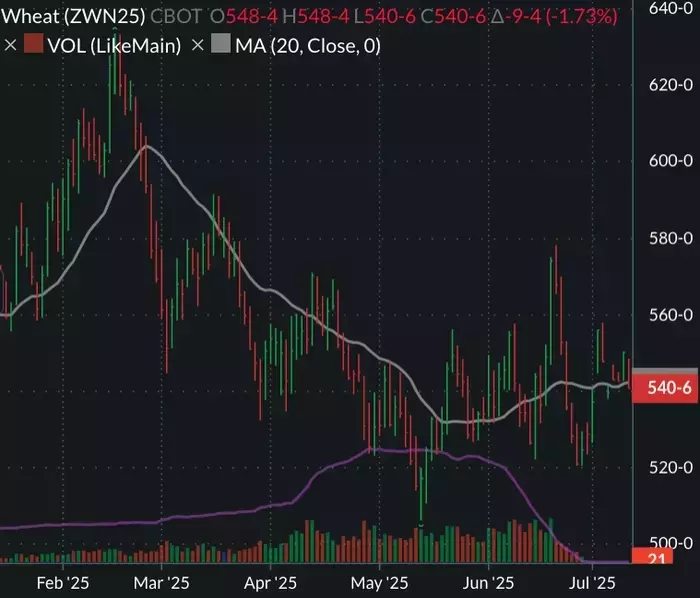
The wheat market, encompassing Chicago, Kansas City, and Minneapolis varieties, saw price increases supported by revised production estimates. The July report indicated a 3% reduction in winter wheat output, totaling 1.35 billion bushels, with specific declines in hard red winter and soft red varieties, despite strong yields. Analysts anticipate further downward revisions for the winter crop and a slight decrease in the overall domestic supply outlook for the upcoming year. This is counterbalanced by an increase in the total estimated wheat production for 2025-26, reaching 1.929 billion bushels. Furthermore, new-crop wheat usage is projected to climb to 2.0 billion bushels, with exports expected to rise by 25 million to 850 million bushels. The balance between production adjustments and consumption forecasts continues to shape the trajectory of wheat prices.
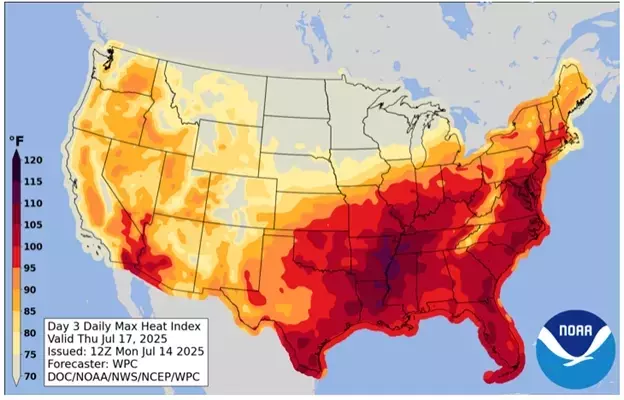
Beyond the specifics of individual crops, broader external forces are exerting considerable influence on the agricultural markets. Weather remains a critical variable, with persistent widespread rainfall and high temperatures across key agricultural regions raising concerns about potential impacts on crop health and field operations. Forecasts indicate continued thunderstorm activity and extreme heat, which could pose challenges for crop development. Concurrently, political announcements and trade policy shifts are introducing a significant degree of market nervousness. Recent declarations regarding tariffs on imports from major trading partners such as Canada, the European Union, and Mexico are creating uncertainty for financial markets, including agricultural commodities. The potential for further sanctions affecting global energy markets, as well as the anticipated rise in energy costs and inflationary pressures from tariffs, are additional factors that market participants must closely monitor.
As the summer progresses, the agricultural sector remains in a state of flux. The interplay between fundamental supply and demand, the capriciousness of weather, and the unpredictable nature of geopolitical and trade policies will dictate the market's direction. Stakeholders will need to remain agile and informed, ready to adapt to an environment characterized by both opportunity and significant risk.
