
The current administration is actively reshaping the landscape of corporate America through strategic equity investments, marking a distinct departure from traditional economic approaches. This initiative seeks to revitalize key domestic industries and secure the nation's technological and industrial future.
Reinvigorating American Industry: A New Era of Government Investment
The Administration's Economic Vision: Strengthening Domestic Foundations
In the past year, the executive branch has championed a revised economic doctrine, prioritizing the rejuvenation of American manufacturing, the expansion of indigenous energy resources, and the enhancement of national infrastructure. This goes beyond mere political discourse, translating into tangible strategies and direct government involvement in the private sector.
From Campaign Promises to Concrete Corporate Partnerships
Initially perceived as standard political rhetoric, the administration's economic blueprint has unveiled sophisticated tactics. Since assuming office, the president has moved beyond policy pronouncements and fiscal inducements. His team has engaged proactively with numerous business leaders across diverse sectors, encouraging the repatriation of operations. In certain instances, these efforts have been augmented by direct federal capital infusions or formalized collaborations.
Key Strategic Investments by the Government
A primary objective of the administration has been to solidify America's preeminence in artificial intelligence, encompassing not only research and human capital but also the foundational infrastructure. Shortly after the inauguration, the White House facilitated the launch of a significant joint venture involving major tech companies, aiming to inject substantial capital into the development of AI-equipped data centers within the U.S. and allied nations. This dedication swiftly extended to the semiconductor industry, where a substantial investment in a leading American chip manufacturer was announced by a global technology conglomerate. Following this, the federal government converted previously allocated grant funds into equity stakes in the semiconductor firm, resulting in a significant ownership percentage for the U.S. Treasury. In the energy domain, a similar strategy was employed, with the Department of Defense committing considerable funds to a rare-earths mining company in exchange for convertible shares. These governmental financial commitments are viewed as crucial steps towards re-establishing America's vital role in global chip production and energy independence, areas increasingly recognized as matters of national security.
Defense Sector in the Government's Investment Sights
The Secretary of Commerce, renowned for his background in finance, has emerged as a principal architect of the government's recent drive toward direct equity investments in American enterprises. He has indicated that the administration is seriously contemplating extending this investment model to defense contractors. While traditional defense giants are often top of mind, a particular company operating at the nexus of defense software and data integration is seen as a highly strategic candidate. This entity has significantly deepened its engagement with the Department of Defense this year, expanding existing partnerships and securing substantial long-term contracts. Its influence is not limited to U.S. military agreements, extending to domestic security agencies and international alliances. This progression highlights the company's evolving role beyond a conventional defense contractor, establishing it as a pivotal AI framework for Western defense systems.
Evaluating Investment Opportunities in a Dynamic Market
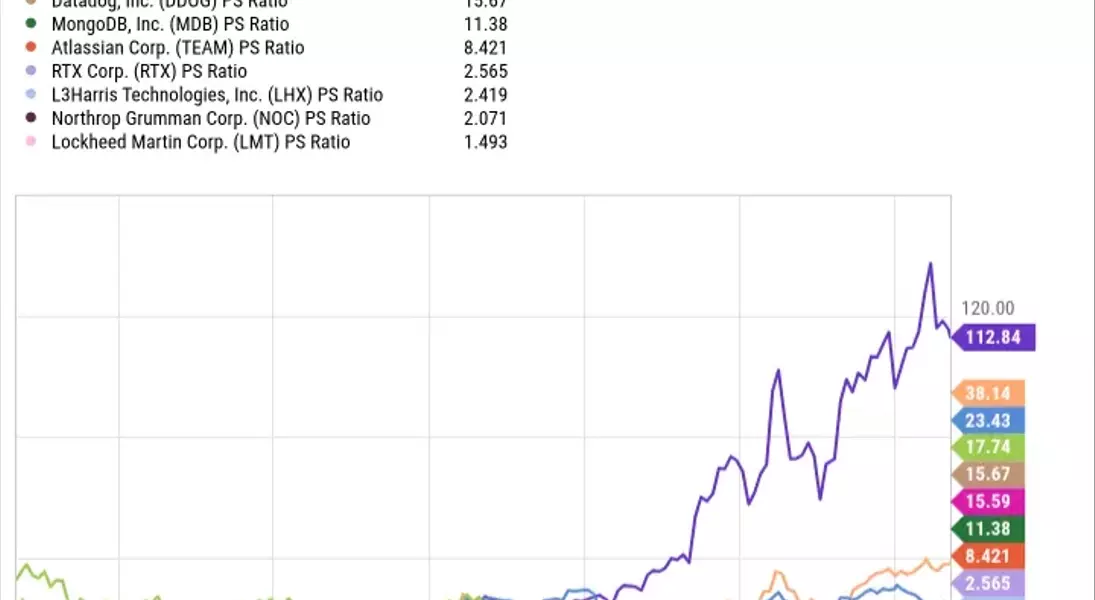
Despite its undeniable growth trajectory, the current market valuation of this defense software company presents a complex scenario. When compared to both established defense contractors and high-growth software-as-a-service firms, its valuation notably surpasses both categories. This elevated valuation is largely attributed to the company's significant momentum within the artificial intelligence revolution, placing its stock in a somewhat speculative domain. However, this does not necessarily preclude investment. The company is progressively cementing its position as an indispensable partner to the U.S. government across critical defense, intelligence, and national security functions. Consequently, it is likely to remain a focal point for Washington, not only as a service provider but also as a potential candidate for further government investment through its sovereign portfolio. A pragmatic investment approach for this company would involve a disciplined strategy, such as dollar-cost averaging, allowing investors to capitalize on its expanding structural importance in U.S. government operations while mitigating the risks associated with its current premium valuation.
