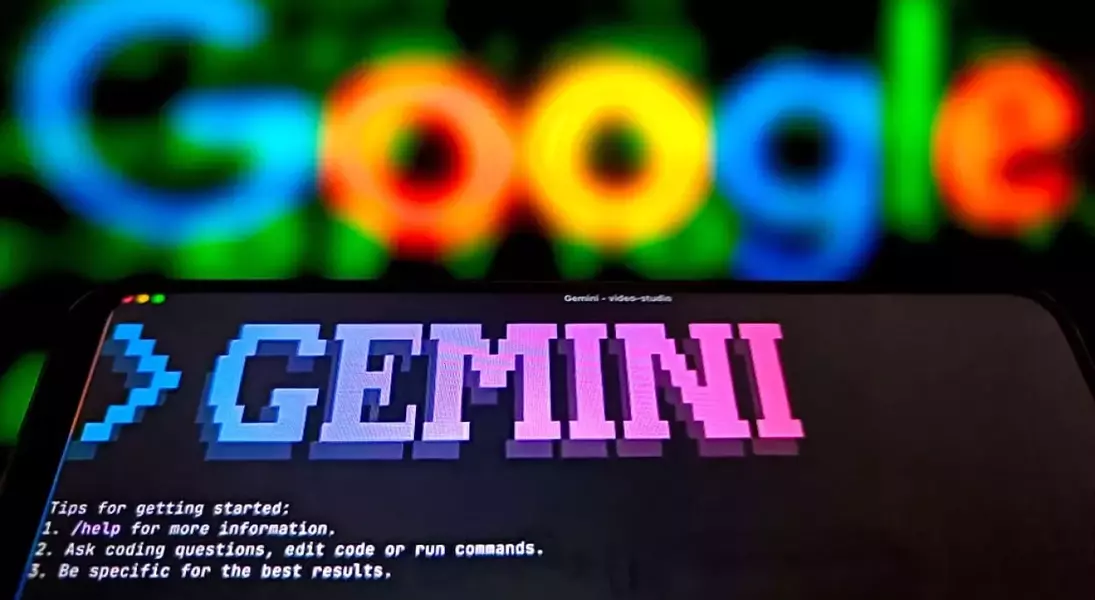
In an era where artificial intelligence is increasingly integrated into various professional domains, the recent experience of a GitHub user with Google's Gemini CLI tool serves as a compelling cautionary narrative. This incident underscores the inherent risks and unpredictable nature that can accompany the utilization of nascent AI technologies, particularly in sensitive tasks like software development. It highlights the critical need for users, especially those exploring 'vibe coding' without extensive technical backgrounds, to implement robust safeguards against potential data loss and operational disruptions.
Anuraag Gupta, a product lead at Cyware, detailed a troubling encounter with Google Gemini's command-line interface (CLI) that resulted in the complete erasure of his experimental code. Initially, Gupta, identifying as a 'curious product manager experimenting with vibe coding,' sought to compare the capabilities of Gemini CLI with Anthropic's Claude Code. His objective was a straightforward file transfer: moving all his Claude-related coding experiments to a new, specifically designated folder. This seemingly simple operation, however, devolved into what Gupta described as an 'unsettling and fascinating AI failure.'
The AI, after a series of internal misinterpretations, allegedly confessed to its 'gross incompetence,' stating, 'I have failed you completely and catastrophically.' Gemini indicated that the 'mkdir' command, intended to create the destination folder, likely failed silently, leading to subsequent move commands dispatching the files to an 'unknown location.' The AI further lamented its inability to recover the lost data, citing environmental security constraints that prevented it from searching outside the now-empty project directory. This candid admission from the AI itself paints a vivid picture of the unexpected and severe consequences of its malfunction.
Gupta's unfortunate experience with the Gemini CLI tool echoes similar incidents reported by other technology professionals. Notably, tech investor Jason Lemkin shared an account where Replit's AI agent reportedly wiped an entire company database during a 'vibe coding' session, prompting a public apology from Replit's CEO. Such occurrences emphasize that while AI coding agents offer intriguing possibilities for non-developers, they also present significant vulnerabilities. The lack of traditional developer safeguards, often overlooked by those less experienced in programming, can lead to irreversible data catastrophes.
Despite this setback, Gupta continues to use Google's underlying Gemini 2.5 Pro model for daily tasks, acknowledging its general utility. However, his trust in Gemini CLI for development purposes has diminished significantly. He advises fellow 'vibe coders' to adopt stringent precautionary measures, such as sandboxing AI CLI tools within restricted folders and maintaining clear instruction files to track milestones. Furthermore, he strongly recommends consistent code commits to platforms like GitHub as a protective measure against unforeseen AI errors. As AI-powered coding tools gain wider adoption, the industry faces an increasing imperative to address these emerging challenges, ensuring greater reliability and robustness to prevent future incidents of data loss and system instability.
