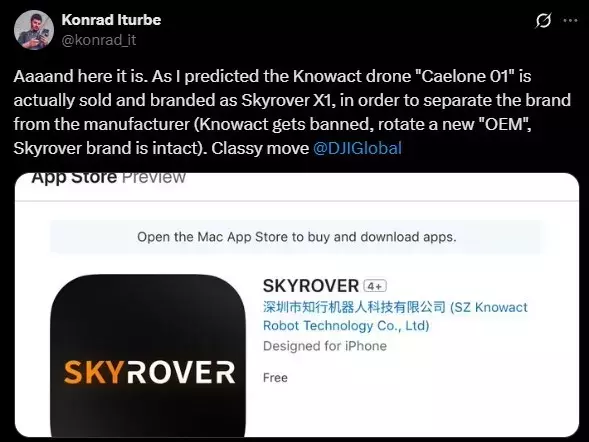
In a fascinating turn of events, the drone market witnesses the emergence of the SkyRover X1 on Amazon, sparking intense speculation about its true origins. This comes at a time when leading drone manufacturer DJI faces significant hurdles in selling its products within the United States due to an undeclared, yet effective, ban by US customs. The striking similarities between the newly launched SkyRover X1 and DJI's popular Mini 4 Pro have led many to believe this could be a strategic move by DJI to re-enter the American market under a different guise. This comprehensive report delves into the compelling evidence, the manufacturer's ambiguous responses, and the broader implications for the drone industry and international trade relations.
Unraveling the SkyRover X1 Mystery: DJI's Stealthy Maneuver in the US Drone Market
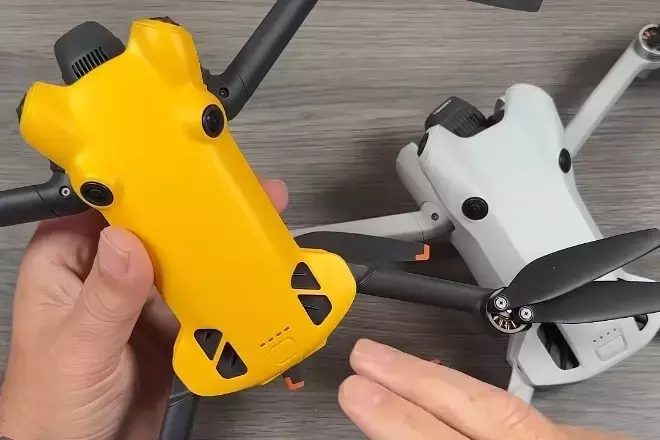
In the vibrant panorama of July 2025, a new contender has surfaced in the American drone market: the SkyRover X1. This intriguing development unfolds against a backdrop where DJI, a titan in the drone manufacturing sphere, finds its products conspicuously absent from US shelves. The prevailing belief within industry circles points to an unofficial, yet formidable, embargo by US customs, effectively stifling DJI's direct sales in the region. However, the unexpected arrival of the SkyRover X1 on Amazon, priced attractively at $758, immediately drew attention due to its uncanny resemblance to DJI's acclaimed Mini 4 Pro.
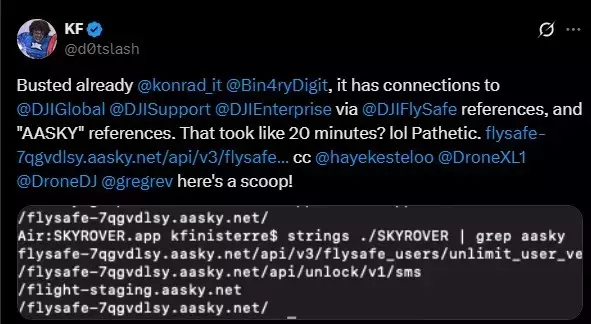
The plot thickened as meticulous investigations by astute security researchers unveiled profound connections between the SkyRover X1 and DJI's established ecosystem. Researchers, including the renowned hacker Kevin Finisterre, highlighted that the SkyRover X1 not only mirrors the specifications and features of DJI's drones but also operates through DJI's proprietary online infrastructure. This alarming discovery extended to the drone's application, which shares striking similarities with DJI's official app. Further evidence presented by security consultant Jon Sawyer revealed that the SkyRover app utilizes the identical encryption keys as DJI, with rudimentary attempts to mask its true affiliation by substituting 'DJI' with generic placeholders like 'xxx' or 'uav' in its code.
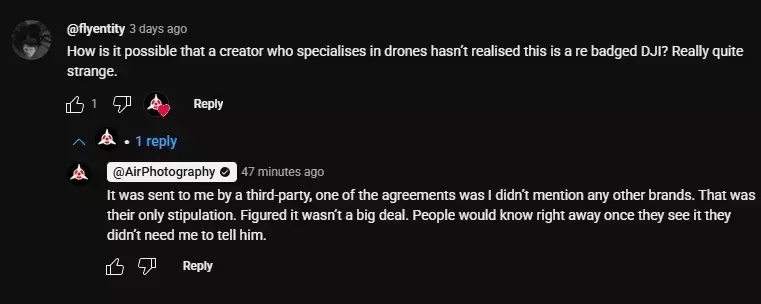
Adding another layer to this enigma, drone reviewer AirPhotography candidly admitted that a condition for receiving a review unit of the SkyRover X1 was to abstain from mentioning any other drone brands in his initial review. This stipulation, he later revealed, was the sole requirement for obtaining the device. Following a wave of criticism from his audience for overlooking the obvious parallels to DJI, AirPhotography produced subsequent videos explicitly comparing the SkyRover X1 to the Mini 4 Pro, dubbing the similarities "suspicious." While minor distinctions exist, such as differences in the camera and incompatibility with existing DJI batteries and controllers, these nuances do little to dispel the growing suspicion.
When approached for clarification, DJI's spokesperson, Regina Lin, maintained an evasive stance, stating, "I'm still looking into this with our headquarters team," effectively declining to confirm or deny any direct involvement with the SkyRover X1. This ambiguity further fuels speculation, particularly given DJI's prior strategies of licensing its technology to US and Hong Kong-based companies, such as Anzu Robotics for the Raptor (a Mavic 3 clone) and Cogito for the Specta and Specta Mini, to navigate US trade restrictions. FCC filings indicate that the SkyRover X1 is manufactured by SZ Knowact in Malaysia, a country increasingly favored by Chinese firms seeking to mitigate the impact of US tariffs.
The broader context reveals that the US government has yet to impose a formal ban on DJI drones. Nevertheless, a de facto prohibition is slated to take effect by December unless a national security agency formally asserts that DJI products pose no "unacceptable risk to the national security of the United States." The US Commerce Department has initiated an investigation to ascertain this very matter, reflecting the heightened scrutiny on Chinese technology imports.
From a journalist's vantage point, this ongoing saga between DJI and the US market underscores the intricate dance between innovation, national security, and global commerce. The emergence of the SkyRover X1, whether a direct DJI product or a cleverly licensed imitation, highlights a persistent cat-and-mouse game where companies seek ingenious ways to bypass trade barriers. This situation prompts a critical reflection on the efficacy of unilateral trade restrictions and the potential for such measures to foster opaque business practices. It also brings into sharp focus the ethical responsibilities of corporations to transparency, especially when operating in a globalized economy with complex political undercurrents. Ultimately, the SkyRover X1 serves as a potent symbol of resilience and adaptation in the face of geopolitical tensions, simultaneously challenging established norms and forcing a re-evaluation of current trade policies.
