Explore GoldenLand, a hidden gem from 2001 that showcases how Russian developers infused their unique cultural heritage into a classic isometric RPG, drawing parallels with iconic Western titles despite resource limitations.
GoldenLand: Unearthing a Slavic Fantasy Epic in the World of RPGs
The Enduring Appeal of Isometric RPGs in Eastern Europe
During the 1990s and early 2000s, sprawling isometric role-playing games found a particularly strong foothold across the former Soviet Union. This phenomenon might be attributed to an inherent cultural connection, perhaps the narodnaya dusha resonating with the epic narratives of Forgotten Realms and Middle-earth, conjuring images from ancient byliny and the mythical beings lurking in the deep forests. Another practical reason could be their compatibility with less powerful computer systems and their utility as a means to learn English.
Discovering the Hidden World of Zlatogorye
While the Eastern European gaming landscape is often associated with studios like GSC Game World and CD Projekt, known for their innovative yet often rough-around-the-edges titles, the realm of mechanically intricate isometric CRPGs largely remained in the shadows. This began to change with a social media post from Felipe Pepe, a renowned editor in the CRPG community, who fondly recalled a series known as Zlatogorye, or GoldenLand. This revelation sparked an immediate desire to experience the game firsthand.
Embarking on the Hero's Journey in GoldenLand
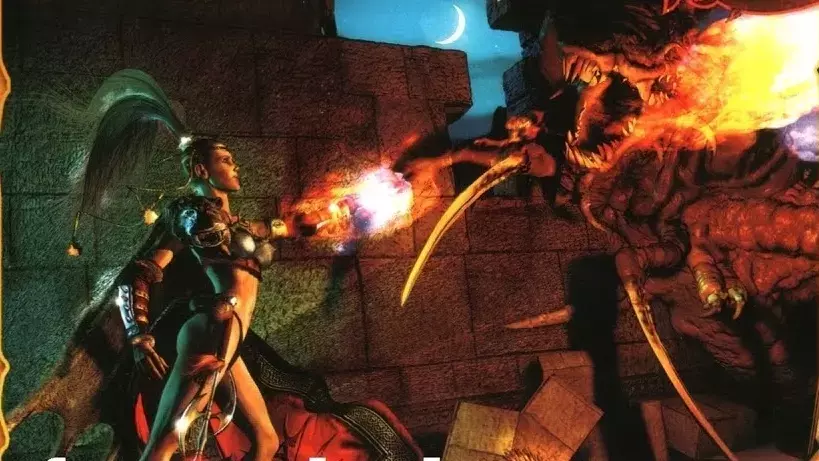
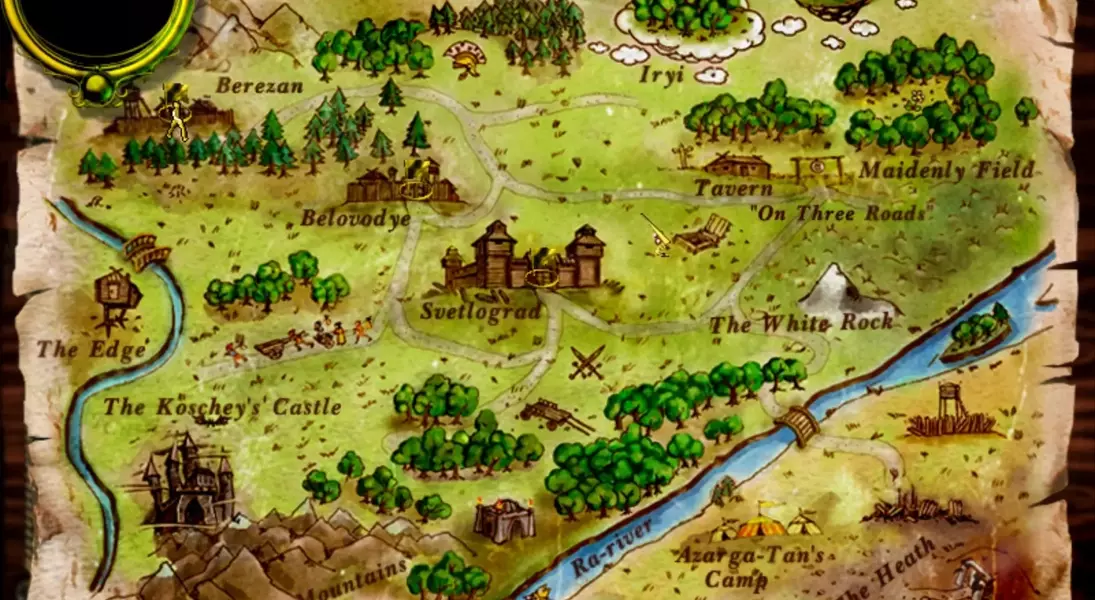
Accessing the original 2001 release of GoldenLand 1 proves surprisingly straightforward, even without its presence on modern digital storefronts. The game, despite officially being titled "Heath: The Unchosen Path" in English, is more commonly known by its semi-translated Russian name, GoldenLand (derived from Zlatogorye, meaning Golden Mountain). Players assume the role of a resurrected hero, tasked by the benevolent deity Belobog to combat the malevolent Drah-Shu and his invading vygak forces, who were responsible for the destruction of the hero's village.
A Narrative Rooted in Russian Folklore
The game's narrative immediately immerses players in ancient Russian oral traditions, diverging significantly from the typical Tolkien-inspired fantasy. Instead, it mirrors Old Rus' epics, where heroes defend their land against pseudo-Mongol invaders. The protagonist embodies figures like Alexander Nevsky, battling for survival. The theological framework is distinctively Orthodox, focusing on the singular divine conflict between the creator god Belobog, revered as Father, and the embodiment of evil, Drah-Shu. Early quests involve seeking out figures like Gromoboy, a legendary bogatyr, akin to a Slavic knight-errant.
Gameplay Mechanics: A Blend of Classic Influences
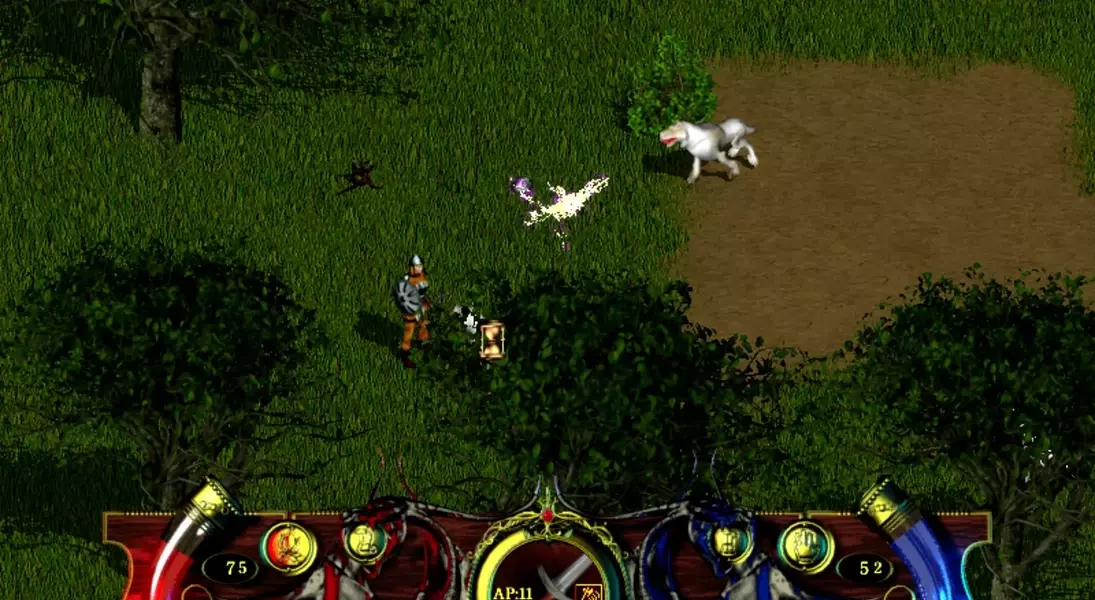
GoldenLand seamlessly integrates these unique cultural elements with established Western CRPG mechanics. Character creation, though simplified, echoes titles like Baldur's Gate, allowing players to choose from predefined classes or customize their own hero. Combat is a strategic, action-point-based system, reminiscent of Fallout, where players carefully manage their character's and enemies' turns to maximize damage while maintaining distance. Successfully completing quests and vanquishing adversaries rewards players with experience, leading to level-ups and the acquisition of new, Fallout-esque perks.
The Enduring Charm of a Low-Budget Masterpiece
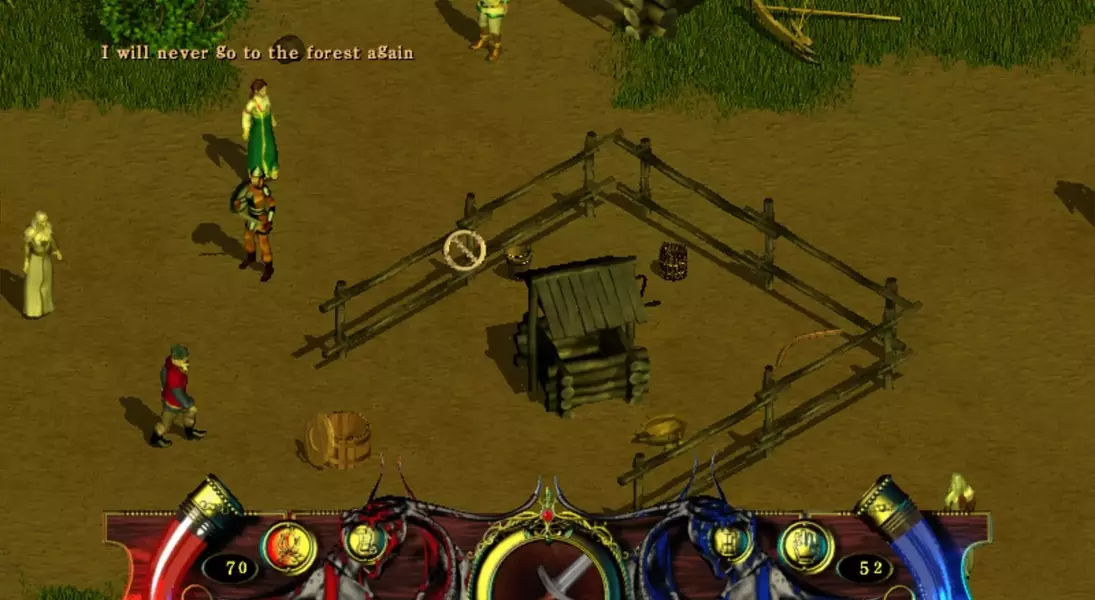
This engaging gameplay loop, though familiar from Fallout 1 and 2, offers a fresh perspective through GoldenLand's unique setting. Despite a noticeably lower budget, reflected in its somewhat jerky animations, occasionally unbalanced combat, and utilitarian fonts—a stark contrast to the ornate styles of its Western counterparts—the game maintains a profound charm. Its appeal lies not only in its deep connection to Russian history and folklore, a subject often studied with great passion, but also in the cohesive integration of its narrative and mechanics. This demonstrates that even with limited resources, a game crafted with genuine affection for the CRPG genre can transcend its technical shortcomings, fostering a desire for more culturally distinct, ambitious, and perhaps better-funded, GoldenLands to emerge from diverse corners of the gaming world.
