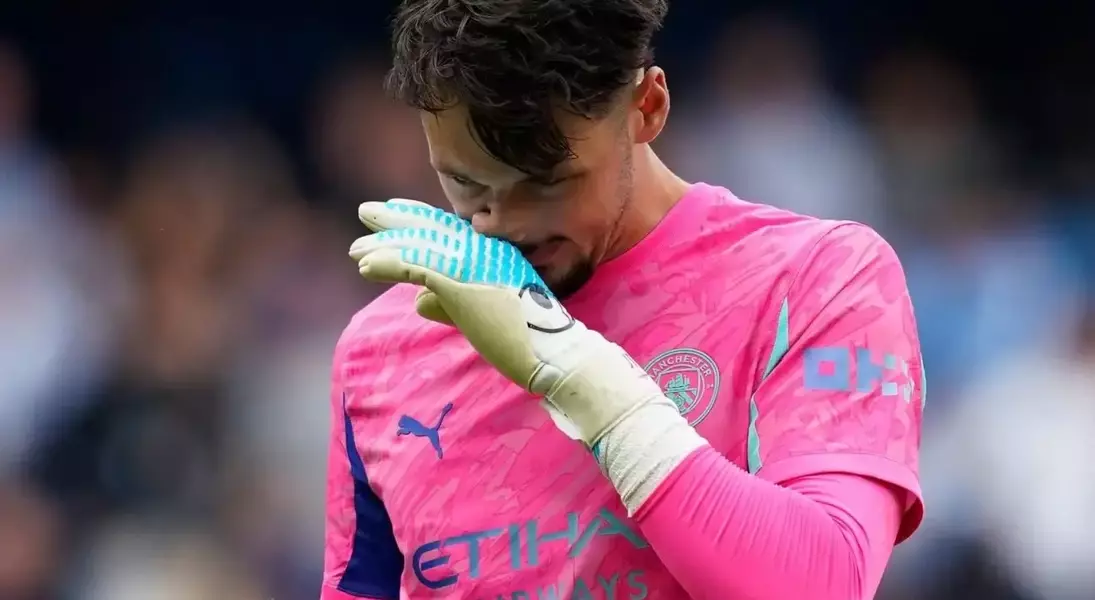
In the high-stakes world of Premier League football, a recent match cast a stark spotlight on Manchester City's goalkeeping strategy, particularly following a challenging home debut for their young talent, James Trafford. His performance during the clash against Tottenham Hotspur has not only fueled debate but also brought into question the club's long-term vision for the pivotal goalkeeper position. This incident, marked by an unfortunate error, serves as a vivid reminder of the fine line between calculated risk and costly misjudgment in elite football.
A Challenging Debut and Strategic Crossroads for Manchester City
On a memorable match day, August 23rd, 2025, James Trafford, donning the Manchester City jersey for his home debut, faced a daunting challenge against Tottenham Hotspur. Despite his inherent confidence, a crucial misstep occurred during the first half's added time. A seemingly routine pass from a goal-kick by Ruben Dias went astray by mere yards, creating a chain of events that culminated in Joao Palhinha netting his inaugural goal for Spurs. This single incident became a focal point, particularly as it unfolded under the watchful eyes of seasoned goalkeeper Ederson, present on the sidelines.
The match was not without its earlier tense moments. Trafford's hurried exit from his box to intercept Mohammed Kudus led to a debatable arm contact, which, despite its apparent nature, went unpunished by both the referee and VAR. This episode, alongside his later error, prompted extensive discussion regarding the efficacy of Guardiola’s intricate passing system from the back. While this tactical approach has often been a hallmark of City's success, its reliance on immaculate execution leaves little room for error, as tragically demonstrated in Trafford's debut.
The discussion around Trafford's role is further complicated by Manchester City's broader goalkeeping dilemma. Ederson, a cornerstone of Guardiola's philosophy for his passing prowess and composure, faces a potential succession. The acquisition of Trafford, facilitated by a buy-back clause from his transfer to Burnley, initially signaled a potential path forward. However, swirling rumors linking the club with other world-class goalkeepers, notably Gianluigi Donnarumma, introduce an element of uncertainty. This dynamic creates a challenging environment for a young goalkeeper like Trafford, who is striving to establish himself on the grandest stage of football.
The Delicate Balance of Risk and Reward in Modern Football
The recent match involving James Trafford and Manchester City vividly illustrates the precarious balance between audacious tactical innovation and the unforgiving reality of on-field execution. From a journalistic perspective, it highlights how a single game can encapsulate broader strategic dilemmas within a football club. The incident with Trafford, while undoubtedly a setback for the young player, also serves as a poignant case study on the immense pressure placed on goalkeepers in modern football, especially within systems that demand participation in intricate build-up play. It begs the question: How much risk is too much, even for a team as dominant as Manchester City? For any aspiring player, particularly a goalkeeper, this scenario underscores the critical importance of mental fortitude and the unyielding belief from management, especially when navigating the turbulent waters of a high-profile debut. The club's handling of Trafford's situation, and their definitive stance on the future of their goalkeeping roster, will undoubtedly be a telling narrative for seasons to come.
