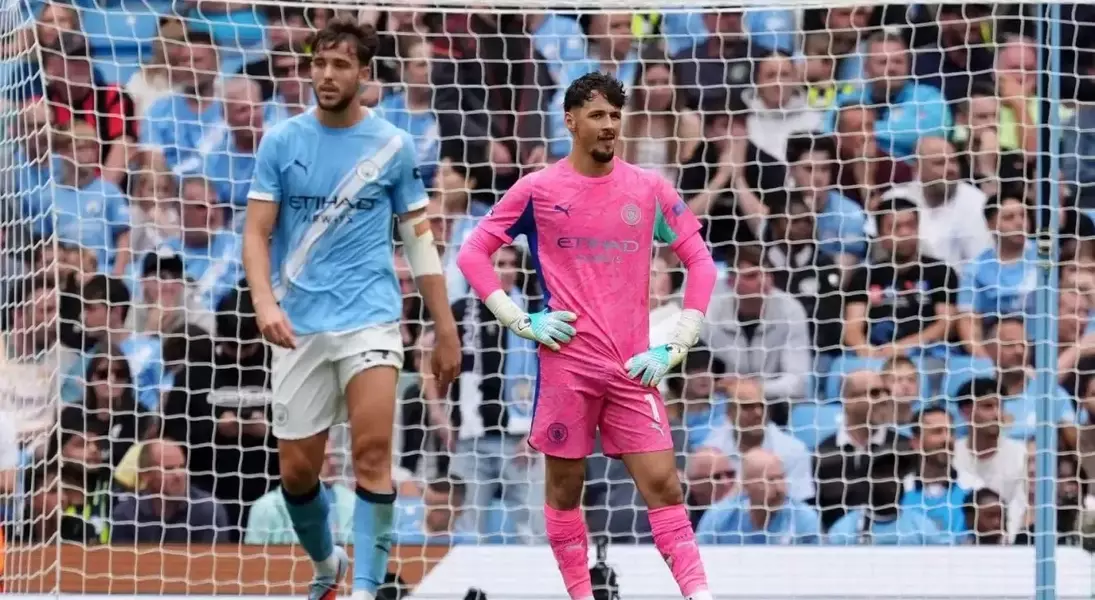
A recent match saw Manchester City's goalkeeper, James Trafford, endure a particularly difficult outing, contributing to his team's 2-0 loss against Tottenham. This game, which saw Tottenham unexpectedly join a multi-team title chase, underscored Manchester City's fluctuating form early in the season, contrasting sharply with their impressive victory on the opening day.
The pivotal moments of the game revolved around Trafford's actions. Tottenham's first goal came after a swift counter-attack, culminating in Brennan Johnson scoring in the 35th minute. However, it was the second goal, just before halftime, that drew the most attention and criticism. Trafford's ill-advised pass from the back was intercepted, leading directly to Tottenham extending their lead. This error compounded an earlier, contentious incident where Trafford challenged Mohammed Kudus outside his penalty area, seemingly making contact with both the ball and the player. Despite the heated debate among fans and pundits, VAR did not intervene, with explanations citing the proximity of Trafford's body to the ball and the nuances of handball rules outside the box. This decision, or lack thereof, further fueled discussions about the consistency and interpretation of VAR protocols in high-stakes matches.
The encounter served as a stark reminder of the intense scrutiny faced by professional athletes, particularly goalkeepers, whose every decision can significantly impact a game's outcome. Trafford's experience in this match, while challenging, offers valuable lessons on resilience and the ongoing evolution of football officiating. It underscores the importance of precision and clear decision-making under pressure, not just for players but also for the technology and officials tasked with upholding fairness in the sport. Such moments, despite their difficulty, contribute to the narrative of growth and continuous improvement in the beautiful game.
